Understanding 5G Frequency Testing for Modern Networks
0 likes | 7 Vues
5G frequency testing is vital for network success. It helps detect issues early, validate hardware performance, and maintain top communication quality. Explore why testing standards are critical for building faster, more efficient 5G and IoT ecosystems globally.


Understanding 5G Frequency Testing for Modern Networks
E N D
Presentation Transcript
Understanding 5G Frequency Testing for Modern Networks Explore the key aspects of 5G frequency testing and its role in modern networks. This presentation covers foundational knowledge, methodologies, challenges, and future trends.
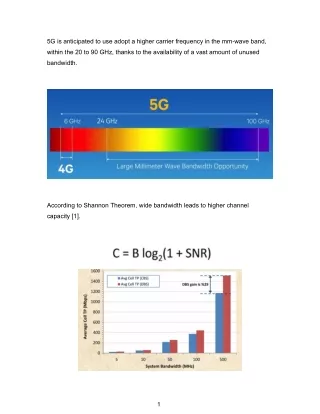
Basics of 5G Frequencies Frequency Bands Includes Sub-6 GHz for coverage and mmWave for high capacity. Spectrum Allocation Licensed Unlicensed Shared Carrier Aggregation Combines channels to boost bandwidth and speed. Example T-Mobile uses 600 MHz (n71) for broad coverage.
Importance of 5G Frequency Performance & Reliability Regulatory Compliance Interference Identify and reduce signal blockages and noise. Test for optimal network operation and uptime. Ensure adherence to FCC and ETSI requirements. Spectral Efficiency Case Study Maximize capacity and bandwidth usage. Verizon’s mmWave rollout faced signal blockage challenges.
Common 5G Frequency Testing Methodologies Spectrum Analyzers Signal Generators Channel Emulators OTA Testing Create controlled test signals for equipment validation. Simulate real-world radio conditions for accuracy. Evaluate device performance in live network environments. Measure signal strength and interference levels.
Key Performance Indicators (KPIs) in 5G Throughput Gbps data rate Latency Delay in ms, target <1 ms Signal Strength RSSI, RSRP values Signal Quality SNR, SINR measurements Error Vector Magnitude Signal distortion rating
Challenges in 5G Frequency Testing 5G Complexity Massive MIMO and beamforming complicate testing. mmWave Propagation High path loss and blockages affect signal. Testing Costs Comprehensive tests require significant resources. Accuracy & Repeatability Ensuring reliable and consistent test results. Example Beamforming tests in busy city environments.
Future Trends in 5G Frequency Automated Testing Cloud Platforms 1 AI-driven analytics speed up test Virtualized testing environments grow rapidly. 2 processes. New Methods Integrated Tools 4 3 Focus on URLLC and emerging Testing blends with network monitoring systems. applications. Cloud-based testing is projected to grow 30% annually through 2027.
Conclusion Q&A Ongoing Testing Engage with experts for clarification and insights. Recap Continuous tests ensure network success and reliability. Reviewed 5G testing basics, KPIs, and challenges.
Thank You If you have any questions or need more information about our products and services, feel free to contact us. Contact Us: Orbis Systems +1 972 929 5705 info@orbissystems.eu https:/ /www.orbissystems.eu