Pallet Racking Systems Explained What You Need to Know
0 likes | 13 Vues
Discover how warehouse pallet racking systems optimize storage, boost efficiency, and reduce costs in logistics and warehousing operations.


Pallet Racking Systems Explained What You Need to Know
E N D
Presentation Transcript
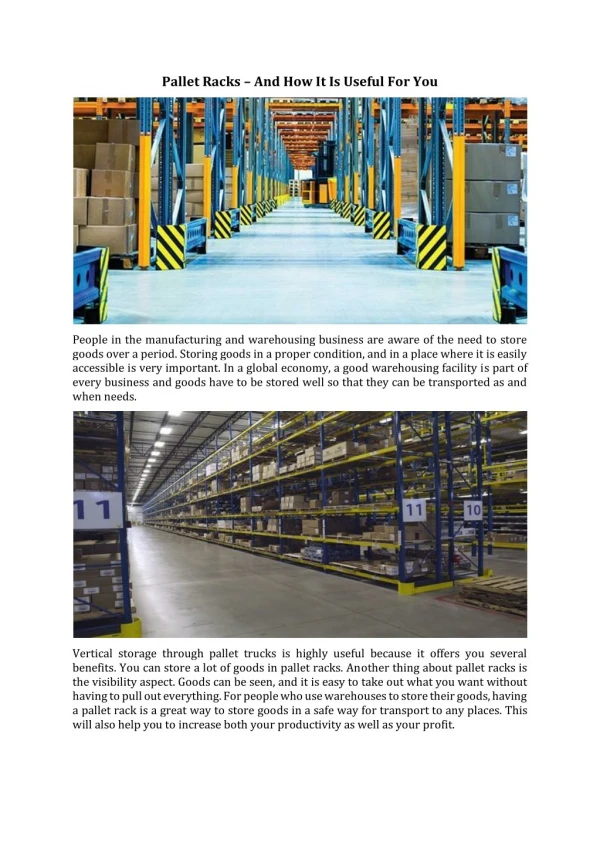
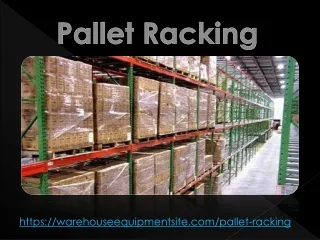
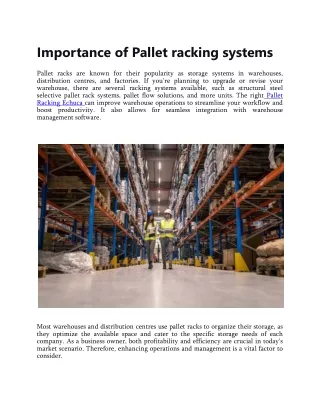
pamelassmith010.blogspot.com/2024/11/pallet-racking-systems-explained-what.htmlpamelassmith010.blogspot.com/2024/11/pallet-racking-systems-explained-what.html Pallet Racking Systems Explained: What You Need to Know In the fast-paced world of logistics and warehousing, efficient storage solutions are crucial for maximizing operational efficiency and minimizing costs. One of the most effective ways to achieve this is through the implementation of warehouse pallet racking systems. This article will explore the fundamentals of pallet racking systems, their types, benefits, and essential considerations for implementation. What Are Pallet Racking Systems? Pallet racking systems are structures designed to store goods on pallets in a systematic and organized manner. They allow businesses to utilize vertical space effectively, enabling higher storage capacity without the need for a larger warehouse footprint. These systems are essential for various industries, including retail, manufacturing, and distribution, facilitating the efficient management of inventory. Benefits of Warehouse Pallet Racking Systems 1. Maximized Storage Efficiency One of the primary advantages of warehouse pallet racking systems is their ability to maximize storage efficiency. By utilizing vertical space, businesses can store more products in the same area, significantly increasing storage capacity. This is especially beneficial for warehouses with limited floor space. 2. Improved Accessibility Pallet racking systems are designed for easy access to stored items. With organized racks, warehouse staff can quickly retrieve products, which streamlines the picking and packing process. This accessibility can lead to faster order fulfillment and improved customer satisfaction. 1/4
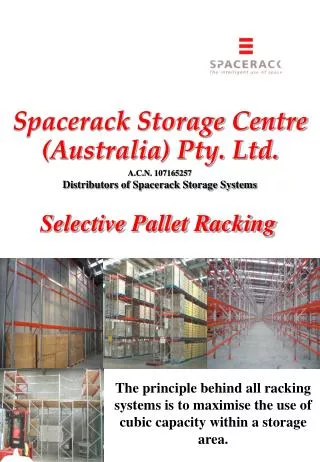
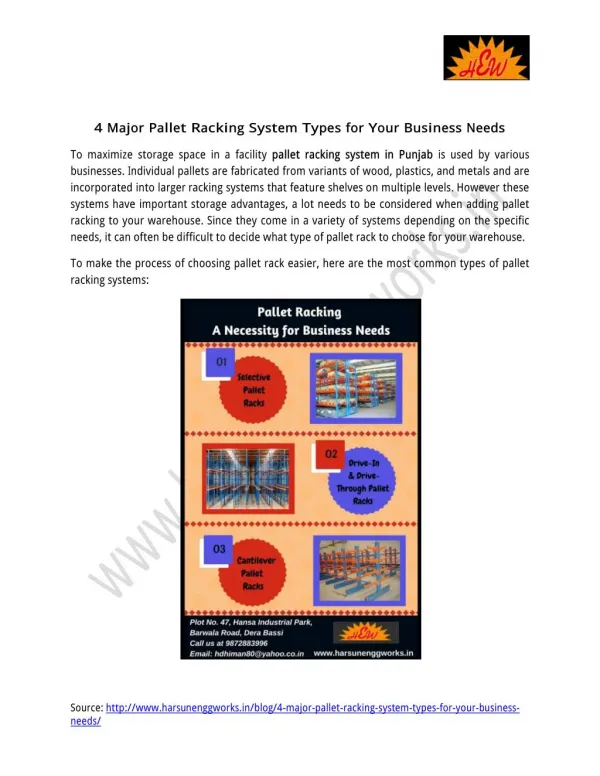
3. Versatility and Customization Different types of pallet racking systems can be customized to meet specific storage needs. Whether a business requires selective racking, drive-in racking, or push-back racking, there is a solution available to fit various inventory types and handling requirements. 4. Enhanced Safety Properly designed and maintained pallet racking systems contribute to a safer work environment. By storing goods securely, the risk of accidents and injuries is minimized. Regular inspections and maintenance are vital to ensure safety standards are upheld. 5. Cost-Effective Storage Solution Investing in warehouse pallet racking systems can lead to long-term cost savings. By improving storage efficiency and reducing the time spent on inventory management, businesses can lower operational costs and increase profitability. Types of Pallet Racking Systems Pallet racking systems come in various configurations, each designed to cater to specific storage needs. Understanding the different types can help businesses choose the right system for their operations. 1. Selective Pallet Racking Selective pallet racking is one of the most commonly used systems. It allows for easy access to every pallet, making it ideal for warehouses with a diverse range of products. This system is flexible and can accommodate various pallet sizes, providing optimal storage solutions for businesses. 2. Drive-In Pallet Racking Drive-in pallet racking is designed for high-density storage. It allows forklifts to drive directly into the rack structure, enabling the loading and unloading of pallets. This system maximizes storage space but requires careful inventory management since it typically operates on a first-in, last-out (FILO) basis. 3. Double Deep Pallet Racking Double deep pallet racking allows for two pallets to be stored back-to-back in a single rack. This system increases storage density while still providing reasonable access to each pallet. However, it requires specialized equipment for loading and unloading. 4. Push Back Pallet Racking Push back pallet racking systems utilize a series of nested carts that allow pallets to be pushed back as new pallets are loaded. This setup operates on a last-in, first-out (LIFO) basis, making it suitable for warehouses with high turnover rates for specific products. 5. Pallet Live Racking Pallet live racking systems use a series of rollers to allow pallets to flow from the back of the rack to the front. This design facilitates easy access and efficient inventory rotation, making it ideal for perishable 2/4
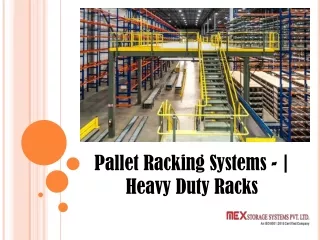
goods or items with expiration dates. 6. Mezzanine Racking Mezzanine racking combines storage and workspace by creating a raised platform within the warehouse. This system maximizes vertical space and is perfect for businesses looking to add additional storage without expanding their physical footprint. Key Considerations for Implementing Pallet Racking Systems When planning to implement warehouse pallet racking systems, several factors should be considered to ensure optimal performance and safety: 1. Warehouse Layout The layout of the warehouse is crucial in determining the type of pallet racking system to be implemented. Analyzing the available space, traffic flow, and accessibility will aid in selecting the most suitable system for the specific environment. 2. Load Capacity Understanding the load capacity of the racking system is essential. Businesses must ensure that the chosen system can support the weight of the pallets and products being stored. Proper weight distribution and adherence to manufacturer guidelines are critical for safety. 3. Inventory Management Effective inventory management is key to maximizing the benefits of pallet racking systems. Implementing systems to track inventory levels, rotation, and retrieval processes enhances efficiency and helps prevent stockouts or overstock situations. 4. Safety Standards Compliance with safety standards is vital when installing pallet racking systems. Regular inspections, maintenance schedules, and employee training on safe operating procedures are necessary to minimize risks and maintain a secure work environment. 5. Professional Installation Engaging professionals for the installation of pallet racking systems can ensure that they are set up correctly and safely. Experts can provide valuable insights into optimizing the system for specific warehouse needs, ensuring both efficiency and safety. Conclusion Warehouse pallet racking systems are essential components of modern warehousing and logistics operations. They offer numerous benefits, including maximized storage efficiency, improved accessibility, and enhanced safety. By understanding the different types of racking systems and key considerations for 3/4
implementation, businesses can make informed decisions that lead to greater operational efficiency and cost savings. For those interested in implementing or upgrading their pallet racking systems, Dalvie Systems provides expert design, supply, and installation services tailored to meet your specific needs. To learn more about their offerings, visit their website or contact their expert team today. 4/4