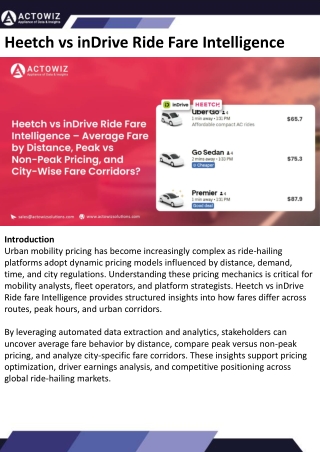
Heetch vs inDrive Ride Fare Intelligence
Heetch vs inDrive Ride Fare Intelligence provides detailed insights into distance-based pricing, comparing peak and non-peak fares, and analyzing city-wise fare corridors across different markets to help understand pricing trends, competitiveness, and rider affordability at a granular level.<br>

Heetch vs inDrive Ride Fare Intelligence
E N D
Presentation Transcript
Heetch vs inDrive Ride Fare Intelligence Extracting Information from TripAdvisor: A Guide to Scraping Data from Hotels and Restaurants How to Effectively Use Competitor Price Trackers: Operational Guidance and Benefits How to Use Zomato API to Scrape Restaurant Data – A Detailed Guide What are Datasets? - A Comprehensive Guide Introduction Urban mobility pricing has become increasingly complex as ride-hailing platforms adopt dynamic pricing models influenced by distance, demand, time, and city regulations. Understanding these pricing mechanics is critical for mobility analysts, fleet operators, and platform strategists. Heetch vs inDrive Ride fare Intelligence provides structured insights into how fares differ across routes, peak hours, and urban corridors. By leveraging automated data extraction and analytics, stakeholders can uncover average fare behavior by distance, compare peak versus non-peak pricing, and analyze city-specific fare corridors. These insights support pricing optimization, driver earnings analysis, and competitive positioning across global ride-hailing markets. Introduction Introduction This blog will provide a comprehensive overview of datasets, including their definition, different types of datasets, and strategies for maximizing the value of data. Leveraging the appropriate API makes scraping TripAdvisor on a large scale a straightforward task. You don't need to possess advanced computer skills to achieve this. Our comprehensive, step-by-step guide is designed to walk you through extracting data from TripAdvisor using a user-friendly web scraping tool. In the dynamic landscape of eCommerce, pricing strategy stands paramount, especially for digital storefronts. Modern consumers are discerning, often prioritizing price comparison as a pivotal step before purchasing. The allure of securing the best deals and most competitive prices drives this behavior. Consequently, a significant portion of online shoppers actively engage in price monitoring across various platforms. Recognizing this trend, online retailers must adeptly employ competitor price trackers to stay ahead. What is a Dataset? Introduction In the dynamic world of digital gastronomy, where culinary delights and dining experiences are increasingly explored and celebrated online, the demand for up-to-date restaurant data is insatiable. As food enthusiasts and businesses seek the latest insights into menus, reviews, and more, the Zomato API emerges as a powerful tool for scraping this invaluable information. TripAdvisor stands out as a powerhouse with an extensive database comprising over 8 million locations, 1 billion reviews, and support for 29 languages. As of 2022, when the cumulative reviews surpassed the one billion mark, it became evident that TripAdvisor's meticulous gaze would soon cover every restaurant, hotel, vacation rental, or attraction listing. By leveraging retail data scraping techniques, businesses can collect comprehensive retail data, offering insights into the broader market's pricing landscape. Such price intelligence empowers retailers to craft a robust pricing strategy, bolstering sales, enhancing profit margins, and fostering customer loyalty. Moreover, a data-driven eCommerce pricing approach ensures competitiveness, with dynamic pricing becoming increasingly prevalent. Unlocking the Potential: The Advantages of Scraping TripAdvisor Data Our comprehensive guide delves into the intricate art of utilizing the Zomato API to scrape restaurant data. Whether you're a restaurateur striving to understand your competitors, a food blogger searching for fresh content, or a data enthusiast eager to explore culinary trends, this guide will serve as your compass in the world of data extraction. In essence, utilizing a competent competitor price tracker facilitates effective pricing optimization and solidifies a retailer's position in the fiercely competitive eCommerce arena. Amidst TripAdvisor's vast sea of information lies a treasure trove awaiting extraction, analysis, and innovative presentation. For those in the tourism, hospitality, or travel sectors, harnessing TripAdvisor data proves invaluable for monitoring competitors and supporting strategic business decisions. The TripAdvisor Scraper facilitates seamless and rapid web scraping, offering the most straightforward route to consistently obtaining data at scale. This article delves into the myriad benefits of scraping TripAdvisor, shedding light on how this process can be initiated, including exploring the initial steps involving API utilization. Dive into the realm of data-driven insights with TripAdvisor scraping. We will navigate through the intricacies of Zomato Scraper, uncovering its capabilities to provide you with rich, real-time restaurant data. From scraping restaurant details to accessing customer reviews, our detailed guide ensures that you harness the full potential of this resource.
Urban Pricing Variations Across Markets Pricing structures vary significantly between cities due to regulation, traffic density, and rider demand. Comparing Heetch vs inDrive Pricing Across Cities enables stakeholders to identify how fares fluctuate across metropolitan regions and suburban routes. From 2020 to 2026, ride fares have steadily increased due to fuel costs, inflation, and driver incentives. However, pricing differences between Heetch and inDrive remain city-specific, with some markets favoring flat pricing and others showing aggressive dynamic adjustments. Average Fare per Kilometer by City (2020–2026) City-level pricing intelligence allows platforms and operators to adapt strategies based on localized fare behavior. Capturing Real-Time Fare Signals Dynamic pricing requires continuous monitoring. Heetch vs inDrive fare scraping automates the collection of live fare quotes across distances, time slots, and service categories. This eliminates manual tracking and ensures data accuracy at scale. Between 2020 and 2026, real-time fare monitoring reduced pricing blind spots and improved responsiveness to demand spikes. Automated scraping captures base fares, per-kilometer charges, minimum fares, and surge multipliers. Extracting Information from TripAdvisor: A Guide to Scraping Data from Hotels and Restaurants How to Effectively Use Competitor Price Trackers: Operational Guidance and Benefits How to Use Zomato API to Scrape Restaurant Data – A Detailed Guide What are Datasets? - A Comprehensive Guide Introduction Introduction This blog will provide a comprehensive overview of datasets, including their definition, different types of datasets, and strategies for maximizing the value of data. Leveraging the appropriate API makes scraping TripAdvisor on a large scale a straightforward task. You don't need to possess advanced computer skills to achieve this. Our comprehensive, step-by-step guide is designed to walk you through extracting data from TripAdvisor using a user-friendly web scraping tool. In the dynamic landscape of eCommerce, pricing strategy stands paramount, especially for digital storefronts. Modern consumers are discerning, often prioritizing price comparison as a pivotal step before purchasing. The allure of securing the best deals and most competitive prices drives this behavior. Consequently, a significant portion of online shoppers actively engage in price monitoring across various platforms. Recognizing this trend, online retailers must adeptly employ competitor price trackers to stay ahead. What is a Dataset? Introduction In the dynamic world of digital gastronomy, where culinary delights and dining experiences are increasingly explored and celebrated online, the demand for up-to-date restaurant data is insatiable. As food enthusiasts and businesses seek the latest insights into menus, reviews, and more, the Zomato API emerges as a powerful tool for scraping this invaluable information. TripAdvisor stands out as a powerhouse with an extensive database comprising over 8 million locations, 1 billion reviews, and support for 29 languages. As of 2022, when the cumulative reviews surpassed the one billion mark, it became evident that TripAdvisor's meticulous gaze would soon cover every restaurant, hotel, vacation rental, or attraction listing. By leveraging retail data scraping techniques, businesses can collect comprehensive retail data, offering insights into the broader market's pricing landscape. Such price intelligence empowers retailers to craft a robust pricing strategy, bolstering sales, enhancing profit margins, and fostering customer loyalty. Moreover, a data-driven eCommerce pricing approach ensures competitiveness, with dynamic pricing becoming increasingly prevalent. Unlocking the Potential: The Advantages of Scraping TripAdvisor Data Our comprehensive guide delves into the intricate art of utilizing the Zomato API to scrape restaurant data. Whether you're a restaurateur striving to understand your competitors, a food blogger searching for fresh content, or a data enthusiast eager to explore culinary trends, this guide will serve as your compass in the world of data extraction. In essence, utilizing a competent competitor price tracker facilitates effective pricing optimization and solidifies a retailer's position in the fiercely competitive eCommerce arena. Amidst TripAdvisor's vast sea of information lies a treasure trove awaiting extraction, analysis, and innovative presentation. For those in the tourism, hospitality, or travel sectors, harnessing TripAdvisor data proves invaluable for monitoring competitors and supporting strategic business decisions. The TripAdvisor Scraper facilitates seamless and rapid web scraping, offering the most straightforward route to consistently obtaining data at scale. This article delves into the myriad benefits of scraping TripAdvisor, shedding light on how this process can be initiated, including exploring the initial steps involving API utilization. Dive into the realm of data-driven insights with TripAdvisor scraping. We will navigate through the intricacies of Zomato Scraper, uncovering its capabilities to provide you with rich, real-time restaurant data. From scraping restaurant details to accessing customer reviews, our detailed guide ensures that you harness the full potential of this resource.
Fare Update Frequency Comparison With structured datasets, analysts can detect fare shifts instantly and respond faster to competitive changes. Benchmarking Competitive Ride Economics Understanding relative pricing is essential for market positioning. Heetch and inDrive ride fare benchmarking compares fare structures across identical routes, distances, and time windows to identify competitive gaps. From 2020 onward, benchmarking revealed that short-distance fares often show minimal variation, while longer routes and peak hours amplify pricing differences. This data supports driver earnings optimization and platform pricing alignment. Average Fare by Distance (2026*) Benchmarking insights help platforms maintain competitive yet sustainable fare structures. Understanding Demand-Based Price Fluctuations Time-of-day pricing has a major impact on ride economics. Scrape Peak vs non-peak ride pricing comparison reveals how fares surge during rush hours, weekends, and special events. Extracting Information from TripAdvisor: A Guide to Scraping Data from Hotels and Restaurants How to Effectively Use Competitor Price Trackers: Operational Guidance and Benefits How to Use Zomato API to Scrape Restaurant Data – A Detailed Guide What are Datasets? - A Comprehensive Guide Introduction Introduction This blog will provide a comprehensive overview of datasets, including their definition, different types of datasets, and strategies for maximizing the value of data. Leveraging the appropriate API makes scraping TripAdvisor on a large scale a straightforward task. You don't need to possess advanced computer skills to achieve this. Our comprehensive, step-by-step guide is designed to walk you through extracting data from TripAdvisor using a user-friendly web scraping tool. In the dynamic landscape of eCommerce, pricing strategy stands paramount, especially for digital storefronts. Modern consumers are discerning, often prioritizing price comparison as a pivotal step before purchasing. The allure of securing the best deals and most competitive prices drives this behavior. Consequently, a significant portion of online shoppers actively engage in price monitoring across various platforms. Recognizing this trend, online retailers must adeptly employ competitor price trackers to stay ahead. What is a Dataset? Introduction In the dynamic world of digital gastronomy, where culinary delights and dining experiences are increasingly explored and celebrated online, the demand for up-to-date restaurant data is insatiable. As food enthusiasts and businesses seek the latest insights into menus, reviews, and more, the Zomato API emerges as a powerful tool for scraping this invaluable information. TripAdvisor stands out as a powerhouse with an extensive database comprising over 8 million locations, 1 billion reviews, and support for 29 languages. As of 2022, when the cumulative reviews surpassed the one billion mark, it became evident that TripAdvisor's meticulous gaze would soon cover every restaurant, hotel, vacation rental, or attraction listing. By leveraging retail data scraping techniques, businesses can collect comprehensive retail data, offering insights into the broader market's pricing landscape. Such price intelligence empowers retailers to craft a robust pricing strategy, bolstering sales, enhancing profit margins, and fostering customer loyalty. Moreover, a data-driven eCommerce pricing approach ensures competitiveness, with dynamic pricing becoming increasingly prevalent. Unlocking the Potential: The Advantages of Scraping TripAdvisor Data Our comprehensive guide delves into the intricate art of utilizing the Zomato API to scrape restaurant data. Whether you're a restaurateur striving to understand your competitors, a food blogger searching for fresh content, or a data enthusiast eager to explore culinary trends, this guide will serve as your compass in the world of data extraction. In essence, utilizing a competent competitor price tracker facilitates effective pricing optimization and solidifies a retailer's position in the fiercely competitive eCommerce arena. Amidst TripAdvisor's vast sea of information lies a treasure trove awaiting extraction, analysis, and innovative presentation. For those in the tourism, hospitality, or travel sectors, harnessing TripAdvisor data proves invaluable for monitoring competitors and supporting strategic business decisions. The TripAdvisor Scraper facilitates seamless and rapid web scraping, offering the most straightforward route to consistently obtaining data at scale. This article delves into the myriad benefits of scraping TripAdvisor, shedding light on how this process can be initiated, including exploring the initial steps involving API utilization. Dive into the realm of data-driven insights with TripAdvisor scraping. We will navigate through the intricacies of Zomato Scraper, uncovering its capabilities to provide you with rich, real-time restaurant data. From scraping restaurant details to accessing customer reviews, our detailed guide ensures that you harness the full potential of this resource.
Between 2020 and 2026, peak-hour premiums increased as demand outpaced driver availability. However, the extent of surge pricing varies by city and platform strategy. Peak vs Non-Peak Fare Index Peak pricing intelligence supports better driver allocation, surge control, and rider transparency. Mapping Fare Corridors Within Cities Urban geography strongly influences fare behavior. City-wise ride fare intelligence maps high-traffic corridors, business districts, and residential zones to understand cost variations between routes. From 2020 to 2026, fare corridors became more pronounced as cities expanded and congestion increased. Corridor-based insights help optimize route planning and pricing fairness. Average Fare by Urban Corridor (2026*) Extracting Information from TripAdvisor: A Guide to Scraping Data from Hotels and Restaurants How to Effectively Use Competitor Price Trackers: Operational Guidance and Benefits How to Use Zomato API to Scrape Restaurant Data – A Detailed Guide What are Datasets? - A Comprehensive Guide Introduction Introduction This blog will provide a comprehensive overview of datasets, including their definition, different types of datasets, and strategies for maximizing the value of data. Leveraging the appropriate API makes scraping TripAdvisor on a large scale a straightforward task. You don't need to possess advanced computer skills to achieve this. Our comprehensive, step-by-step guide is designed to walk you through extracting data from TripAdvisor using a user-friendly web scraping tool. In the dynamic landscape of eCommerce, pricing strategy stands paramount, especially for digital storefronts. Modern consumers are discerning, often prioritizing price comparison as a pivotal step before purchasing. The allure of securing the best deals and most competitive prices drives this behavior. Consequently, a significant portion of online shoppers actively engage in price monitoring across various platforms. Recognizing this trend, online retailers must adeptly employ competitor price trackers to stay ahead. What is a Dataset? Introduction In the dynamic world of digital gastronomy, where culinary delights and dining experiences are increasingly explored and celebrated online, the demand for up-to-date restaurant data is insatiable. As food enthusiasts and businesses seek the latest insights into menus, reviews, and more, the Zomato API emerges as a powerful tool for scraping this invaluable information. TripAdvisor stands out as a powerhouse with an extensive database comprising over 8 million locations, 1 billion reviews, and support for 29 languages. As of 2022, when the cumulative reviews surpassed the one billion mark, it became evident that TripAdvisor's meticulous gaze would soon cover every restaurant, hotel, vacation rental, or attraction listing. By leveraging retail data scraping techniques, businesses can collect comprehensive retail data, offering insights into the broader market's pricing landscape. Such price intelligence empowers retailers to craft a robust pricing strategy, bolstering sales, enhancing profit margins, and fostering customer loyalty. Moreover, a data-driven eCommerce pricing approach ensures competitiveness, with dynamic pricing becoming increasingly prevalent. Unlocking the Potential: The Advantages of Scraping TripAdvisor Data Our comprehensive guide delves into the intricate art of utilizing the Zomato API to scrape restaurant data. Whether you're a restaurateur striving to understand your competitors, a food blogger searching for fresh content, or a data enthusiast eager to explore culinary trends, this guide will serve as your compass in the world of data extraction. In essence, utilizing a competent competitor price tracker facilitates effective pricing optimization and solidifies a retailer's position in the fiercely competitive eCommerce arena. Amidst TripAdvisor's vast sea of information lies a treasure trove awaiting extraction, analysis, and innovative presentation. For those in the tourism, hospitality, or travel sectors, harnessing TripAdvisor data proves invaluable for monitoring competitors and supporting strategic business decisions. The TripAdvisor Scraper facilitates seamless and rapid web scraping, offering the most straightforward route to consistently obtaining data at scale. This article delves into the myriad benefits of scraping TripAdvisor, shedding light on how this process can be initiated, including exploring the initial steps involving API utilization. Dive into the realm of data-driven insights with TripAdvisor scraping. We will navigate through the intricacies of Zomato Scraper, uncovering its capabilities to provide you with rich, real-time restaurant data. From scraping restaurant details to accessing customer reviews, our detailed guide ensures that you harness the full potential of this resource.
Fare corridor analysis enables smarter operational and pricing decisions at a city level. Transforming Fare Data into Strategic Intelligence Raw fare data has limited value without analytics. Price Intelligence, Heetch vs inDrive Ride fare Intelligence transforms scraped data into structured insights for forecasting, strategy, and performance evaluation. From 2020 onward, platforms leveraging fare intelligence improved pricing accuracy, reduced revenue leakage, and enhanced user satisfaction through transparent pricing models. Impact of Fare Intelligence Adoption Intelligence-driven pricing strengthens long-term competitiveness in urban mobility markets. How Actowiz Solutions Can Help? Actowiz Solutions delivers scalable ride-hailing intelligence through advanced automation. With Car Rental Data Scraping capabilities and Heetch vs inDrive Ride fare Intelligence, Actowiz enables businesses to extract, analyze, and act on real-time fare data across platforms and cities. Actowiz supports route-level pricing analysis, peak-hour tracking, and city-wise benchmarking through enterprise-grade data pipelines designed for mobility analytics. Extracting Information from TripAdvisor: A Guide to Scraping Data from Hotels and Restaurants How to Effectively Use Competitor Price Trackers: Operational Guidance and Benefits How to Use Zomato API to Scrape Restaurant Data – A Detailed Guide What are Datasets? - A Comprehensive Guide Introduction Introduction This blog will provide a comprehensive overview of datasets, including their definition, different types of datasets, and strategies for maximizing the value of data. Leveraging the appropriate API makes scraping TripAdvisor on a large scale a straightforward task. You don't need to possess advanced computer skills to achieve this. Our comprehensive, step-by-step guide is designed to walk you through extracting data from TripAdvisor using a user-friendly web scraping tool. In the dynamic landscape of eCommerce, pricing strategy stands paramount, especially for digital storefronts. Modern consumers are discerning, often prioritizing price comparison as a pivotal step before purchasing. The allure of securing the best deals and most competitive prices drives this behavior. Consequently, a significant portion of online shoppers actively engage in price monitoring across various platforms. Recognizing this trend, online retailers must adeptly employ competitor price trackers to stay ahead. What is a Dataset? Introduction In the dynamic world of digital gastronomy, where culinary delights and dining experiences are increasingly explored and celebrated online, the demand for up-to-date restaurant data is insatiable. As food enthusiasts and businesses seek the latest insights into menus, reviews, and more, the Zomato API emerges as a powerful tool for scraping this invaluable information. TripAdvisor stands out as a powerhouse with an extensive database comprising over 8 million locations, 1 billion reviews, and support for 29 languages. As of 2022, when the cumulative reviews surpassed the one billion mark, it became evident that TripAdvisor's meticulous gaze would soon cover every restaurant, hotel, vacation rental, or attraction listing. By leveraging retail data scraping techniques, businesses can collect comprehensive retail data, offering insights into the broader market's pricing landscape. Such price intelligence empowers retailers to craft a robust pricing strategy, bolstering sales, enhancing profit margins, and fostering customer loyalty. Moreover, a data-driven eCommerce pricing approach ensures competitiveness, with dynamic pricing becoming increasingly prevalent. Unlocking the Potential: The Advantages of Scraping TripAdvisor Data Our comprehensive guide delves into the intricate art of utilizing the Zomato API to scrape restaurant data. Whether you're a restaurateur striving to understand your competitors, a food blogger searching for fresh content, or a data enthusiast eager to explore culinary trends, this guide will serve as your compass in the world of data extraction. In essence, utilizing a competent competitor price tracker facilitates effective pricing optimization and solidifies a retailer's position in the fiercely competitive eCommerce arena. Amidst TripAdvisor's vast sea of information lies a treasure trove awaiting extraction, analysis, and innovative presentation. For those in the tourism, hospitality, or travel sectors, harnessing TripAdvisor data proves invaluable for monitoring competitors and supporting strategic business decisions. The TripAdvisor Scraper facilitates seamless and rapid web scraping, offering the most straightforward route to consistently obtaining data at scale. This article delves into the myriad benefits of scraping TripAdvisor, shedding light on how this process can be initiated, including exploring the initial steps involving API utilization. Dive into the realm of data-driven insights with TripAdvisor scraping. We will navigate through the intricacies of Zomato Scraper, uncovering its capabilities to provide you with rich, real-time restaurant data. From scraping restaurant details to accessing customer reviews, our detailed guide ensures that you harness the full potential of this resource.
Conclusion In a fast-changing mobility ecosystem, pricing agility defines competitive advantage. Leveraging Web Scraping, Mobile App Scraping, and a Real-time dataset allows organizations to understand distance-based fares, peak pricing behavior, and city-wise fare corridors with precision. Partner with Actowiz Solutions today to unlock ride fare intelligence and make smarter, data-driven mobility decisions! You can also reach us for all your mobile app scraping, data collection, web scraping , and instant data scraper service requirements!By leveraging Actowiz Solutions, your business stays ahead of the competition, armed with actionable insights from every marketplace. Extracting Information from TripAdvisor: A Guide to Scraping Data from Hotels and Restaurants How to Effectively Use Competitor Price Trackers: Operational Guidance and Benefits How to Use Zomato API to Scrape Restaurant Data – A Detailed Guide What are Datasets? - A Comprehensive Guide Introduction Introduction This blog will provide a comprehensive overview of datasets, including their definition, different types of datasets, and strategies for maximizing the value of data. Leveraging the appropriate API makes scraping TripAdvisor on a large scale a straightforward task. You don't need to possess advanced computer skills to achieve this. Our comprehensive, step-by-step guide is designed to walk you through extracting data from TripAdvisor using a user-friendly web scraping tool. In the dynamic landscape of eCommerce, pricing strategy stands paramount, especially for digital storefronts. Modern consumers are discerning, often prioritizing price comparison as a pivotal step before purchasing. The allure of securing the best deals and most competitive prices drives this behavior. Consequently, a significant portion of online shoppers actively engage in price monitoring across various platforms. Recognizing this trend, online retailers must adeptly employ competitor price trackers to stay ahead. What is a Dataset? Introduction In the dynamic world of digital gastronomy, where culinary delights and dining experiences are increasingly explored and celebrated online, the demand for up-to-date restaurant data is insatiable. As food enthusiasts and businesses seek the latest insights into menus, reviews, and more, the Zomato API emerges as a powerful tool for scraping this invaluable information. TripAdvisor stands out as a powerhouse with an extensive database comprising over 8 million locations, 1 billion reviews, and support for 29 languages. As of 2022, when the cumulative reviews surpassed the one billion mark, it became evident that TripAdvisor's meticulous gaze would soon cover every restaurant, hotel, vacation rental, or attraction listing. By leveraging retail data scraping techniques, businesses can collect comprehensive retail data, offering insights into the broader market's pricing landscape. Such price intelligence empowers retailers to craft a robust pricing strategy, bolstering sales, enhancing profit margins, and fostering customer loyalty. Moreover, a data-driven eCommerce pricing approach ensures competitiveness, with dynamic pricing becoming increasingly prevalent. Unlocking the Potential: The Advantages of Scraping TripAdvisor Data Our comprehensive guide delves into the intricate art of utilizing the Zomato API to scrape restaurant data. Whether you're a restaurateur striving to understand your competitors, a food blogger searching for fresh content, or a data enthusiast eager to explore culinary trends, this guide will serve as your compass in the world of data extraction. In essence, utilizing a competent competitor price tracker facilitates effective pricing optimization and solidifies a retailer's position in the fiercely competitive eCommerce arena. Amidst TripAdvisor's vast sea of information lies a treasure trove awaiting extraction, analysis, and innovative presentation. For those in the tourism, hospitality, or travel sectors, harnessing TripAdvisor data proves invaluable for monitoring competitors and supporting strategic business decisions. The TripAdvisor Scraper facilitates seamless and rapid web scraping, offering the most straightforward route to consistently obtaining data at scale. This article delves into the myriad benefits of scraping TripAdvisor, shedding light on how this process can be initiated, including exploring the initial steps involving API utilization. Dive into the realm of data-driven insights with TripAdvisor scraping. We will navigate through the intricacies of Zomato Scraper, uncovering its capabilities to provide you with rich, real-time restaurant data. From scraping restaurant details to accessing customer reviews, our detailed guide ensures that you harness the full potential of this resource.
How to Effectively Use Competitor Price Trackers: Operational Guidance and Benefits How to Use Zomato API to Scrape Restaurant Data – A Detailed Guide What are Datasets? - A Comprehensive Guide Introduction This blog will provide a comprehensive overview of datasets, including their definition, different types of datasets, and strategies for maximizing the value of data. In the dynamic landscape of eCommerce, pricing strategy stands paramount, especially for digital storefronts. Modern consumers are discerning, often prioritizing price comparison as a pivotal step before purchasing. The allure of securing the best deals and most competitive prices drives this behavior. Consequently, a significant portion of online shoppers actively engage in price monitoring across various platforms. Recognizing this trend, online retailers must adeptly employ competitor price trackers to stay ahead. What is a Dataset? Introduction In the dynamic world of digital gastronomy, where culinary delights and dining experiences are increasingly explored and celebrated online, the demand for up-to-date restaurant data is insatiable. As food enthusiasts and businesses seek the latest insights into menus, reviews, and more, the Zomato API emerges as a powerful tool for scraping this invaluable information. By leveraging retail data scraping techniques, businesses can collect comprehensive retail data, offering insights into the broader market's pricing landscape. Such price intelligence empowers retailers to craft a robust pricing strategy, bolstering sales, enhancing profit margins, and fostering customer loyalty. Moreover, a data-driven eCommerce pricing approach ensures competitiveness, with dynamic pricing becoming increasingly prevalent. Our comprehensive guide delves into the intricate art of utilizing the Zomato API to scrape restaurant data. Whether you're a restaurateur striving to understand your competitors, a food blogger searching for fresh content, or a data enthusiast eager to explore culinary trends, this guide will serve as your compass in the world of data extraction. In essence, utilizing a competent competitor price tracker facilitates effective pricing optimization and solidifies a retailer's position in the fiercely competitive eCommerce arena. We will navigate through the intricacies of Zomato Scraper, uncovering its capabilities to provide you with rich, real-time restaurant data. From scraping restaurant details to accessing customer reviews, our detailed guide ensures that you harness the full potential of this resource.