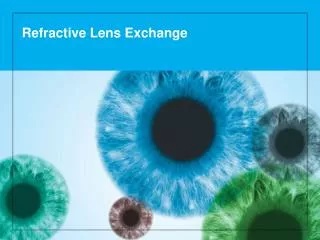
Understanding Refractive Lens Exchange
Understanding Refractive Lens Exchange


Understanding Refractive Lens Exchange
E N D
Presentation Transcript
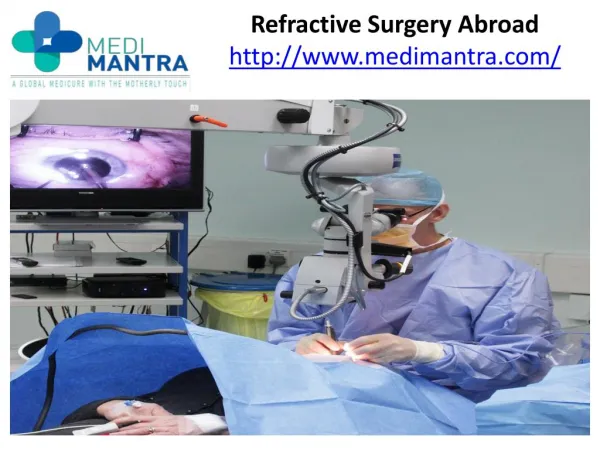
Understanding Refractive Lens Exchange Refractive lens exchange is a vision correction procedure that replaces the eye’s natural lens with an artificial intraocular lens (IOL). It is designed to correct refractive errors such as nearsightedness, farsightedness, presbyopia, and astigmatism, providing long-term visual clarity. Who Can Benefit from Refractive Lens Exchange? This procedure is ideal for individuals over 40 who are not suitable candidates for laser eye surgery. It is especially beneficial for those experiencing presbyopia or early cataract development, offering a permanent alternative to glasses and contact lenses. Types of Lenses Used in the Procedure There are multiple IOL options available, including monofocal lenses for clear distance vision, multifocal lenses for near and far vision correction, and toric lenses designed to correct astigmatism. The choice of lens depends on individual lifestyle and vision needs. The Procedure: What to Expect Refractive lens exchange is performed under local anesthesia and typically takes around 15-30 minutes per eye. The natural lens is gently removed and replaced with an artificial lens, restoring sharp vision without the need for corrective eyewear. Recovery and Healing Process Most patients experience improved vision within a few days. Full recovery usually takes a few weeks, during which patients should follow post-operative care instructions, including using prescribed eye drops and avoiding strenuous Refractive lens exchange. Potential Risks and How to Minimize Them Like any surgical procedure, there are minor risks such as infection, dry eyes, or glare. However, these risks are rare and can be minimized by choosing a skilled surgeon and following proper aftercare guidelines. Long-Term Benefits of Refractive Lens Exchange This procedure provides lifelong vision correction, eliminating the need for future cataract surgery. It also offers greater visual freedom, reducing dependency on reading glasses or bifocals.
Refractive Lens Exchange vs. LASIK: Which Is Better? Unlike LASIK, which reshapes the cornea, this procedure addresses vision problems by replacing the lens itself. It is a better choice for individuals with high prescriptions or age-related vision loss. Choosing the Right Surgeon for the Procedure A qualified and experienced eye surgeon is essential for achieving optimal results. A thorough consultation will help determine the best lens option and ensure a smooth surgical experience. Final Thoughts on Refractive Lens Exchange With advancements in medical technology, this procedure has become a highly effective and safe solution for vision correction. It offers a permanent improvement in eyesight, allowing individuals to enjoy a clearer, more independent lifestyle.