Download
1 / 2
20 likes | 140 Vues
This overview examines the early leadership of the Islamic community following the death of Muhammad in 632 CE, highlighting the first Caliphs, including Abu Bakr, and the significant role of the Umayyad clan. Muhammad, born into the Quraysh tribe, initially faced opposition from the Umayyads, who ultimately recognized his authority. The political landscape shifted with the emergence of Ali, Muhammad's son-in-law, and the subsequent struggles for power among Muslims. This period laid the foundation for the Sunni-Shiite divide still evident today.

E N D
Details on first Caliphs and rise of the Ummayads • Muhammad born into Quraysh tribe in 570. • As Muhammad’s power grew, the Ummayad clan saw him as a threat and tried to kill him. He and his followers fled to Medina in 622. • Eventually Muhammad won over the various tribes in the area, including the Ummayads. • In 632, Muhammad died. Who would succeed him as leader of the growing Islamic community?
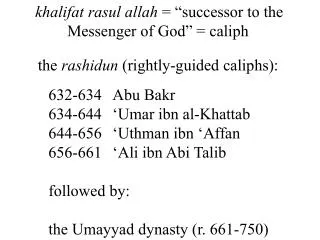
Details on first Caliphs and rise of the Ummayads • The first Caliph was Abu Bakar. • The third Caliph, Uthman, was the first caliph to be chosen from the Ummayad tribe. He was murdered by mutinous warriors. • After his murder, the followers of Ali, Muhammed’s son-in-law, proclaimed him Caliph. The Ummayads rejected this claim. • Battles were fought, eventually the Ummayads gained the upper hand and the title. • Shiites recognize none of the early caliphs except for Ali, Sunnis supported Uthman and the Ummayads.