CCC
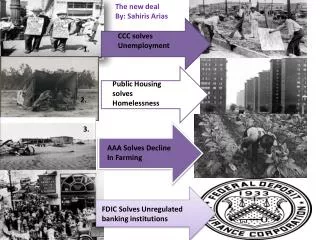
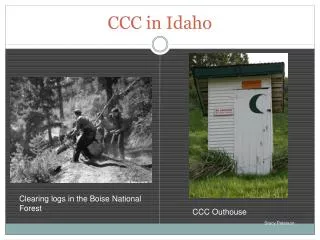
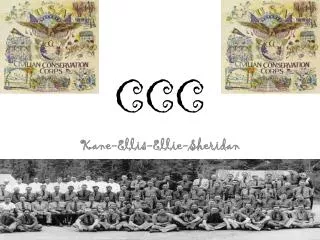
Established between 1933 and 1942 during Franklin D. Roosevelt's first term, the Civilian Conservation Corps (CCC) was a fundamental work relief program of the New Deal. Targeting unemployed young men aged 18 to 26, the CCC aimed to alleviate unemployment through environmental conservation, reducing soil erosion, and enhancing flood control. Enlistment was open to U.S. citizens in good health, with a six-month term at military-style camps. The CCC notably contributed to reforestation, created state parks, and significantly lowered crime rates.


CCC
E N D
Presentation Transcript
CCC Caitlin James, CarrisLahey & Kelly Mui
What? • Civilian Conservation Corps • Established 1933-1942 • During FDR’s first term • Part of New Deal • Work relief program • Alphabet Agency • Targeted unemployed young men • Ages 18 to 26
Goal • Alleviate unemployment • Conservation of natural resources • Prevention of soil erosion • Flood control • Decrease crime rate
How • War department • Agriculture & Interior department • Department of Labor
Requirements • U.S. citizenship • Good health • Unemployed • Unmarried • War veterans allowed • 6 month enlistment term
Camp Life • Military like • Sports • Improved nutrition
Government Role • Increased Federal Spending • More involvement • Safer communities • Educational programs • Segregation/discrimination
Primary Source FDR to Robert Fechner, 27 September 1935 Classification: African Americans Publication: Date: September 27, 1935 Author: Roosevelt, Franklin D. Type: Letter Fechner— In the CCC Camps, where the boys are colored, in the Park Service work, please try to put in colored foremen, not of course in technical work but in the ordinary manual work. FDR
Effectiveness • 55% decrease in crime • $25 sent home • Flood & Fire Control • Reforestation • Natural Resource conservation
FUN FACTS • CCC camps in all states • Peak enrollment in 1935 • 3 billion trees planted • 800 State Parks • ECW • Roosevelt’s Tree Army