Understanding Biological Processes: From Genetics to Ecosystems
This comprehensive guide covers various key concepts in biology, including genetic principles like DNA, alleles, and genetic profiling, as well as ecological interactions such as food webs, chemical impacts on the food chain, and farming practices. It explores critical cycles like carbon and nitrogen, adaptations and competition among species, and methods of temperature and glucose regulation in animals. The importance of evolution, natural selection, and human influences such as drug use and agricultural chemicals are also examined, alongside practical questions for research and investigation.

Understanding Biological Processes: From Genetics to Ecosystems
E N D
Presentation Transcript
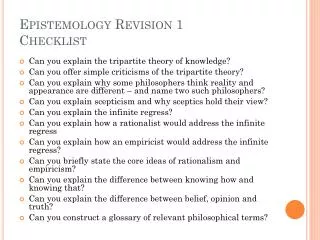
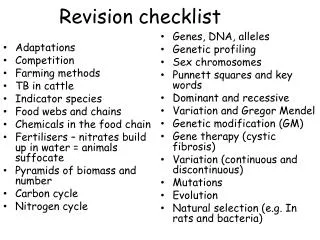
Revision checklist • Adaptations • Competition • Farming methods • TB in cattle • Indicator species • Food webs and chains • Chemicals in the food chain • Fertilisers – nitrates build up in water = animals suffocate • Pyramids of biomass and number • Carbon cycle • Nitrogen cycle • Genes, DNA, alleles • Genetic profiling • Sex chromosomes • Punnett squares and key words • Dominant and recessive • Variation and Gregor Mendel • Genetic modification (GM) • Gene therapy (cystic fibrosis) • Variation (continuous and discontinuous) • Mutations • Evolution • Natural selection (e.g. In rats and bacteria)
Negative feedback • Control of body temperature • Control of blood glucose levels • Plant responses (gravitropism, phototropism) • Diagram of skin • Health: • Drugs • Alcohol • Smoking • Food groups • Drug testing
QWC questions • How did “......................” develop this characteristic over time = • How do nitrates affect aquatic animals? • Temperature regulation • Sweating • Hairs / feathers • Blood vessels How would you investigate the amount of energy in different foods?