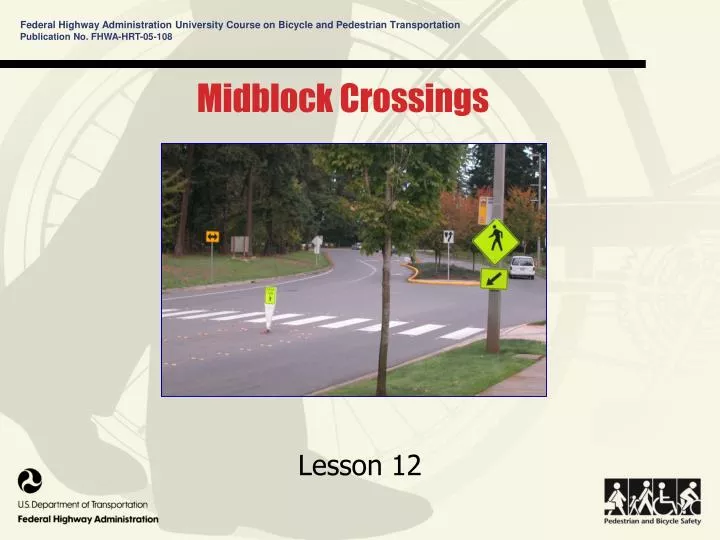

Midblock Crossings
E N D
Presentation Transcript
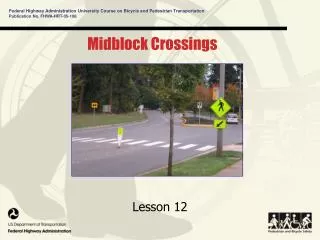
Publication No. FHWA-HRT-05-108 Midblock Crossings Lesson 12
Lesson Outline • Pros and cons of midblock crossings. • Advantages of using medians with midblock crossings. • Design considerations for using medians with midblock crossings. • Where midblock crossings should be allowed.
Where To Use Midblock Crossings • Long distances between intersections. • Churches. • Schools. • Hospitals. • High pedestrian activity locations.
Advantages of Using Medians • Allow more frequent gaps. • Reduce conflicts. • Concentrate pedestrians crossings in one central location. • Cost less to build and maintain.
Potential Issues withMidblock Crossings • High-speed suburban roadways create challenging conflicts. • Motorist do not expect midblock crossings. • Motorist do not always yield at midblock crossings.
Uses of Midblock Crossings • Local roads. • Collector roads. • Arterials with four lanes. • Arterials with six or more lanes.
Design Considerationsfor Using Medians • Connection of desired locations. • Lighting. • Use of same techniques as in lesson 10 (various crosswalk types, signs, signals and markings). • Staggered/offset crossings. • Detection.
Design Considerations for Using Medians • Curb extensions to reduce crossing distance. • Width: 2.4 m (8 ft) desirable. 0.6 m (2 ft) minimum. • Ramps may be needed. • Drainage.
Pedestrian Crossing Examples Sources: Southeast Neighborhood Traffic Management Plan, Vancouver, WA, and Bicycle Facilities Guide: Types of Bicycle Accommodations.
Lesson Summary • Midblock crossings can be an effective part of the overall pedestrian network. • Midblock crossings can be created by using simple designs and logical guidelines.