Patterns of Immigration in U.S. History: Colonial to New Waves (1780-1924)
This overview explores the diverse waves of immigration to the United States, detailing the Colonial immigrants, predominantly English, Scotch-Irish, and German, who sought political and religious freedom and economic improvement. It examines challenges, such as land conflict with Indigenous peoples. The Old Immigration (1780s-1850) saw Irish and German newcomers facing discrimination and contributing to infrastructure. The New Immigration (1850-1924) included Italians, Poles, Russians, and Chinese, driven by poverty and political turmoil. Each wave added cultural richness and faced significant obstacles.

Patterns of Immigration in U.S. History: Colonial to New Waves (1780-1924)
E N D
Presentation Transcript
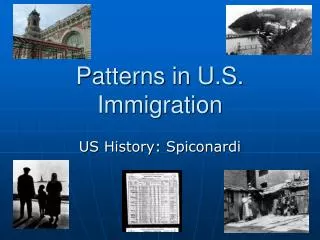
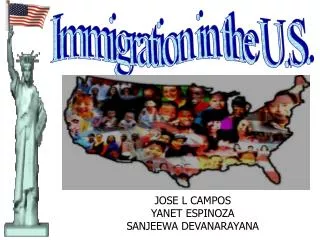
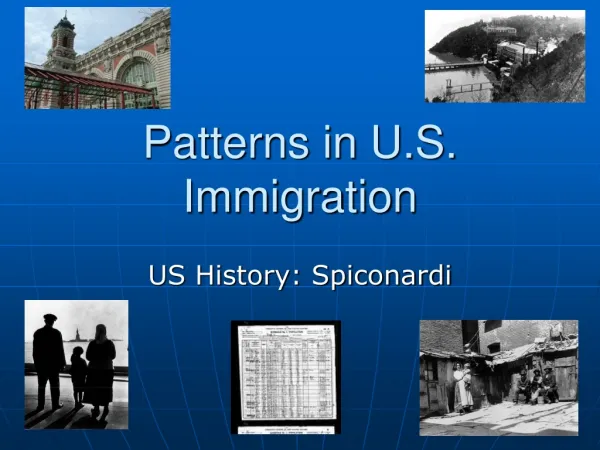
Patterns in U.S. Immigration US History: Spiconardi
Colonial Immigration • The Immigrants • Predominately English • Also Scotch-Irish, some German, Swedish, and Dutch • Africans via the slave trade • Reasons • Political & Religious Freedom • Improvement of economic standing
Colonial Immigration • Difficulties Faced • Conflict over land with Indians • Building of homes/farms in an unfamiliar territory • Contributions • Government = Representative Democracy • Religion = Christianity (Protestantism) • Cultural traditions
Old Immigration 1780s - 1850 • The Immigrants • Northern and Western European • Irish, German, and Scandinavian • Reasons • Irish = Potato famine • German = Political revolution in Germany
“Old” Immigration 1780s-1850 • Difficulties Faced • Irish and German Catholics faced discrimination • US predominately Protestant • Feared Catholics more loyal to pope than USA • Americans feared economic competition posed by immigrants (cheap labor)
“Old” Immigration 1780s-1850 • Contributions • Irish = Helped build railroads, canals, and worked in factories • Germans & Scandinavians = Brought newer farming techniques and kindergarten
“New” Immigration: 1850-1924 • The Immigrants • Italy, Poland, Russia (Jews) • China & Japan
Reasons Farm poverty & job insecurity Available work and land opportunity in America Wars & mandatory military service Political uncertainty & tyranny Democratic political system in United States Religious Oppression Pogroms against Jews Higher standard of living Opportunity for social mobility “New” Immigration: 1850-1924
“New” Immigration: 1850-1924 • Difficulties Faced • Assimilation Process • Loss of native cultural values & traditions • Faced backlash from Nativists • Often violence • Job and housing discrimination • Life in the Ghetto • Tenement housing & unsanitary conditions in the Northeast urban centers.
“New” Immigration: 1850-1924 • Contributions • Italians = masonry • Jews = Young ladies in the garment industry • Poles & Slavs = Coal mines in Pennsylvania • Chinese = Labor on transcontinental railroad in the West