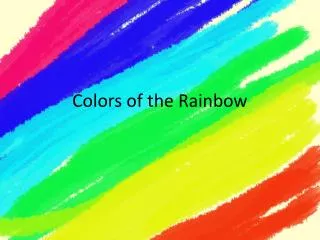
Embrace Colorful Foods for Better Health: The Benefits of Eating the Rainbow
330 likes | 458 Vues
Discover the importance of colorful foods in your diet! This insightful guide highlights how consuming a variety of fruits and vegetables—each representing different colors—can enhance your health. Richly pigmented foods contain potent phytochemicals, antioxidants, and nutrients that support immunity, heart health, and may even reduce cancer risks. The guide explains the benefits linked to various color groups—reds, oranges, greens, blues, and whites—and offers tips on maximizing nutrient retention through cooking methods.


Embrace Colorful Foods for Better Health: The Benefits of Eating the Rainbow
E N D
Presentation Transcript
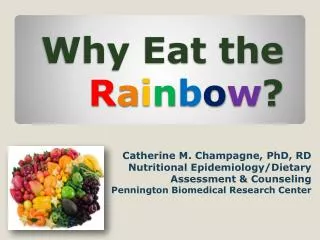
Why Eat the Rainbow? Catherine M. Champagne, PhD, RD Nutritional Epidemiology/Dietary Assessment & Counseling Pennington Biomedical Research Center
Why worry about color? • Think health – think color • The richer the color in foods the more potent natural chemicals they contain.
Eat Colorful Foods!!!! • They contain phytochemicals • The term is generally used to refer to those chemicals that may affect health, but are not yet established as essential nutrients. • Abundant scientific and government support for recommending diets rich in fruits and vegetables. • Only limited evidence that health benefits are due to specific phytochemicals. • Therefore, eat the rainbow!!!
Phytochemicals • Phenols and cyclic compounds • Isothiocyanates and indoles • Resveratrol • Sulforaphane • Zeaxanthin • Ellagic acid • Allicin • Carotenoids • Flavonoids • Lignans • Lutein • Lycopene • Anthocyanins
What can phytochemicals do? • Function as antioxidants • Enhance your immune response • May alter estrogen metabolism • Cause cancer cells to die (apoptosis) • Repair DNA damage caused by toxic compounds • Detoxify carcinogens
Oxygen Radical Absorbance Capacity (ORAC) • A method of measuring antioxidant capacities in biological samples • A wide variety of foods have been tested using this methodology, with certain spices, berries, and legumes rated very highly • High antioxidants from a diet rich in colorful fruits and vegetables is believed to play a role in the free-radical theory of aging (aging better!!)
USDA data on foods with high ORAC scores *measured as Trolox Equivalents
USDA data on foods with high ORAC scores *measured as Trolox Equivalents
Something else to note • With nearly all vegetables, conventional boiling reduces the ORAC value significantly, while steaming retains more of the antioxidants. • So, it is clear that you will get less impact with dried or raw beans following cooking (my guess is about 90% less).
Importance of eating peelings • Ever heard this saying? • Peppy Pearly eats peelings, Droopy Delsey doesn’t • Check out the apple story next
ORAC Food Values *measured as Trolox Equivalents
A Word of Caution • The relationship between ORAC values and health benefits has not been established. • While this information is useful, remember that we need more scientifically controlled studies. • Beware of marketing that suggests their products are #1 in ORAC! • It is not known whether such values are accurate or how absorbable and functional these concentrated antioxidants are in the human body.
The Red Group • They add anthocyanins, betacyanins and lycopenes • Lycopene is a bright red carotene/carotenoid pigment found in tomatoes and other red fruits & vegetables (but not strawberries or cherries)
What about the REDS?? • Red in your diet will help maintain: • A healthy heart • Memory function • Urinary tract health (cranberries) • Lower risk of some cancers
Of the top 20 antioxidant fruits and vegetables, 7 are red: • Strawberries • Cranberries • Raspberries • Cherries • Red grapes • Beets • Red peppers
TheGroup Orange–Yellow • foods are a great source of carotenoids • Beta Carotene is a provitamin A carotenoid, which means it can be converted into Vitamin A. Orange–Yellow
in your diet will… Orange–Yellow • Help maintain: • A healthy heart • Night vision • Healthy immune system • Lower risk of cancer • Antioxidants in fruits and vegetables help prevent cataracts and protect the body from other types of damage from free radicals. orange–yellow
The Foods: Orange–Yellow • Vegetables • Carrots • Sweet potatoes • Yellow potatoes • Pumpkins • Squash • Corn • Yellow peppers • Fruits • Oranges • Tangerines • Grapefruit • Mangoes • Cantaloupe • Apricots • Bananas
The Green Group • Green foods are a great source of lutein and zeaxanthin • Lutein is actually a yellow-orange pigment, but is masked by the chlorophyll in green foods.
The Power of Green Foods • Antioxidants present in greenfruits and vegetables can: • Help prevent macular degeneration • Help prevent cataracts • Can lower risk of some cancers
The Green Group • Kiwi • Green grapes • Honeydew • Limes • Spinach • Green pepper • Broccoli • Romaine Lettuce Found in:
The Blue-Purple Group • Blue-Purplefoods are a great source of anthocyanins and resveratrol • Resveratrol is found in the skin of grapes and is present in purple grape juice and red wine.
The Blue-Purple Group may: • Protect against heart disease • Have anti-aging effects • Prevent urinary tract infections • Have anti-cancer properties
The Blue-Purple Group Found in: • Blueberries • Blackberries • Grapes • Plums • Purple Cabbage • Purple Onion • Eggplant • Purple peppers • Purple Endive
The Group White • foods are a great source of allicin, indoles, and allyl sulfides . • They can help maintain heart health and lower risk of some cancers. White
foods include: White • Onions • Garlic • Cauliflower • Apples • Plantains • Shallots
Color Code’s Top 10 Vegetables: • Red • Tomatoes • Red bell peppers • Orange-Yellow • Carrots • Sweet potatoes • Winter squash • Green • Kale • Broccoli • Spinach • Blue-Purple • Purple cabbage • Eggplant
Color Code’s Top 10 Fruits: • Red • Strawberries • Raspberries • Orange-Yellow • Oranges • Mangoes • Grapefruit • Green • Kiwi • Avocado • Blue-Purple • Blueberries • Concord grapes • Dried plums
Consider Blueberries! • A USDA database reveals that blueberries contain more than a dozen vitamins and minerals in small amounts. • They pack fiber. • And they contain nearly 100 different phytochemicals!!! • Some data suggests blueberries help memory. • Is there more??????