Download
1 / 16
160 likes | 297 Vues
The 1848 Revolutions across Europe marked a pivotal moment in history where nationalism and liberalism clashed with conservative forces. Inspired by Enlightenment ideals, people sought freedom from government restraint and recognized their national identity through common culture and language. Major events included the overthrow of Charles X in France, the successful independence of Belgium, and the collective aspirations of the German states for unification. Although many revolutions failed, they set the stage for future political movements and the reconfiguration of national boundaries in Europe.

E N D
Nationalism Breakdown of the Concert of Europe 1848 Revolutions
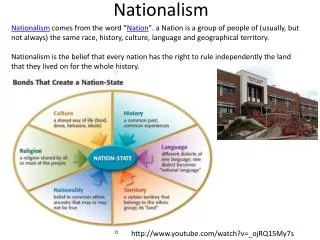
New Forces in Europe • Liberalism – political philosophy – Enlightenment – people should be as free from gov’t restraint as possible • Nationalism – people with common traditions, culture, language began to associate themselves as part of a nation – loyalty to nation, not just to monarch • Some Nationalist revolts do not recognize the rights of other “nations” of people
1830 - FRANCE • Upper middle-class liberals overthrew Charles X because he ignored laws • Created a constitutional monarchy • Belgium revolted against Dutch rule – created independent nation
1848 Revolutions • More liberal, nationalist revolts against the conservative status quo in Europe • France – more economic problems – middle class and workers overthrew constitutional monarch • Second Republic - single legislature, president who served 4 year terms • Universal male suffrage – all adult men could vote • 1st President – Louis Napoleon – Napoleon’s nephew
Prussia - German states • 38 German states – German Confederation – Otto Van Bismarck • Austria & Prussia – most powerful • German people wanted constitution, free press, jury trials • Frankfurt Assembly – constitution for unified German nation • Deputies elected by universal male suffrage • Drafted constitution but German rulers failed to accept it & Assembly had no power to enforce it
Central Europe • Austrian Empire • Numerous nationalities – Germans, Poles, Serbians, Czechs • Metternich dismissed because of protests – March 1848 • Revolutionaries took control of Vienna & demanded a liberal constitution • Hungarian revolutionaries receive independent legislature • Russian Army enters Hungary to end revolt • Austrian Empire regains control
Italian States • Part of Austrian Empire • 1848 revolts • Middle-class liberals and radical democratic revolutions joined forces and succeeded in forming constitutional gov’ts • Competing goals divided liberals and radicals • Conservative forces re-captured power • Austrian Empire crushed revolts by 1849
Legacy of 1848 Revolutions • France – successful - establishes constitutional gov’t • Belgium – successful - national independence • German unification fails • Italian independence fails • Central European peoples fail to win independence from Austrian Empire • Southern European peoples fail to win independence from Ottoman Empire
Crimean War • Russia vs. Ottoman Empire • Russia wanted sea port in Balkans • Austria did not support Russia in war – they were allies under Concert of Europe • Russia failed to win Crimean War and withdrew from European affairs
Group Poster ProjectNationalism • Create a poster about nationalistic revolutions in the country or place your group is assigned. • Information required: • Map with color • Names of revolutionary leaders • Causes of revolts; slogans • How was NATIONALISM defined or used in revolt? • Outcome of rebellion • Countries • Mexico • South America (Peru, Bolivia, Chile, Argentina) • Greece • France • Russia • Italy • Germany • Haiti • Brazil