Discovering Cell Theory: From Leeuwenhoek to Modern Biology
110 likes | 231 Vues
This overview traces the evolution of cell theory, starting with Anton van Leeuwenhoek's observations of microorganisms in the 17th century. Robert Hooke's discovery of the basic unit of life as "cells" in 1665 laid the groundwork for scientists like Matthias Schleiden and Theodor Schwann, who established that all plants and animals are composed of cells. In 1858, Rudolf Virchow added that cells arise only from preexisting cells, cementing the foundational principles of cell theory: all living things consist of one or more cells, they are the basic units of structure and function, and they originate from existing cells.


Discovering Cell Theory: From Leeuwenhoek to Modern Biology
E N D
Presentation Transcript
Leeuwenhoek • 1673-1723 Anton van Leeuwenhoek * described live microorganisms observed in teeth scrapings, rain water ,and peppercorn infusions.
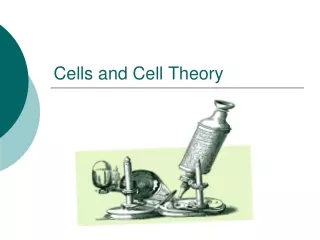
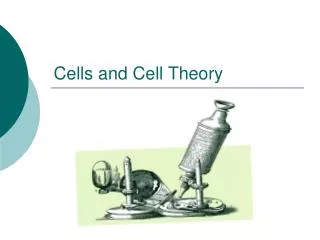
The First Observations • 1665 Robert Hooke • – reported that living things were composed of little boxes or cells.
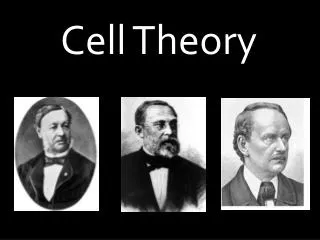
Schleiden & Schwann • Development of the CELLTHEORY • • Matthias Schleiden (1838) – using a microscope proposed that all plants are composed of cells • • Theodor Schwann (1839) – using a microscope proposed that all animals are composed of cells • • Together they stated: • – Cells are the elementary particle of all living organisms • – All cells are alive – independent to the organisms to which they belong
Virchow • • 1858, Rudolf Virchow • said cells arise from preexisting cells.
Cell Theory Cell Theory • 1. All living things are composed of one or more cells • 2. Cells are the basic units of structure and function in an organism • 3. Cells come only from the reproduction of preexisting cells * Named for the Monk prayer cells
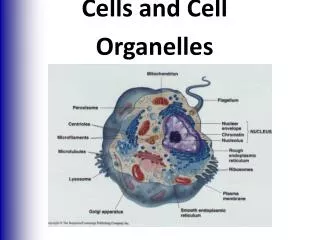
Cells • Eukaryotic versus Prokaryotic Cells • • Prokaryotic - Cells lacking a nucleus. • • Eukrayotic - Cells containing a nucleus. Organelles - Membrane-bound bodies found within eukaryotic cells.
Types of Cells • Two Basic Types of Cells • Prokaryotes: prounounced: pro-carry-oats • Eukaryotes – Proun: you-carry-oats
Eukaryotes Eukaryotes • Larger more complex cells that make up most familiar life forms: • plants, animals, fungi, algae • Surrounded by a cell membrane made of lipids
Prokaryotes • Smaller • No true nucleus – loose genetic material • Includes Archaea & Bacteria