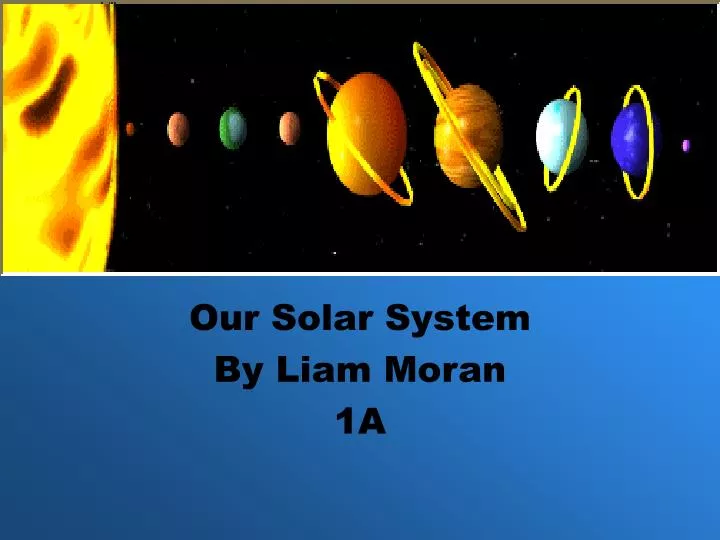
Our Solar System By Liam Moran 1A
100 likes | 215 Vues
Dive into an intriguing overview of our solar system with this engaging exploration of the eight major planets, plus Pluto. Learn about Mercury, the closest planet to the sun, and its rocky surface, alongside Venus and Earth, both also rocky planets. Discover gaseous giants like Jupiter and Saturn, the vastness of Uranus and Neptune, and the distant dwarf planet Pluto. Uncover fascinating facts, such as how long each planet takes to rotate on its axis and their visibility from Earth. An exciting read for astronomy enthusiasts of all ages!


Our Solar System By Liam Moran 1A
E N D
Presentation Transcript
Our Solar System By Liam Moran 1A
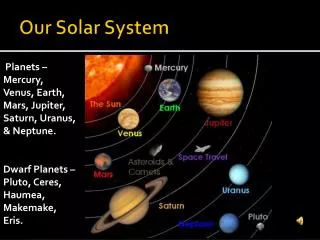
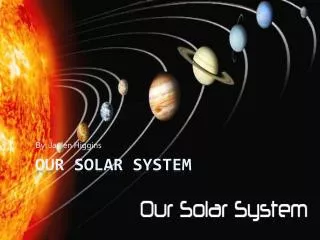
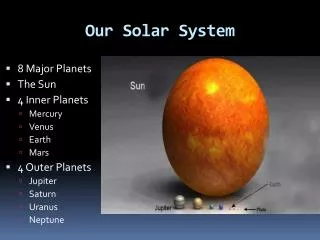
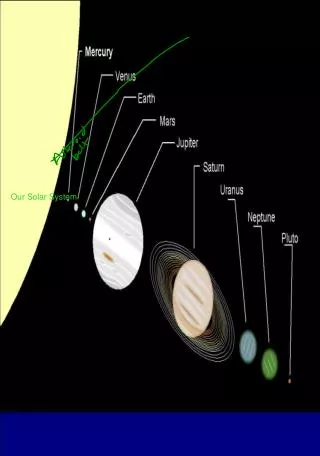
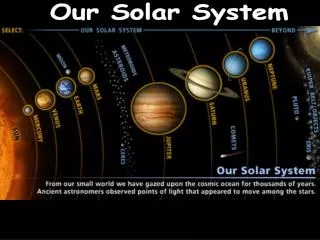
mercury Mercury is the closest planet to the sun. Mercury is a rocky planet. Mercury does not have a ring on it. You can see Mercury with the naked eye.
venus Venus is the 2nd planet from the sun. Venus can be seen with the naked eye. Venus is a rocky planet. Venus turns once on it axis every 243 days.
Earth Earth is the 3rd planet from the sun. Earth is a rocky planet. Earth does not have a ring on it.
mars Mars is the 4th planet form the sun. Mars is a rocky planet. Mars does not have a ring on it. You can see Mars with the naked eye.
jupiter Jupiter is the 5th planet from the sun. Jupiter has got a ring on it. Jupiter is not a rocky planet. Jupiter is called a gaseous planet.
Saturn Saturn is the 6th planet from the sun. Saturn can not be seen with the naked eye. Saturn is a gaseous planet. Saturn has a ring on it.
uranus Uranus is the 7th planet from the sun. Uranus is not a rocky planet. Uranus can not be seen with the naked eye. Uranus has got a ring on it.
neptune Neptune is the 8th planet from the sun. Neptune is not a rocky planet. Neptune can not be seen with the naked eye. Neptune has a ring on it.
Pluto Pluto is the furthest planet from the sun. Pluto can not be seen with the naked eye. Pluto is considered more like a comet. Pluto spins once on it axis every 6.4 days.