Download

1 / 14
140 likes | 239 Vues
This presentation by Lauren Berry discusses the development of RNA-regulated devices designed to have predictable activities, enabling programmable pathways and circuits. The focus is on two types of expression devices: ribozyme-regulated expression devices (rREDs) and aptamer-regulated expression devices (aREDs). Key findings include the correlation between predicted and observed gene expression levels and the significance of folding in achieving programmable functions. Although promising, the study highlights the lack of detailed descriptions of rREDs and aREDs. The potential applications are vast, including studying natural mRNA activity and controlling engineered pathways.

E N D
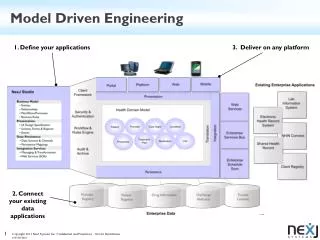
Model-Driven Engineering of RNA Devices to Quantitatively Program Gene Expression James M Carothers, Jonathan A Goler, DarmawiJuminaga, Jay D Keasling Presented by Lauren Berry April 25, 2012
Goal • RNA-regulated devices with predictable activity • Allow programmable pathways/circuits • Ribozyme-regulated expression devices (rREDs) • Aptamer-regulated expression devices (aREDs)
Identify Functional Designs Impact of Design Variables
Identify Functional Designs Impact of Design Variables
Physical Implementation Design Method
Physical Implementation Folding Characterization
Assembly & Verification Expression Profiles
Assembly & Verification Predicted vs. Observed Expression
Conclusions • Expression mediated by rREDs and aREDs correlated with the predicted levels • Folding was important to programmable function • Functional aREDs and rREDs can be made from component parts
Significance • Program expression of large number of genes Can be used to: • Study natural mRNA activity • Control engineered pathways or circuits • Implement new genetic programs
Concerns • Not much description on rRED/aRED mechanism • Only characterized either rREDs or aREDs, not both • Essential information only in supplemental material
Identify Functional Designs The System