
1 / 8

Analyzing Fiat's Growth Strategy and Marketing Insights

This analysis delves into Fiat's growth strategy using the Ansoff Matrix, highlighting their alliance with Chrysler and its potential to facilitate expansion. It examines Fiat's historical departure from the U.S. market 27 years ago, addressing the reasons behind it. The discussion extends to defining marketing as a decision-making process that anticipates and satisfies customer needs. Key marketing components such as product development, pricing strategies, target markets, and promotional efforts are explored, providing a holistic view of Fiat's approach to operations, finance, and the external environment.
alban
Télécharger la présentation

Analyzing Fiat's Growth Strategy and Marketing Insights

An Image/Link below is provided (as is) to download presentation Download Policy: Content on the Website is provided to you AS IS for your information and personal use and may not be sold / licensed / shared on other websites without getting consent from its author. Content is provided to you AS IS for your information and personal use only. Download presentation by click this link. While downloading, if for some reason you are not able to download a presentation, the publisher may have deleted the file from their server. During download, if you can't get a presentation, the file might be deleted by the publisher.

E N D

Presentation Transcript


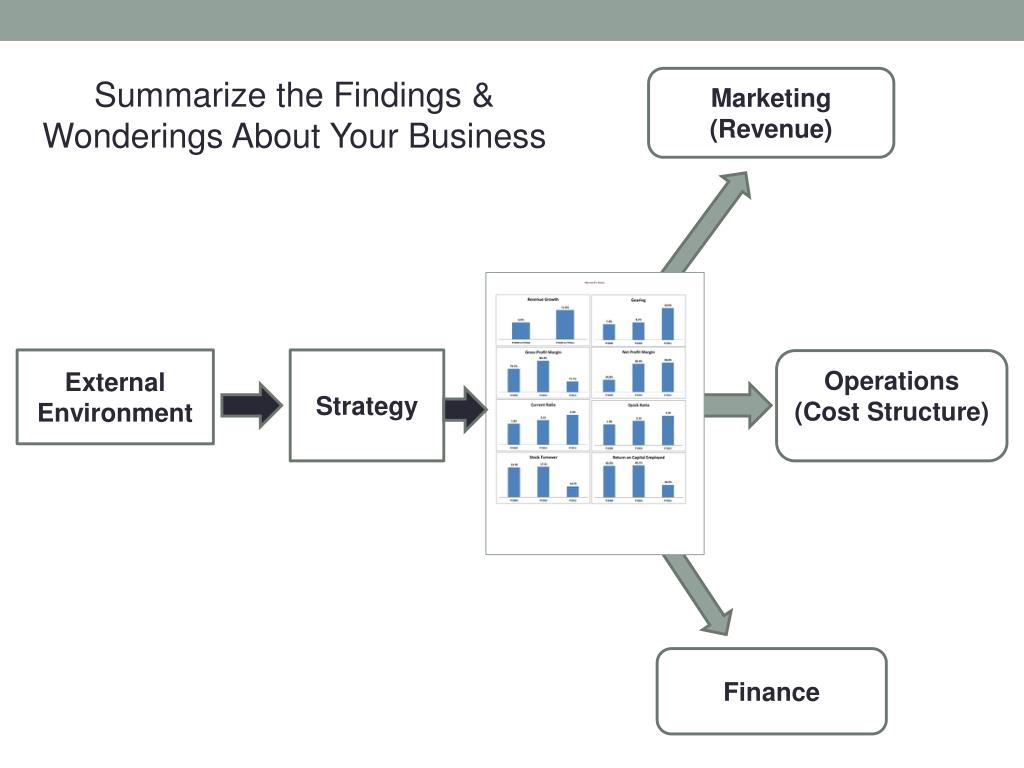
  1. Summarize the Findings & Wonderings About Your Business Marketing (Revenue) External Environment Strategy Operations (Cost Structure) Finance

  2. 4/17 Warm-up • Use the Ansoff Matrix to categorize Fiat’s growth strategy described in the article. • Explain how the alliance with Chrysler will facilitate growth strategy. • Summarize reasons for Fiat leaving the U.S. market 27 years ago.

  3. Marketing (Revenue) External Environment Strategy Operations (Cost Structure) Finance

  4. 3 Major Business Functions

  5. Objectives • Define marketing • Discuss the characteristics of a market.

  6. Marketing is a • Decision making process • Identify customers • Identifies customers’ needs & wants • Anticipates & predicts customers’ future needs & wants • Facilitates exchanges that satisfy customer’s needs & wants

  7. MARKET PLANNING • PRODUCT • Development, Design, Features, Branding, • Mix (“variety”), Packaging • PRICE • Competition-based, Market-based, Cost-based Target Market(s) • PEOPLE • Behavior, Motivation, Training, Attitude, Branding • PHYSICAL ENVIRONMENT • Peripherals, appearance, atmosphere, branding • PROCESSES • Efficiency, payment, customer service, relationship management • PLACE • Channel Management • PROMOTION • Communication & Stimulating Sales • Above-the-line, Below-the-line MARKET INFORMATON MANAGEMENT

  8. Marketing Approaches Product Orientation Market Orientation • Getting customers to buy the products that business feels customers need & want • Market products that can be made • Identify, design, develop and supply products that meet customer’s needs & wants • Market products that can be sold (because customers want them) Product Customer Customer Product

More Related