Electrical Energy and Circuits
80 likes | 199 Vues
This resource covers essential concepts in electricity, including electric charge, static electricity, and electric circuits. It explains the fundamental principles of electric forces, detailing how like charges repel and opposite charges attract. The text also describes electric current as the continuous flow of charges, the components of an electric circuit, and the differences between conductors and insulators. Key aspects, such as the factors affecting resistance, including diameter and length, are discussed, providing a comprehensive overview of electrical fundamentals.


Electrical Energy and Circuits
E N D
Presentation Transcript
Electrical Energy and Circuits N. Sassaman SAMS - 2013
- Electric Charge and Static Electricity Electric Charge http://www.colorado.edu/physics/2000/waves_particles/wavpart2.html • Charges that are the same repel each other. Charges that are different attract each other.
- Electric Charge and Static Electricity Electric Force • An electric field is a region around a charged object where the object’s electric force is exerted on other charged objects.
- Electric Current Flow of Electric Charges • Electric current is the continuous flow of electric charges through a material. http://www.rkm.com.au/animations/animation-electrical-circuit.html
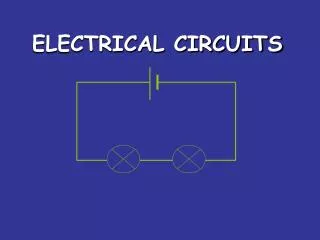
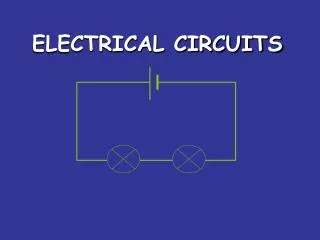
- Electric Current An Electric Circuit • An electric circuit is a complete, unbroken path through which electric charges can flow. • http://www.thetech.org/exhibits/online/topics/12a.html (Read information on a basic circuit, but do not worry about the associated Activity 1).
- Electric Circuits Basic parts of a Circuit Simple symbols are used to diagram a circuit.
- Electric Current Conductors and Insulators • Use the website below to explore the difference between conductors and insulators (at the atomic level). • http://www.thetech.org/exhibits/online/topics/13a_flash.html • Be sure to click on the ‘Explore Some More’ button to see an example of a lab that tests for conductors and insulators (YOU will be writing a lab just like this one!!)
- Electric Current Resistance http://www.thetech.org/exhibits/online/topics/13a_flash.html • Two factors that affect the resistance of water flowing in a pipe are diameter and length. The diameter and length of a wire also affect resistance in a circuit.