Download
1 / 16
170 likes | 282 Vues
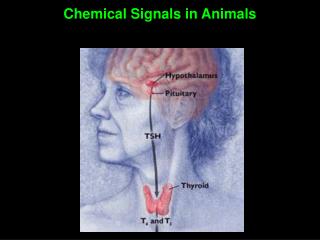
This overview explores the intricacies of the endocrine system, highlighting the roles of hormone-secreting cells and ductless glands. It delves into the hypothalamus-pituitary axis, the release of hormones from the posterior pituitary, and their impact on target cells. Specific focus is given to thyroid hormones T3 and T4, regulating metabolic rate and other physiological functions. Additional insights into hormone control, including the process of ecdysis in crustaceans and the role of brain hormones, enrich the understanding of endocrine signaling in various biological contexts.

E N D
Chemical Signals 2 BIOL 1407
Endocrine Glands • Hormone-secreting cells make up endocrine system • Ductless glands • Secrete into blood • Receptors on target cells
Relationship of Hypothalamus and Anterior Pituitary Hypothalamus
Example: Control of Release of T3/T4 Levels of T3/T4 fall below minimum range Receptor on Hypothalamic Neuron
Thyroid Gland • Calcitonin • Ca regulation • T3 and T4 • Metabolic rate • Other effects: • Nervous • Reproductive • Muscle • Heart & blood pressure • Digestive system • Development • Diagram Credit: US Government, Wikimedia Commons
Control of Ecdysis • Ecdysis in Crustacean: http://www.youtube.com/watch?v=qACc82n6ODE • Photo Credit: Macau500, 2004, Wikimedia Commons
The End Unless otherwise specified, all images in this presentation came from: Campbell, et al. 2008. Biology, 8th ed. Pearson Benjamin Cummings.