Homeostasis
100 likes | 220 Vues
This educational resource explores the concept of homeostasis, focusing on how the body maintains balance in temperature, blood sugar, water, and salt levels. A concept diagram illustrates the roles of various organs and hormones in monitoring and regulating these parameters. The lesson objectives include understanding kidney anatomy and function, with a hands-on dissection activity for students. Key structures like the renal capsule, glomerulus, and nephron are examined, highlighting their roles in filtration and fluid regulation, including the mechanisms of ADH in water management.


Homeostasis
E N D
Presentation Transcript
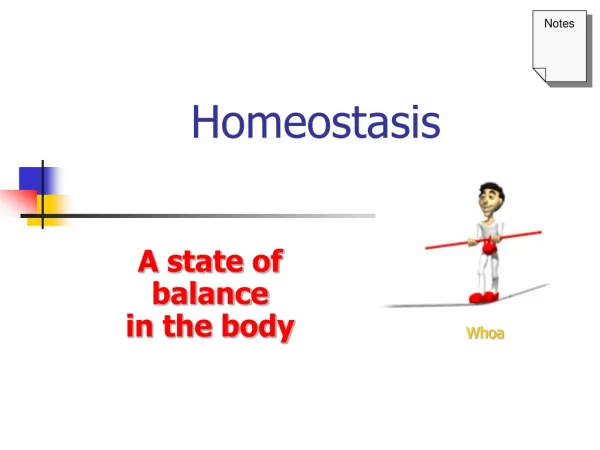
Homeostasis Keeping the body functions in balance
Draw a concept (spider diagram) to show which organs or hormones of the body are responsible for monitoring and fixing the following; • Temperature • Blood sugar • Water • Salt
The Kidney Anatomy and Function
Lesson objectives • Knowledge: Understand the structure and function of the kidney • Skills Learn how to carry out an accurate dissection.
Activity 1 • Work in pairs, with one kidney between two. • Make a sketch diagram of the kidney, labelling the following structures. • Renal capsule, renal vein and artery, ureter, cortex, medulla
Renal Artery • Glomerulus • Bowman’s capsule • Proximal tubule • Loop of Henle • Distal tubule • To ureter
Parts of the Nephron • Renal Artery • Glomerulus • Bowman’s capsule • Proximal tubule • Loop of Henle • Distal tubule • To ureter
How it works • High pressure forces water, urea, ions and glucose into the Bowman’s capsule. • Big molecules, such as proteins stay in the blood. • Sugar is reabsorbed into blood • Sufficient ions are reabsorbed, excess is not. • Sufficient water is reabsorbed depending on levels of ADH. • Excess water and ions and all urea are excreted.
Water regulation • Hypothalamus in brain instructs pituitary gland to release ADH. • Too little water, a lot of ADH so water reabsorbed. Concentrated urine • Opposite for too much water so pale urine. • Dialysis 12-18 hrs week. • Transplant.