

SlideServe
Menu
Préférences
© SlideServe · v2026

Witchcraft

alexander-martin avatar
26 diapositives · 481 Views · Nov 03, 2014

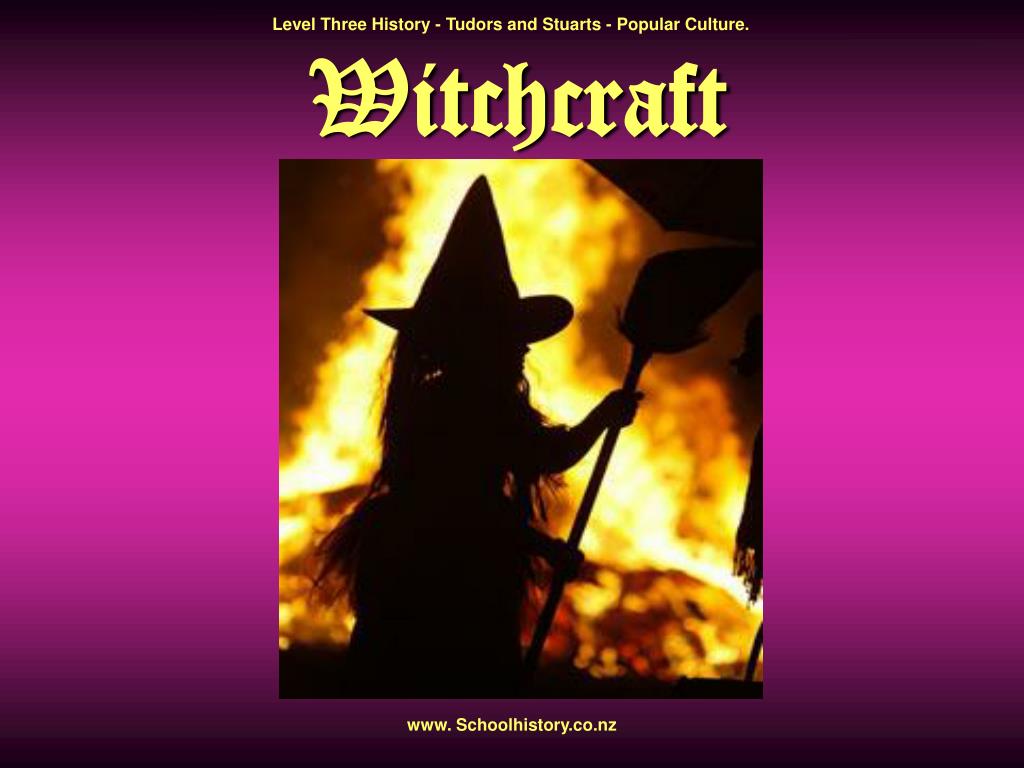
Level Three History - Tudors and Stuarts - Popular Culture. Witchcraft. www. Schoolhistory.co.nz. Historical Context. The Reformation challenged traditional beliefs which had previously been accommodated within the Catholic Church. Martin Luther. 1468. 1521: Animalistic Antichristian
Witchcraft - slide 1
01 / 26Witchcraft
1 / 17

Télécharger la présentation

Witchcraft
Une image / un lien ci-dessous est fourni (tel quel) pour télécharger la présentation

Politique de téléchargement : le contenu du site vous est fourni TEL QUEL pour votre information et votre usage personnel ; il ne peut être vendu, concédé sous licence ni partagé sur d’autres sites sans l’accord de son auteur.Le contenu vous est fourni TEL QUEL, pour votre information et votre usage personnel uniquement. Téléchargez la présentation en cliquant sur ce lien. Lors du téléchargement, si vous ne parvenez pas à télécharger une présentation, l’éditeur a peut-être supprimé le fichier de son serveur.Pendant le téléchargement, si vous ne parvenez pas à obtenir une présentation, le fichier a peut-être été supprimé par l’éditeur.

F I N

Plus de contenu associé

Transcription de la présentation
  1. Level Three History - Tudors and Stuarts - Popular Culture. Witchcraft www. Schoolhistory.co.nz

  2. Historical Context

  3. The Reformation challenged traditional beliefs which had previously been accommodated within the Catholic Church. Martin Luther

  4. 1468

  5. 1521: Animalistic Antichristian Deviant Female Evil Unruly

  6. John Dee Even the monarchs consulted astrologers such as John Dee.

  7. James the First took an active and personal interest in witchcraft.

  8. Matthew Hopkins was the self- appointed Witch Finder General who worked from 1645-1647. He mastered the art of inflicting torture even when it was forbidden. He oversaw some of the most sensational Witch trials in England.

  9. Educated people, especially judges, found it increasingly difficult to accept witch trials and with better education there were fewer and fewer accusations.

  10. Salem Witch Trials 1692

  11. Beliefs

  12. Malevolent –heart Bad words – tongue Evil looks - eye

  13. Don’t offend witches. • Take precautions against them.

  14. Problems dealt with locally: burning thatch, water tests, burning affected animals.

  15. Witches used many methods of inflicting harm upon their community

  16. Witches supposedly had special marks on their bodies and used familiars to do their evil work.

  17. Witches were often just old, unattractive and sometimes mentally retarded. They were considered a drain on community resources and easy victims.

  18. White witches worked for good and were common and easy to find. ‘Cunning Men’ also worked for good in the community.

  19. The elite also believed in witches but that they were more against society as a whole rather than the individual

  20. The Three Witches from Macbeth

  21. Most witches were accused by their neighbours. With little charity available there was often no other way to survive except by begging

  22. Witch trials became ever more popular and many innocent women were faced with death.

  23. Suspected witches were interrogated before they went to trial. They were punished by hanging or burning.

  24. Bibliography • Guiley, Rosemary Ellen, An Encyclopedia of Witches and Witchcraft, Facts on File, New York, 1989. • Reay, Barry. Popular Culture in England 1550-1750, Longman, London, 1998. • Sharpe, J.A. Early Modern England: A Social History, Edward Arnold, London, 1992.

  25. The End