Understanding Aromatic Reactions: Catalyst Influence and Substitution Types
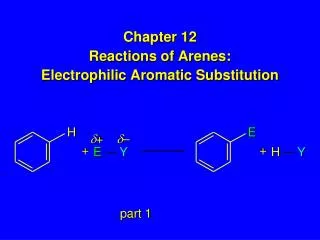
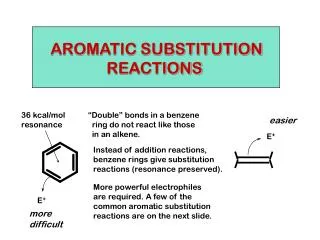
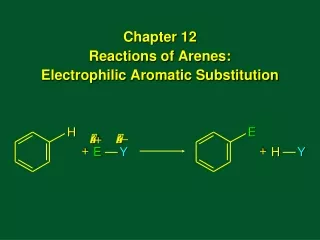
Explore the fascinating world of aromatic reactions, focusing on the unique characteristics that distinguish them from aliphatic reactions. Learn how bonds in aromatic compounds are not strictly single or double bonds, leading to intermediate reactivity between alkenes and alkanes. This overview covers the addition of Br2 with catalysts, the non-reactivity of benzene like typical double bonds, and the use of nitric acid for nitro substitution. Understand why specific catalysts are necessary for alkyl substitutions and their implications for reactivity and product formation.

Understanding Aromatic Reactions: Catalyst Influence and Substitution Types
E N D
Presentation Transcript
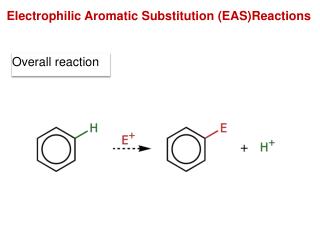
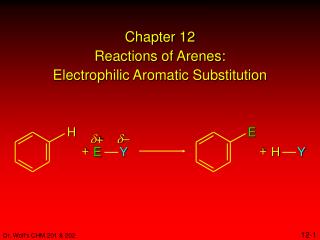
Aromatic Reactions Remember bonds are not true sgl or dbl bonds - intermediate reactivity between alkenes and alkanes
Halide Sub (p28) • Br2 added with _____________ catalyst • benzene will not undergo ________________like dblbonds + Br2 + HBr
Nitro Sub (p28) • nitric acid with _____________ catalyst • multiple sub prefer 1,3,5 positions + HNO3 (xs) + 3H2O
Alkyl Sub. - requires alkyl group to have halogen and an ________________________ catalyst + Benzene 1-chloropropane