Extend your Thinking @ Bishop Justus 6 th Form
90 likes | 229 Vues
In this lesson from Year 12 AS Level English, we delve into the theme of identity in modern literature through an analysis of Carol Ann Duffy's poem "The Woman Who Shopped." We explore various literary techniques such as alliteration, assonance, and symbolism that Duffy employs to convey her message. Students will engage in discussions, paired analysis tasks, and creative activities to enhance their understanding of the poem's themes and social context. By the end of the lesson, students should confidently link their analyses of the text to broader themes of identity and feminism.


Extend your Thinking @ Bishop Justus 6 th Form
E N D
Presentation Transcript
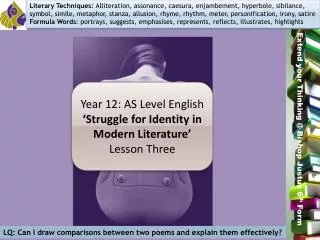
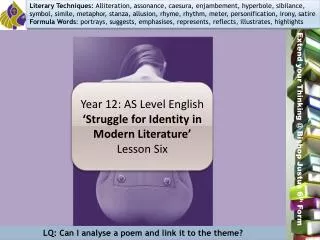
Literary Techniques: Alliteration, assonance, caesura, enjambement, hyperbole, sibilance, symbol, simile, metaphor, stanza, allusion, rhyme, rhythm, meter, personification, irony, satire Formula Words: portrays, suggests, emphasises, represents, reflects, illustrates, highlights Year 12: AS Level English ‘Struggle for Identity in Modern Literature’ Lesson Six Extend your Thinking @ Bishop Justus 6th Form LQ: Can I analyse a poem and link it to the theme? Miss L. Hamilton
Literary Techniques: Alliteration, assonance, caesura, enjambement, hyperbole, sibilance, symbol, simile, metaphor, stanza, allusion, rhyme, rhythm, meter, personification, irony, satire Formula Words: portrays, suggests, emphasises, represents, reflects, illustrates, highlights LQ: Can I analyse a poem and link it to the theme? How much progress will you make today? Outstanding progress: Sophisticated analysis and confident link to theme and social context using the formula, extended vocabulary and second embedded quotes Extend your Thinking @ Bishop Justus 6th Form Excellent progress: Interesting interpretation and analysis of the poem linking it to the theme and social context Good Progress: Confident analysis of form, structure and language and exploration of feminism and identity in relation to the poem’s message
Literary Techniques: Alliteration, assonance, caesura, enjambement, hyperbole, sibilance, symbol, simile, metaphor, stanza, allusion, rhyme, rhythm, meter, personification, irony, satire Formula Words: portrays, suggests, emphasises, represents, reflects, illustrates, highlights Starter: Paired Activity We are going to play ‘Pictionary’, pick who in your pair is drawing and who is guessing. You have one minute to draw and guess 3 verbs... Extend your Thinking @ Bishop Justus 6th Form LQ: Can I analyse a poem and link it to the theme? Miss L. Hamilton
Literary Techniques: Alliteration, assonance, caesura, enjambement, hyperbole, sibilance, symbol, simile, metaphor, stanza, allusion, rhyme, rhythm, meter, personification, irony, satire Formula Words: portrays, suggests, emphasises, represents, reflects, illustrates, highlights Starter: Paired Activity We are going to play ‘Pictionary’, pick who in your pair is drawing and who is guessing. You have one minute to draw and guess 3 verbs... Extend your Thinking @ Bishop Justus 6th Form Shopping Cooking Cleaning LQ: Can I analyse a poem and link it to the theme? Miss L. Hamilton
Literary Techniques: Alliteration, assonance, caesura, enjambement, hyperbole, sibilance, symbol, simile, metaphor, stanza, allusion, rhyme, rhythm, meter, personification, irony, satire Formula Words: portrays, suggests, emphasises, represents, reflects, illustrates, highlights Introduction: Group Discussions Shopping – why the gender divide? Extend your Thinking @ Bishop Justus 6th Form LQ: Can I analyse a poem and link it to the theme? Miss L. Hamilton
Literary Techniques: Alliteration, assonance, caesura, enjambement, hyperbole, sibilance, symbol, simile, metaphor, stanza, allusion, rhyme, rhythm, meter, personification, irony, satire Formula Words: portrays, suggests, emphasises, represents, reflects, illustrates, highlights Main Task: Paired Analysis Task Read and discuss the poem and answer the following question based on just the two stanzas you’ve been given: ‘What message is Duffy delivering in the poem The Woman Who Shopped?’ (AO2 and 3) Outstanding Progress: Sophisticated communication using the formula, extended vocabulary and second embedded quotation making reference to social context where relevant Ext: Make reference to AO4 Extend your Thinking @ Bishop Justus 6th Form Excellent Progress: Interesting and unique interpretations and analysis Good Progress: Confident and thorough analysis with clear links to theme and social context LQ: Can I analyse a poem and link it to the theme? Miss L. Hamilton
Literary Techniques: Alliteration, assonance, caesura, enjambement, hyperbole, sibilance, symbol, simile, metaphor, stanza, allusion, rhyme, rhythm, meter, personification, irony, satire Formula Words: portrays, suggests, emphasises, represents, reflects, illustrates, highlights • AO2: Demonstrate detailed critical understanding in analysing the ways in which form, structure and language shape meanings in literary texts • Identify relevant aspects of form, structure and language • Explore how writers shape meaning and create effects • Use specific references to texts to support the response Extend your Thinking @ Bishop Justus 6th Form • AO3: Explore connections and comparisons between different literary texts, informed by interpretations of other readers. • Explore links and connections between literary texts • Communicate understanding of the views expressed in different interpretations or readings LQ: Can I analyse a poem and link it to the theme? Miss L. Hamilton
Literary Techniques: Alliteration, assonance, caesura, enjambement, hyperbole, sibilance, symbol, simile, metaphor, stanza, allusion, rhyme, rhythm, meter, personification, irony, satire Formula Words: portrays, suggests, emphasises, represents, reflects, illustrates, highlights Plenary: Self Evaluations Read another pair’s work and then peer assess your own work using the success criteria Outstanding Progress: Sophisticated communication using the formula, extended vocabulary and second embedded quotation making reference to social context where relevant Ext: What can you learn from other people? Extend your Thinking @ Bishop Justus 6th Form Excellent Progress: Interesting and unique interpretations and analysis Good Progress: Confident and thorough analysis with clear links to theme and social context LQ: Can I analyse a poem and link it to the theme? Miss L. Hamilton
Literary Techniques: Alliteration, assonance, caesura, enjambement, hyperbole, sibilance, symbol, simile, metaphor, stanza, allusion, rhyme, rhythm, meter, personification, irony, satire Formula Words: portrays, suggests, emphasises, represents, reflects, illustrates, highlights LQ: Can I analyse a poem and link it to the theme? How much progress will you make today? Outstanding progress: Sophisticated analysis and confident link to theme and social context using the formula, extended vocabulary and second embedded quotes Extend your Thinking @ Bishop Justus 6th Form Excellent progress: Interesting interpretation and analysis of the poem linking it to the theme and social context Good Progress: Confident analysis of form, structure and language and exploration of feminism and identity in relation to the poem’s message