Understanding Volcanoes: Eruptions, Lava Types, and Predictive Indicators
130 likes | 251 Vues
Volcanoes are fascinating geological formations that erupt in two primary ways: quietly or explosively. The type of eruption depends on the viscosity of the lava, which is influenced by its composition. Mafic lava is runny and leads to gentle eruptions, such as those in Hawaii. In contrast, felsic lava is sticky and can cause explosive eruptions like that of Mt. St. Helens. Various volcano types, including shield, cinder, and composite volcanoes, exhibit unique characteristics. Predicting eruptions involves monitoring seismic activity and changes in rock temperature.


Understanding Volcanoes: Eruptions, Lava Types, and Predictive Indicators
E N D
Presentation Transcript
Types of eruptions • Viscosity affects how the volcano will erupt, determined by magma’s composition • Mafic-runny lava, low viscosity, quiet • Felsic- sticky lava, high viscosity, violent • Trapped gases likely to cause explosive eruptions
Quiet eruptions • A. Oceanic form from mafic magma • B. Low viscosity- gases easily escape • C. Example Hawaii
Lava flows • Pahoehoe- least viscous, wrinkly, ropy texture, cools on surface • Aa- more viscous, forms sharp rock when it cools, same composition • Different in texture because of gas content, rate, & slope of a volcano • Blocky lava- most viscous, forms chunky rock when cools, high silica content, solidify on top & liquid beneath
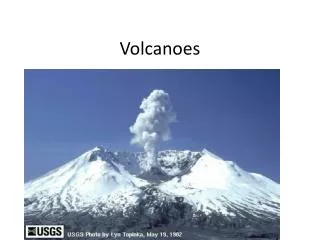
Explosive Eruptions • Occur on continents, felsic lava, Mt. St. Helen • Lava tends to be cooler and stickier • Contain trapped gasses, water vapor, CO2 • Gases send rock into air • Pyroclastic material- fragments of rock that from during volcanic eruption
Types of Pyroclastic Material • Volcanic ash- less than 2mm • Volcanic dust-less than .25mm • Lapilli- little stones- near vent • Volcanic bombs- red hot, spindle shaped • Volcanic blocks- blasted rock, can be size of house
Types of volcanoes • Shield- broad cones, gentle slope quiet eruptions- Hawaii • Cinder- steep slope, explosive, pyroclastic material • Composite- stratovolcanoes, alternating layers of lava and pyroclastic layers, both quiet & violent- Mt. St. Helens • Crater- funnel- shaped pit
Calderas • Circular depression formed by ground sinking & magma chamber empties • From when large amounts of magma is expelled.
Predicting Volcanic Eruptions • Earthquake activity • Small earthquakes • Temperature changes, fracturing rock • Increase in strength & frequency a signal
Patterns in activity • Movement in rock to bulge surface • Knowledge of previous eruptions • Difficult to see patterns because of dormant volcanoes
Two Types of magma • Mafic- rich in Mg, Fe, dark in color, oceanic • Felsic- rich in silica, light in color, continental