radiofrequency-ablation-treatment
0 likes | 0 Vues
Radiofrequency ablation treatment is a minimally invasive procedure designed to provide long-lasting relief from chronic neck, back, and joint pain. This advanced technique uses targeted heat energy to interrupt pain signals from specific nerves, helping patients reduce discomfort without major surgery. Radiofrequency ablation treatment is commonly recommended for conditions such as arthritis, facet joint pain, and nerve-related pain that has not responded to conservative therapies. With minimal downtime and proven effectiveness, radiofrequency ablation treatment offers a safe and reliable sol


radiofrequency-ablation-treatment
E N D
Presentation Transcript
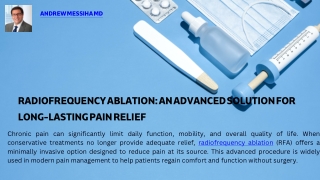
ANDREW MESSIHA MD RADIOFREQUENCY ABLATION: AN ADVANCED SOLUTION FOR LONG-LASTING PAIN RELIEF Chronic pain can significantly limit daily function, mobility, and overall quality of life. When conservative treatments no longer provide adequate relief, radiofrequency ablation (RFA) offers a minimally invasive option designed to reduce pain at its source. This advanced procedure is widely used in modern pain management to help patients regain comfort and function without surgery.
ANDREW MESSIHA MD WHAT IS RADIOFREQUENCY ABLATION? Radiofrequency ablation is a medical procedure that uses controlled radiofrequency energy to interrupt pain signals transmitted by specific nerves. By applying heat generated through radio waves, targeted nerve fibers responsible for chronic pain are temporarily deactivated, preventing them from sending pain messages to the brain. This technique is commonly used for spine-related pain and joint-based pain conditions and is performed with precision to protect surrounding tissues.
ANDREW MESSIHA MD HOW RADIOFREQUENCY ABLATION WORKS IN PAIN MANAGEMENT The effectiveness of RFA lies in its precision. Using imaging guidance, the physician identifies the exact nerve contributing to pain. A specialized probe then delivers radiofrequency energy to that nerve, creating a small lesion that disrupts pain transmission. Because the treatment focuses only on pain-generating nerves, radiofrequency ablation is often incorporated into comprehensive pain management plans alongside physical therapy, rehabilitation, or other interventional treatments such as trigger point injection or peripheral joint injections when appropriate.
ANDREW MESSIHA MD CONDITIONS COMMONLY TREATED WITH RADIOFREQUENCY ABLATION • Radiofrequency ablation is frequently used to manage: • Chronic neck and lower back pain • Facet joint–related spinal pain • Degenerative joint conditions • Pain following sports-related strain or overuse • In patients dealing with persistent discomfort from sports injuries treatment, RFA may be considered when conservative therapies fail to restore function or provide lasting relief.
ANDREW MESSIHA MD CERVICAL AND LUMBAR RADIOFREQUENCY ABLATION Cervical radiofrequency ablation targets pain originating from the neck, often associated with degenerative changes or repetitive strain. Lumbar radiofrequency ablation focuses on the lower back and is commonly used for facet joint–related pain. Both approaches aim to improve range of motion, reduce stiffness, and provide sustained pain relief that supports long-term mobility and daily activity. WHAT TO EXPECT DURING THE RADIOFREQUENCY ABLATION PROCEDURE The radiofrequency ablation procedure is typically performed on an outpatient basis. Patients remain comfortable while the treatment area is numbed, and imaging guidance ensures accurate nerve targeting. The procedure usually takes less than an hour, and most individuals return home the same day. Mild soreness or temporary discomfort may occur after treatment, but this generally resolves as healing progresses.
ANDREW MESSIHA MD RECOVERY, RESULTS, AND HOW LONG RELIEF LASTS Pain relief from radiofrequency ablation is not immediate but develops gradually as the treated nerves stop transmitting pain signals. Many patients experience meaningful improvement within a few weeks. Results can last several months or longer, depending on individual healing and nerve regeneration. During recovery, supportive therapies may be recommended to enhance outcomes and maintain mobility.
RADIOFREQUENCY ABLATION SIDE EFFECTS AND SAFETY Radiofrequency ablation is considered a safe and well-tolerated procedure when performed by trained professionals. Potential radiofrequency ablation side effects are typically mild and may include temporary soreness, swelling, or localized discomfort. Serious complications are uncommon, and careful patient selection ensures optimal outcomes while minimizing risk.
IS RADIOFREQUENCY ABLATION RIGHT FOR YOU? Radiofrequency ablation may be an effective option for individuals who have not achieved sufficient relief from medications, therapy, or injections alone. It is often used as part of a broader pain treatment strategy that may also include therapies such as Botox treatment for muscle-related pain conditions or joint-focused interventions when clinically appropriate. A thorough evaluation helps determine whether RFA aligns with the patient’s diagnosis, goals, and overall treatment plan.
(949) 458-2026 www.andrewmessihamd.com info@andrewmessihamd.com 23521 Paseo De Valencia Suite 204 Laguna Hills, CA 92653 CONTACT US