
Land Use
E N D
Presentation Transcript
Land Use Our urban world Forestry management Parks, Reserves, and Wildlands Agricultural land use
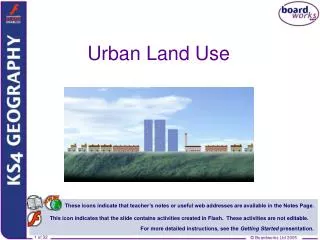
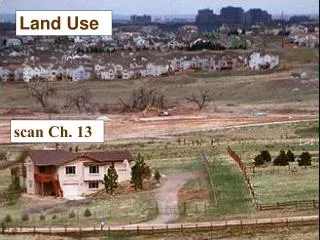
Urban environments • Created due to industrialization • Require resources from other places • Need natural land nearby for • ecosystem services: water, air, waste • escape from stresses of daily urban life • preservation for posterity
Urban environments • Includes larger and larger percentages of the population 1850 – included 15% of US citizens 1920 – included more than 50% of US citizens Now – includes more than 80% of US citizens
Urban Sprawl • Why does this happen? • What are the positive and negative aspects of sprawl?
Examples of livable cities • Chicago area • Portland area
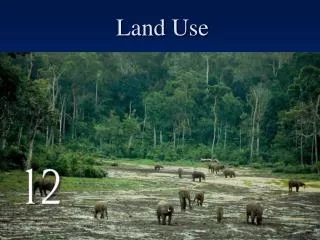
Forest management • Forests provide many resources and services • In US, management practices have changed over time
Westward expansion • Development of resources – forests, minerals, rangelands • Originally there was no land use planning • Deforestation began to occur
Management strategies • Clear cutting vs. selective cutting • Maximum sustainable yield • Ecosystem based management • Adaptive management • Public vs. private land
US Forest Service • Gifford Pinchot • Changing mission • Timber for nation • Multiple use management • Impact of road building
US Forest Service and fires • Changing opinions on management • Total suppression • Let it burn • Prescribed burns • Influence of climate change
US federal parks and reserves • National parks: • Managed by National Park Service • monuments, historic sites, wild and scenic rivers, parks, and recreation areas • Too many visitors? • National forests: • Managed by US Forest Service • Timber harvests • Fire suppression
US federal parks and reserves • National wildlife refuges: • Managed by US Fish and Wildlife Service • Variety of management styles • Preservation (Sevilleta NWR as example) • Active manipulation (Bosque del Apache NWR as example)
Wilderness areas • Should they exist? • Changing values • Resources such as timber, oil, minerals? • States rights? • Wilderness Act of 1964 • Public lands can be set aside • No development allowed
What should parks look like? • Many small or one large? • Protection of biodiversity • Wildlife corridors • What is practical?
Agricultural land use • 38% of land world-wide is agriculturally used • 2/3 of this is pasture land • 1/3 of this is used for crops
Crop production - feeding the world • Industrial agriculture – green revolution • Inorganic fertilizers and synthetic pesticides • Fossil fuels • Genetically modified crops • Monocultures • Removal of wetlands
What about sustainable agricultural practices? • Soil management • Irrigation practices • Targeted fertilizer • Integrated pest management • No-till farming
Livestock grazing • ¼ of world land • Sustainable if at low intensity – think about Tragedy of the Commons • Use of public lands
Some additional agricultural issues • Feedlot agriculture (factory farming) • Aquaculture • Organic farming • Buy local movement
Making cities livable • Planning and zoning • Urban growth boundaries • Smart growth • New urbanism • Transit options • Parks