Understanding the Cardiovascular System: Blood Components and Their Functions
440 likes | 564 Vues
This educational unit focuses on the components of blood and the cardiovascular system. Students will learn about blood characteristics, functions of red and white blood cells, hemostasis, and blood typing. Through various group activities, including using modeling clay and diagrams, participants will explore the formation and roles of blood cells. Additionally, the unit emphasizes practical skills in blood smear analysis and understanding health indicators like blood cell concentrations. By the end of this unit, students will have a comprehensive understanding of how blood functions within the body.


Understanding the Cardiovascular System: Blood Components and Their Functions
E N D
Presentation Transcript
Essential Questions • What are the different components of blood and what are their functions? • How do doctors use blood smears to tell the health of a patient?
Day 1: Blood • Required Readings: • Chapter 11 • Learning Objectives: • Describe the general characteristics and functions of blood • Describe the functions of the different components of blood • Explain the normal concentrations of white blood cells, and what an elevated concentration may mean • Explain the basis of blood typing and why it is important
Starter • What do these following terms mean to you? Discuss with your group. • Red blood cell (erythrocyte) • White blood cell (leukocyte) • Platelet • Sickle cell • Hemoglobin • Antibody • Antigen • Plasma • Time: 10 minutes
Activity 1 • Your group will be given one of the following to act out to the class about red blood cells: • Structure & function • Hemoglobin – structure & function • Where is it produced & how? • Life span & destruction • Normal values & what can make the values increase or decrease • Time: 15 minutes
Activity 2 • Your group will be given one of the 5 WBC’s: • Neutrophils • Eosinophils • Basophils • Lymphocytes • Monocytes • With your group, create a story board that shows how your WBC is formed, and what job(s) it has in the human body • Time: 25 minutes
Activity 3 • Use the modeling clay to describe the process of hemostasis (the stoppage of bleeding) • Be sure to label the different structures involved • Use the cue cards to draw a diagram to coincide with your model • Time: 15 minutes
Activity 4 • We use the ABO blood group to type our blood • Use a diagram to help explain what is meant by antigens, antibodies, and A, B, AB, and O blood types • Time: 20 minutes
Closing • What are 2 new things you learned today? • What is 1 thing you still don’t understand from today’s lesson? • Show to me before you leave
Day 2: Blood Smears • Required Readings: • None • Learning Objectives: • To determine normal white and red blood cell counts • To observe various blood smears • To identify the functions of blood and the cardiovascular system
Starter • Draw a picture of a normal RBC and a sickle-shaped RBC • What is the disadvantage of having sickle-shaped RBC’s? • What is this condition called, and why is it advantageous in some situations? • Time: 10 minutes
Activity 1 • Lab groups? Quick discussion • With your group, you will work through the Blood Smears lab • There are some blood samples to look at on the microscope slides, but the samples you will use for the lab are on the next PPT slide • Time: 45 minutes
Closing • What does an elevated WBC count mean? • How are sickle-shaped RBC different from the regular shaped RBC’s? • Why do people who live at high altitudes have a higher concentration of RBC’s? • What does this mean for people who train long distances then compete in a city that is at sea level?
Day 3: The Cardiovascular System • Required Readings: • Chapter 12 • Learning Objectives: • Identify the parts of the heart and describe their functions • Trace the blood flow through the heart • Describe the structure and function of arteries, capillaries, and veins • Describe how materials are exchanged between blood and interstitial fluid • Describe blood pressure and how it is regulated • Identify the major systemic arteries and veins
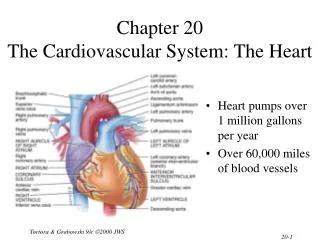
Starter • Describe how blood flows through our body including the lungs, the heart, and body tissues • Bonus: Describe the blood flow through the heart • What materials are dropped off and picked up, and where does it occur? • Use a diagram to help your explanation • Time: 15 minutes
Activity 1 • Read over the instructions for the mammal heart dissection • With your group, locate the external structures on the heart • Begin dissecting. Some of the structures will be difficult to find, but try your best • Throw hearts out and put dissecting pans in the sink • Clean the dissecting utensils you used and put them on the lab bench to dry • Time: 20-30 minutes
Activity 2 • We will watch a dissection video of the cardiovascular system • Write down any questions you have as you watch the video • Write down any interesting or new facts that you have learned • Time: To the end of the lesson
Homework • Bring PE clothes for next lesson
Day 4: Exercise & HR/BP • Required Readings: • None • Learning Objectives: • To design and carry out an investigation • To determine the effects exercise has on heart rate and blood pressure • To research the effects of prolonged physical activity on the cardiovascular system
Starter • Sit quietly for 5 minutes and relax • We will take our resting heart rates, so you need to be as still as possible • We will then try to take our blood pressure • While you are waiting, answer these questions individually: • What are normal resting HR values? • What are normal resting BP values? • What happens to these values after exercise? Why? • What happens to these values in a more fit individual? • Time: 20 minutes
Activity 1 • With your group, design an experiment that will test the effects of physical activity on an individual’s HR • We want to see how long after exercise it takes for our HR to get back to normal • You can decide what type of exercise to do, but the amount of time you will exercise will be a max of 3 minutes • What to include? • Aim • Hypothesis • Variables (Controlled, Independent, Dependent) • Materials • Procedure • Data Table • Time: 20 minutes – Show to me before you begin
Activity 2 • Carry out your investigation • You may go into the back room to put the heart rate monitor on • Each group needs to have at least 2 individuals participate • Time: 45 minutes
Homework • Read Chapter 14 • Lab Report – due January 24 • You may choose the method of write up for the lab report, but it must include: • Your lab plan • Background information • Include in this section the effects of regular physical activity on the CV system • Your results • Analysis of your results * Chapter 12 will help you with your report
Day 5: The Respiratory System • Required Readings: • Chapter 14 • Learning Objectives: • List the parts of the respiratory system and describe their functions • Describe the mechanisms of breathing • Describe the various respiratory volumes and explain the significance of each one • Describe the neural control of breathing • Identify the factors that influence breathing and explain how they produce their effect • Describe the mechanisms of gas exchange in the lungs and body tissues • Describe how oxygen and carbon dioxide are transported in the blood
Starter • List as many of the organs in the respiratory system as you can • For the organs you listed, what is their function? • Share your ideas with another group • Time: 10 minutes
Activity 1 • Make flashcards for the following structures: • Lungs • Diaphragm • Alveoli • Heart • Vein • Artery • Capillary • Ribcage • The front should include a picture, and the back should include a description and function of the structure • Your picture can come from the internet, or be hand-drawn • Time: 30 minutes
Activity 2 • Create a flow chart that describes the process, mechanics and the factors that influence breathing • Time: 20 minutes
Activity 3 • Use a diagram to help explain how carbon dioxide and oxygen are transported throughout the blood and how gas exchange occurs • Time: 30 minutes
Homework • Lab report – HR & Exercise – due January 24 • Work from today to be handed in on Friday
Day 6: Lung Capacity • Required Readings: • Chapter 14 • Learning Objectives: • Describe the mechanisms of breathing • Describe the various respiratory volumes and explain the significance of each one
Starter • What does the term “lung capacity” mean to you? • Do you think we all have the same lung capacity? • If you answered no, what do you think are some things that can increase or decrease a person’s lung capacity? • Time: 10 minutes
Activity 1 • Create a graph that shows the respiratory volumes for the following values: • Tidal Volume • Inspiratory Reserve Volume • Expiratory Reserve Volume • Vital Capacity • Residual Volume • Total Lung Capacity • Explain what the above terms mean • Time: 20 minutes
Activity 2 • Complete the “Exploring Breath Rates” activity with your group (parts A, B, C, and D) • Put your results on the “Our Breathing Fitness” chart • Record your answers on a separate sheet of paper • Time: 30 minutes
Closing • Is breathing voluntary or involuntary? Explain. • What types of activities lead to an increase in lung capacity?
Homework • All activities from Monday and Wednesday due Friday • Lab report – due Friday • Bring PE clothes for Friday • We will test our lung capacity on Friday as well as another breathing activity
Day 7: Lung Function & Breathing Fitness • Required Readings: • None • Learning Objectives: • Discover how exercise affects the amount of air the body uses for respiration • Use data to calculate respiration rates • Compare breath recovery rates after jogging and sprinting
Starter • Any questions from the last two days? • Quick discussion of what you did over the last two days • Hand in all activities you completed
Activity 1 • Read through “breath recovery” and “measuring breath volume” • As a group, decide which activity you would like to complete • Time: 45-60 minutes
Activity 2 • When you complete the chosen activity, return to your seats and complete the analysis and any graphs you may need to do • Hand this in at the end of the lesson • Time: 20 minutes
Homework • Final project – due on Thursday • You will get the lesson on Tuesday to work on it
Day 8: Disorders of the Cardiovascular and Respiratory Systems • Required Readings: • 12.8 • 14.8 • Learning Objectives: • Describe the common disorders of the heart and blood vessel • Describe the major disorders of the respiratory systems
Disorders to choose from • COPD • Asthma • Bronchitis • Emphysema • Common cold • Influenza • Laryngitis • Pneumonia • Tuberculosis • Pulmonary emoblism • Arrhythmia • Heart murmurs • Myocardial infarction • Arteriosclerosis • Atherosclerosis • Hypertension • Varicose veins • Heart attack