
SlideServe
Menu
Préférences
© SlideServe · v2026

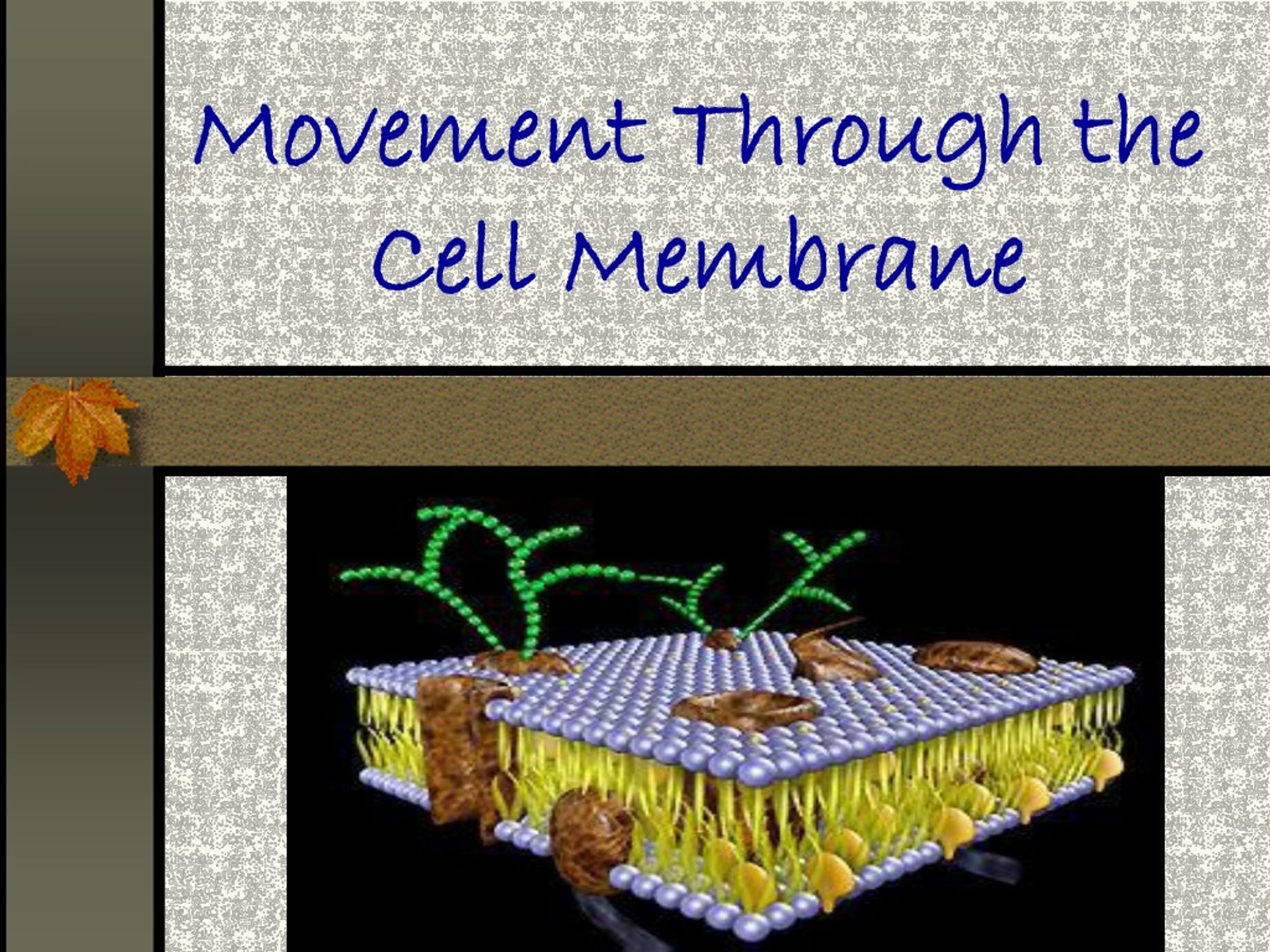
Movement Through the Cell Membrane

anjelita avatar
16 diapositives · 291 Views · Aug 03, 2012

Explore important terms like concentration gradient, hypertonic, and facilitated diffusion. Learn how molecules move across cell membranes through active and passive transport mechanisms.
Movement Through the Cell Membrane - slide 1
01 / 16Movement Through the Cell Membrane
1 / 17

Télécharger la présentation

Movement Through the Cell Membrane
Une image / un lien ci-dessous est fourni (tel quel) pour télécharger la présentation

Politique de téléchargement : le contenu du site vous est fourni TEL QUEL pour votre information et votre usage personnel ; il ne peut être vendu, concédé sous licence ni partagé sur d’autres sites sans l’accord de son auteur.Le contenu vous est fourni TEL QUEL, pour votre information et votre usage personnel uniquement. Téléchargez la présentation en cliquant sur ce lien. Lors du téléchargement, si vous ne parvenez pas à télécharger une présentation, l’éditeur a peut-être supprimé le fichier de son serveur.Pendant le téléchargement, si vous ne parvenez pas à obtenir une présentation, le fichier a peut-être été supprimé par l’éditeur.

F I N

Plus de contenu associé

Transcription de la présentation
  1. Movement Through the Cell Membrane

  2. Important Vocabulary Concentration gradient: Difference in concentration from one location to another. Equilibrium: both sides of the cell membrane have equal concentration.

  3. Concentration Hypertonic: solution with a higher concentration. Hypotonic: solution with a lower concentration. Isotonic: solutions have equal concentration.

  4. Permeability Permeable: substance is able to pass through the membrane. Impermeable: substance is not able to pass through. Semipermeable: membrane is permeable to some substances, impermeable to others.

  5. Is membrane permeable, selectively permeable, or impermeable?

  6. Passive Transport Does NOT require energy. Molecules move down a concentration gradient (high concentration to low concentration). Types: Diffusion Osmosis Facilitated Diffusion

  7. Diffusion Movement of molecules in a liquid or gas down a concentration gradient.

  8. Osmosis Diffusion of water. Ex. sugar water and membrane selectively permeable to water… what will happen? ?

  9. Answer…

  10. Facilitated Diffusion Diffusion across a membrane using carrier proteins.

  11. Factors that Increase the Rate of Diffusion Hotter temperature Higher concentration Small particle size/increased surface area Increase in pressure

  12. Active Transport Molecules are pumped from low to high concentration (against the concentration gradient). Energy is required.

  13. Endocytosis Cell takes in liquids or large particles that are not able to move through the cell membrane. Process: 1. membrane surrounds substance 2. Microfilaments pull membrane, pinches off 2. vesicle forms

  14. Exocytosis Opposite of endocytosis, substances are released from the cell. 1. cell forms a vesicle around substance. 2. vesicle is transported to cell membrane 3. vesicle fuses to cell membrane, contents released.

  15. Application Molecules that are soluble in lipids tend to move across cell membranes more quickly than those that are not. Why?