The Interplay of Art and Science: Insights from Experimental Huts in Urban Malaria Control
This piece explores the connections between art, materiality, and scientific inquiry through the lens of experimental huts used in urban malaria control in Dar es Salaam. It examines the concept of "shuttering" as both a practical and metaphorical device, enabling the trapping of living facts while highlighting haptic experiences in both painting and entomological studies. The writing navigates the relationships between humans, their environments, and diseases, emphasizing the importance of tactile experiences, local materials, and the complex interplay of aesthetics and functionality in public health interventions.

The Interplay of Art and Science: Insights from Experimental Huts in Urban Malaria Control
E N D
Presentation Transcript
Shuttering as Fact-Trap Ann H. Kelly
Urban Malaria Control Programme, Dar es Salaam Public Health Entomology Laboratories, Ifakara Experimental Huts, Lupiro
R.A. Rapley’s Experimental Hut With Shuttering, Notes on Experimental Hut (1961)
Perceiving the lack of something…inspires us to search for an approximating resemblance to fill its place…Analogy, born of the human desire to achieve union with that which one does not possess, is a passionate processes marked by fluid oscillations. Barbara Stafford, Visual Analogy 2001: 133
“As an artist you have to, in a sense, set a trap by which you hope to trap this living fact alive. How well can you set the trap?” Francis Bacon, 1975
Anchors • Materiality • Texture of the brushstroke • Local materials, makeshift design • The Room • Objects and bodies are only given weight and identity in painting by being enclosed (T.J. Clarke 2013: 104)
The Trap A trap is a lethal parody of the animal’s umwelt…it embodies a scenario, which is the nexus of intentionalities that binds these two protagonists together, and which aligns them in time and space. Alfred Gell 1996: 29
Haptic Accidents “Take the subject as the bait...the texture of the painting unlocks the valves of feeling to return the onlooker to reality more violently.” Study for crouching nude, 1952
Entomological Insights Probabilistic Itinerary: • A mosquito will fly into a house • Encounter a host • Be diverted by a bed net • Enter another house • Feed on a human • Feed on livestock
Interior Space • Objects and bodies are only given weight and identity in painting by being enclosed. • T.J. Clarke 2013: 104) Study for a Self Portrait. Seated figure 1973
Proximity without intimacy • Interior imprinted by exterior End of the Line 1953
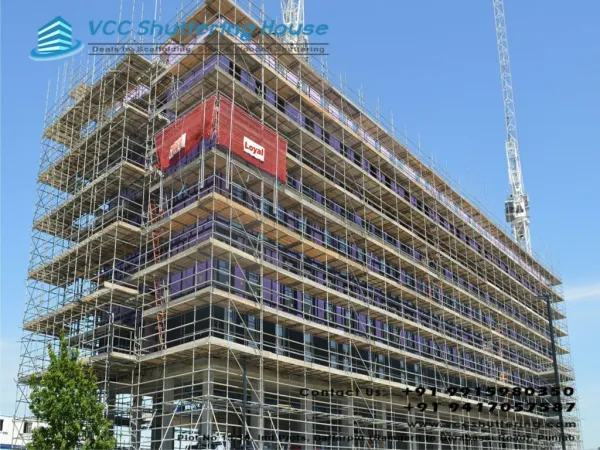
Shuttering • Materiality • Accident renders vital forces visible • Makeshift as machine for surprise • The Room • Operational field that scales disease control • Introduces ambivalences