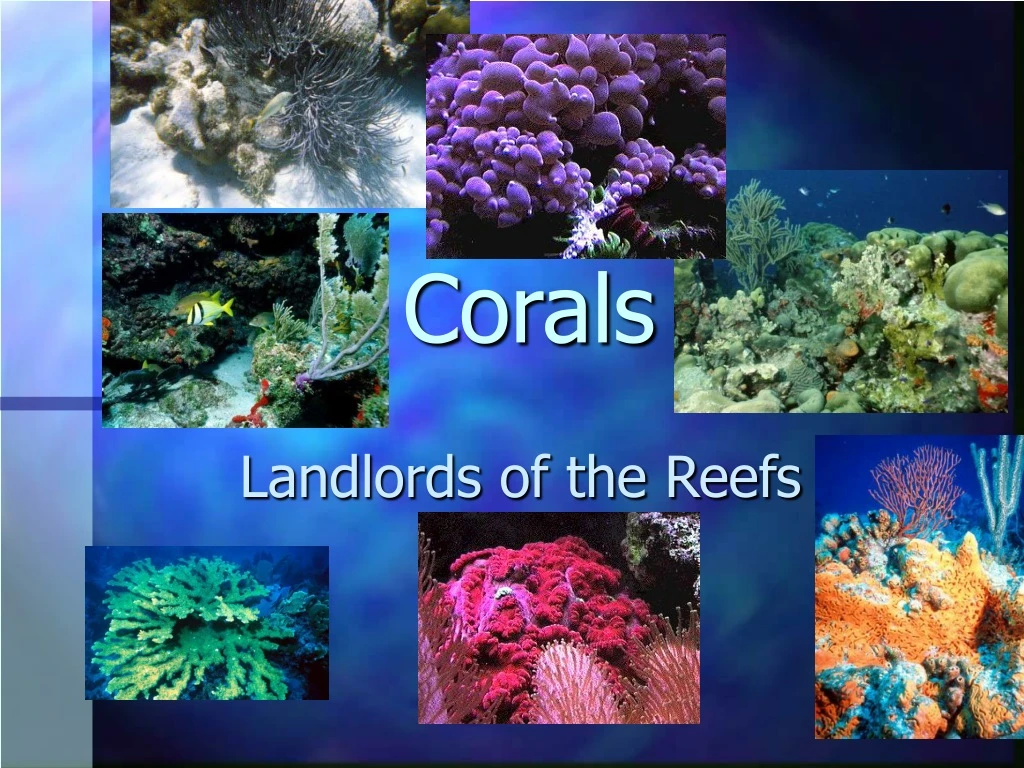

Corals: Landlords of the Reefs
E N D
Presentation Transcript
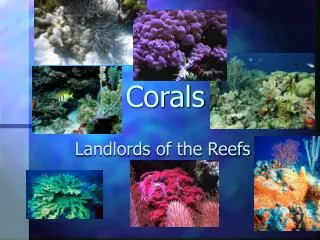
Corals Landlords of the Reefs
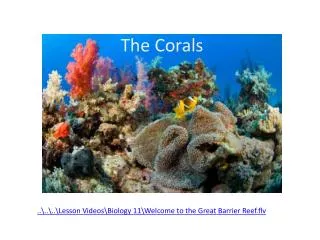
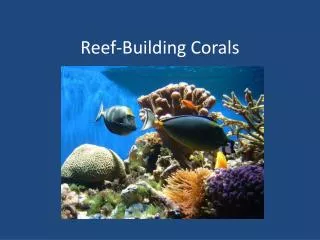
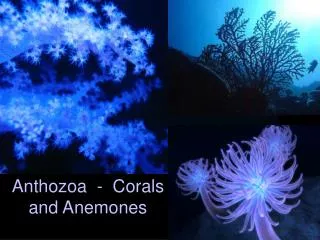
What should you know about corals? • They are animals • Plants live inside of them • Two kinds • Soft corals • Hard corals (These build reefs!) • They are made of tiny polyps (which look like upside-down jellyfish)
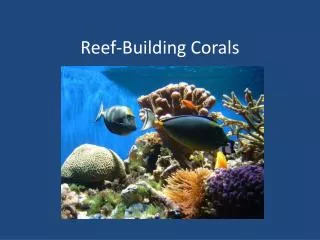
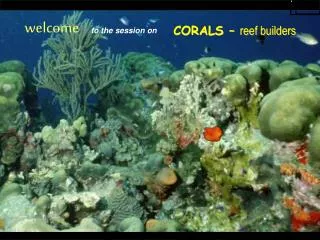
Hard CoralsThe Reef Builders • Polyps build hard limestone cups around their bases • The cups cement together to make a coral colony • Reefs are made of hundreds of hard coral colonies next to and on top of each other
What’s a Polyp? • Tentacles release stinging cells when something brushes by them • Polyps make their own limestone cup to hide in during the day • At night, polyps come out to catch plankton floating by.
Zoo-what!?! Algae, Coral Polyps’ Tenants • Inside polyps live zooxanthellae, which are algae. • Zooxanthellae give corals their color. • Since algae are plants, they use sunlight and CO2 to make food (the process known as photosynthesis).
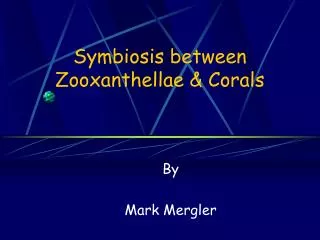
Symbiosis:So Happy Together • Two organisms living together and helping each other is called symbiosis. • Zooxanthellae make oxygen, remove the polyp’s wastes, and make food for the polyp from photosynthesis. • Coral polyps protect the zooxanthellae, release CO2, and provide it with necessary nutrients from their own waste.
Mutually Beneficial SymbiosisA Win-Win Situation • Egyptian Plover bird and crocodile • Bumblebee and flowers • Lichens (fungi and algae) • Your intestine and bacteria
Parasitic Symbiosis A Win-Lose Situation • Tapeworms and intestines • Ticks and dogs • Mistletoe and trees
How are these mutually symbiotic? • Drivers and passengers in a carpool • Tenants and landlords