Evidence of Evolution: Understanding the Development of Modern Organisms
140 likes | 250 Vues
This article explores the compelling evidence supporting the concept of evolution, demonstrating how present-day organisms have evolved from ancestral forms. Key aspects include fossil records that reveal a time sequence illustrating the progression from simple to complex life forms, the significance of transition fossils like Archaeopteryx, and comparative anatomy that highlights shared traits among different species. Additionally, biogeography illustrates how the distribution of plants and animals reflects evolutionary changes post-supercontinent breaks, while comparative embryology and DNA analysis further illuminate evolutionary relationships.


Evidence of Evolution: Understanding the Development of Modern Organisms
E N D
Presentation Transcript
Evidence of EvolutionOutline evidence that present day organisms have developed from different organisms in the distant past
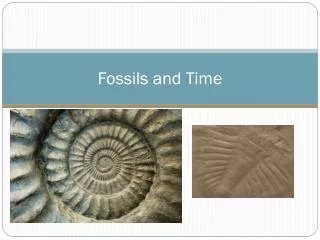
Fossils can be placed in a time sequence to see patterns • Relative dating Law of superposition (generally shows a progression from simple life forms to more complex life forms • Now we can place absolute times on may fossils by Radiometric Dating
Transition fossils Provide a suggested pathway for evolutionary change. Archaeopteryx Birds evolved from reptiles
Skeletons of Crossopterygious (lobed fish) and amphibians show many similarities. Convincing argument for relations • Comparison of present day organisms with fossils of past • organisms show changes that have occurred over time. • Skeletal comparisons are often used as evidence of possible • Lineages.
Biogeography • Is the Study of the distribution of living things. Distribution of similar plants and animals across the world suggests that after the break up of super continents (eg Gondwana), evolution has continued resulting in small changes of species as a result of changes in environmental conditions • Oreocallis: Peru Ecuador, • New Guinea and parts of Australia Embothrium: Chilie, Argentina
Tasmanian Waratah Gippsland Waratah or Victorian Waratah. Northeast NSW New South Wales Waratah. East New South Wales.
Comparative DNA analysis