Download
1 / 5
50 likes | 172 Vues
Poverty is a multi-dimensional issue that varies significantly across different regions. Understanding the balance between relative and absolute poverty is crucial in addressing this challenge. Ecosystem services, food systems, and local livelihoods all play a role in poverty alleviation, but they bring complex trade-offs and power dynamics. This discussion explores the importance of local property rights and community institutions in managing ecosystem services, promoting sustainable tourism, and enhancing local economies through micro-credits and alternative currencies.

E N D
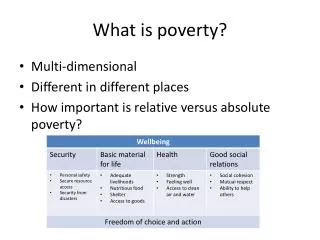
What is poverty? • Multi-dimensional • Different in different places • Howimportant is relative versus absolute poverty?
Ecosystem services and systems thinking Both win-wins and trade-offs: complex situations! Who has the power? Who tells the story about the situation?
Rest of community/ nation/world • Rivers Ecosystem Services • Food systems • Plants • Animals • Transport systems Impacts • Soils Poor community • Livelihood systems Impacts Payment for ecosystem services (e.g. tourism) Services • Food systems • Transport systems • Livelihood systems
Important aspects of creating ESPA: Establish property rights related to ecosystem services in demand, e g land attractive to tourists or land that could be used for urban farming Support institutions that keep transactions related to ecosystem services circulating on local level rather than send money abroad through global markets. This can include: Training that makes local employment possible Establishment or development of local banks that can support: Micro-credits that make it possible for small-scale business related to ecosystem services to enter markets Establishment of barter systems or local currencies