The Counter-Reformation
290 likes | 526 Vues
The Counter-Reformation. Chapter 15 Section 4. Key Terms. Counter-Reformation Jesuits Ignatius of Loyola Council of Trent Charles Borromeo Francis of Sales Teresa of Avila. Reforming the Catholic Church. Protestants not the only ones dissatisfied Catholics also upset


The Counter-Reformation
E N D
Presentation Transcript
The Counter-Reformation Chapter 15 Section 4
Key Terms • Counter-Reformation • Jesuits • Ignatius of Loyola • Council of Trent • Charles Borromeo • Francis of Sales • Teresa of Avila
Reforming the Catholic Church • Protestants not the only ones dissatisfied • Catholics also upset • Counter-Reformation- series of reform in the Catholic Church
Early Reformers • Girolamo Savonarola- monk preached fiery sermons against the church in the 1400’s • Called on church to melt down its gold and silver to buy bread for the poor
Early Reformers • Convinced people to burn jewelry and trinkets • “The bonfire of the vanities” • First allowed by the pope • Pope Alexander excommunicated Savonarola • 1498 executed in Florence
Jesuits • Jesuits- society of Jesus, religious order to reform the church • Ignatius of Loyola founded Jesuits in 1534 • Nobleman, soldier • While recovering from an injury read books on saints • Became a soldier of God
Jesuits • Father general- ran it like a military institution • Emphasized obedience to the church • Concentrated on education to combat the Protestants • Established missions, school, and universities • Effective organization, gained ground on Protestants
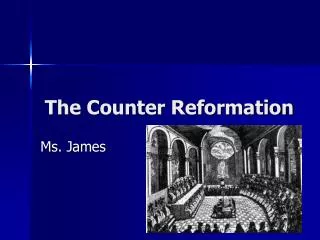
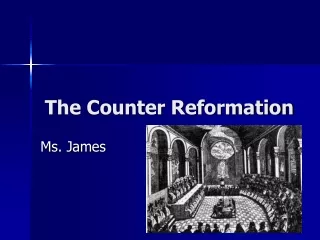
Council of Trent • Paul Pope III in 1545 called the council • Need to redefine the doctrines of the church • Examined criticisms by the Protestants and Catholics • Clarified Catholic teachings on certain points
Council of Trent • Reforms addressed the corruption of the clergy • Training of priests • Financial abuses • Indulgences were abolished • Rejected Protestant’s emphasis on self-discipline and individual faith
Council of Trent • Church could help believers achieve salvation • Using mystery and magnificent ceremonies to inspire faith • Consistent with the belief of millions • Majority of Europeans remain Catholic
Council of Trent • No compromise between Catholics and Protestants • Bold action boost to Catholicism in Poland • Other parts of Europe return to the Church • Catholics felt renewed energy
Council of Trent • By 1700 Jesuits operated 699 colleges in Italy, Germany, and other places • Future leaders educated in Jesuit schools • Order had an influence over public affairs • Worked in India, China, and Japan
Reforming Catholics • Charles Borromeo Archbishop of Milan • Decisive steps to implement reform • Build new schools to educate priests • Francis of Sales • Founded a religious order for women • Returned Calvinists to the church through missionary work
Women and the Church • Women took on more roles • Before Renaissance they lived in secluded convents • 1543-Italian nun Angela Merici began Saint Ursula Company for teaching girls
Women and the Church • Jane of Chantal formed an order to teach girls to become teachers • Schools throughout Europe • Work denounced by anti-Jesuits and the Church as dangerous
Women and the Church • Teresa of Avila • Age 20 ran away to a convent • Thought rules were too lax • Followed her own strict rules fasting, sleeping, and prayer • Reformed the Carmelite order • Had visions of Christ • Her faith inspired many to stay in the Church
The Inquisition • Roman Inquisition in 1542 to fight Reformation • Popes increased the Inquisition’s powers • Accused Protestants of witchcraft and breaking the law • Spanish monarchs set up a tougher one in 1478
The Inquisition • Used it to convert Jews, Muslims and later Protestants • Index of Forbidden Books- to stamp put rebellion • People not to read books on the list • Lose their souls • Torture and execution damaged the Church’s image
Changes in Religion • Renewed zeal spread Catholic faith to other continents • North America- and elsewhere softened the harsh colonial rule • Protestants broke away from the Catholic Church and formed many factions
Changes in Religion • Discord and rifts between Protestants • Luther and followers denounced Anabaptists and Zwingli’s followers • John Calvin disapproved of some of Luther’s ideas • Luther’s these opened the door to religious freedom
Persecution and Hysteria • Luther and Catholics viewed Jews as heretics • Spain forced conversion or they had to leave • Jews resettled in eastern and southern Europe • Some areas they were forced to live in certain areas • Called a ghetto
Persecution and Hysteria • Ghettos were walled and their gates closed at night • People feared witches roamed the land • Fears increased during hard times • Witches were rounded up and tried • 1580-1660 thousands tried and executed as witches • Mostly women and the poor
Political Effects • Rising sense of nationalism • Protestant Reformation encouraged formation of independent states and nations • Rulers and merchants wanted less church involvement • Political power separated from churches
Italian Wars • Italy bounced between two powers • Sack of Rome by Spaniards and Holy Roman Emperor Charles V in 1527 • Italian wars ended in 1559 • Expanded the Italian Renaissance
Italian Wars • Artist from Italy fled north bringing new techniques • Troops returned carrying new ideas
Conflicts among Germans • Unhappy with high taxes, lack of power, new ideas • Peasants unhappy • Reformation preachers were backing idea of freedom • 1524 tens of thousands German peasants stormed monasteries
Conflict among Germans • Martin Luther accused of the unrest denounced it • Luther’s refusal to back peasants prevented the Reformation from spilling into a social revolution • Holy Roman Emperor Charles V wanted to turn back Protestantism
Conflict among Germans • 1546 war against Luther’s German princes • Peace of Augsburg signed in 1555 • Had religious compromise • Allowed each prince to pick their religion • Subjects had no say in the choices
Conflict between Religions • France the Huguenots, Protestant minority fought the Catholics • Fighting ended when their leader became Catholic • Conversion led to political stability • 1598 Edict of Nantes granted religious freedom to Protestants