The Counter-Reformation
60 likes | 175 Vues
The Counter-Reformation marked a significant movement among Catholics to address the need for reform, reviving the Church's influence and countering the Protestant Revolt. The Council of Trent (1545) was pivotal, abolishing the sale of indulgences, improving clergy training through seminaries, and rejecting individualistic Protestant beliefs. New religious orders, such as the Jesuits, focused on education and service. The Inquisition enforced Church doctrine, battling heresy and controlling dissent. This period also saw increased religious conflict, anti-Semitism, and the spread of religious ideas to new lands, shaping societal attitudes profoundly.


The Counter-Reformation
E N D
Presentation Transcript
The Counter-Reformation Turning Back the Protestant Tide
Main Idea • All Catholics recognized the need for reform. They began to make changes which in some places turned back the tide of Protestant Revolt and renewed Catholic devotion in others. • Essential questions: • What were the main features of the Counter-Reformation and was it a success? • What impact did it have on society?
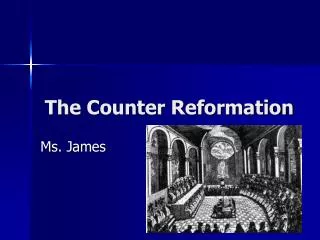
Council of Trent (1545) • Ended sale of indulgences • Clergy training at seminary schools • Rejected Protestant ideas of individual faith • Ritual can help inspire faith
New Religious Orders • Jesuits • Founded by Ignatius of Loyola • Emphasis on spirituality and service & spreading the faith • Education (missions, schools, universities) • Nuns • Now okay to work with poor, orphans, or sick
The Inquisition • Roman Inquisition • Church court • Tried Protestants, witches, & heretics • Spanish Inquisition • Controlled by Spain • Much worse • Index of Forbidden Books • Read a banned book & lose your soul!
Impact on Society • Religious Conflict • Religions spread to new lands (North America) • Anti-Semitism increases • Ghettoes – Jews forced to live in certain section • Witchcraft hysteria