Innovative LAPS for Fine-Scale Solar Energy Forecasting and Cloud Analysis
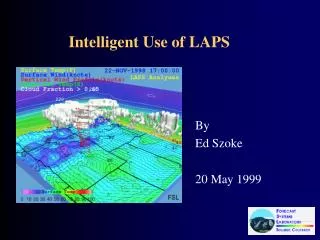
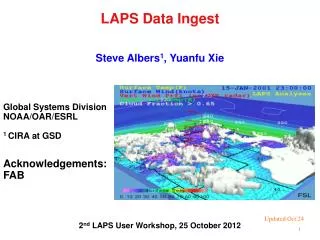
LAPS is a cutting-edge operational system providing unique fine-scale cloud analysis, setting itself apart from NOAA’s offerings. With a multiscale approach and advanced data assimilation techniques at resolutions as fine as 1 km, LAPS excels in forecasting cloud behavior and solar energy metrics. Its 20+ years of technology transfer and a large user community demonstrate its effectiveness and efficiency. Widely adopted across NOAA and internationally, LAPS enhances solar energy proposals by improving short-term solar forecasting through rapid updates and ensemble methods.

Innovative LAPS for Fine-Scale Solar Energy Forecasting and Cloud Analysis
E N D
Presentation Transcript
LAPS: UNIQUE FEATURES • Fine scale operational system at NWS • Cloud permitting scale - No match within NOAA • Multiscale approach • Data assimilation at fine resolution, e.g. 1km, comparing to HRRR’s 13km data assimilation. • First of its kind internationally • Long (20+ yrs) history of technology transfer • Many DA systems adapting LAPS cloud analysis • Efficiency • Very fast, allows very frequent updating • Portability and ease of use • Widely used / installed at sites within NOAA, US, Internationally • Large user/developer community (150+ users) • Leadership in technology transfer
LAPS FOR RENEWABLE ENERGY • A unique fine scale cloud analysis • Showing high quality cloud forecast, specially 0-3h. • Contribute to Solar Energy proposal for DOE • User metrics for Solar Energy • Improved methods for 0-6 hour Solar Energy forecasting • Very fine scale data assimilation, numerical modeling, ensemble methods • Optimal use of forecast information • Use of ensemble forecasts in operational & economic decision making • Many institutions approached FAB for proposals using LAPS for solar energy applications
Global Horizontal Irradiance Analysis + Observations 3-Frames at 15-minute interval Utilizes GOES imagery and 3-D cloud analysis allowing rapid 1-3km resolutionupdate
Solar Radiation Analysis (GHI) Verification HWT Domain Analysis (72 hour time series) ~100 Oklahoma mesonet stations. Partly Cloudy Days
Global Horizontal Irradiance (GHI) Forecast • Generated from LAPS initialized WRF model • “Hot-Start” procedure used to help get clouds into model • Vertical Velocity / Horizontal Divergence • Temperature / Height Adjustment • Hydrometeor Assimilation • Consistent Water Vapor Fields OAR/ESRL/GSD/Forecast Applications Branch 5
GHI Forecast 0-60 minutes 10-min Time Steps 1.7km Domain Resolution Observed Forecast
Simulated IR Satellite Forecast Observed / 15 mins Forecast • Helps show forecast behavior of low & high clouds • Simulated VIS also available – derived from cloud amount • Developingobjective cloud and solar forecast verification