Enhancements to MPLS Fast Reroute: Streamlined Backup Route Objects
This draft outlines significant improvements to MPLS fast reroute through the introduction of two new RSVP objects: the Backup Record Route Object (BRRO) and the Backup Explicit Route Object (BERO). These objects enhance scalability and operational efficiency by optimizing detour path merging and facilitating distributed detour computation. The draft addresses key issues such as object length management and interoperability between areas. Future steps include performance evaluations and potential working group considerations.

Enhancements to MPLS Fast Reroute: Streamlined Backup Route Objects
E N D
Presentation Transcript
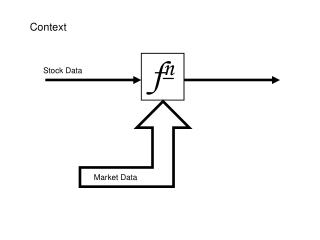
Context • Draft • draft-decnodder-mpls-ero-rro-fastreroute-02.txt • S. De Cnodder, R. Cetin, S. Van den Bosch, A. Atlas • first discussed at IETF53 (Minneapolis) • defines two RSVP objects: • BRRO: backup record route object • BERO: backup explicit route object • Relation to IETF WGs • MPLS: it is about MPLS fast reroute • References • draft-ietf-mpls-rsvp-lsp-fastreroute-01.txt • Relation to requirements • Improves scalability of detour LSPs by a more optimal merging such that the merging nodes are close to the PLRs.
Issue 1: Support of distributed detour computation • BRRO gives path of detour to upstream PLR • upstream PLR can calculate path that merges fast with detour of downstream PLR • BERO can use loose hops • Path determination still relies on local computation BRRO = F-D B C D S A F E G
Issue 2: Object length • BRRO no longer used to make complete LSP path (+ detour paths) visible at ingress node • NMS can query each PLR using SNMP to make LSP path visible • 1 detour path in BRRO is sufficient (the path of the detour established by the immediate downstream PLR) • BERO “compressed”: • only specify relevant nodes (e.g., merging nodes) • most parts of the path are the same for multiple detour LSPs: do not repeat the same information more than once • do not specify the paths of detours that cannot merge with others
area 1 area 0 BRRO = F-D B C D A F E G BRRO = F-D E can calculate more optimal path Issue 3: Operation with inter-area LSPs • Inter-area primary LSP establishment techniques not completely stable • However, • BERO works for inter-area case • BRRO is now passed with the detour setup messages allowing it to be used by downstream nodes • Example: BRRO gives path in area 0 which can be used by the ABR(not in draft because we first need to know how inter-area LSPs are established.)
Next steps • Implementation • Further investigation of performance gain and label state for different network topologies • Confirm an efficiency/scalability trade-off between bypass and detour • Confirm consistent improvement of BRRO, even if only a single detour is passed • Further comments…? • Request to consider this to be a working group document