Download
1 / 29
290 likes | 402 Vues
Photosynthesis is the process through which organisms convert solar energy into chemical energy in the form of glucose, primarily involving two stages: the Light Reactions and the Calvin Cycle (Dark Reactions). During the Light Reactions, chlorophyll pigments capture sunlight and produce ATP and NADPH. The Calvin Cycle then utilizes these energy carriers, along with carbon dioxide and water, to synthesize glucose. This entire process is vital as it forms the basis of energy for autotrophs and heterotrophs alike.

E N D
The process of converting solar energy to chemical energy (glucose) via 2 steps: 1. ______________ 2. ____________ aka _____________ Involves the use of: • __________ • Chlorophyll a, Chlorophyll b, Carotenoids • _______________________ • ATP, NADH, NADPH & FADH2 Overview
All organisms need _________ • Energy obtained/used by organisms either comes ___________________________ The Light Reactions
Refer to Fig 6-1 bottom of pg 113 • Organisms are classified by how they get energy • ____________ – organisms who capture sunlight and convert it to organic compounds • Make their own food • Get energy ___________ from the source (sun) • _____________ – organisms who get their energy from food • Do not make their own food • Get energy _____________ from autotrophs or other heterotrophs Obtaining Energy
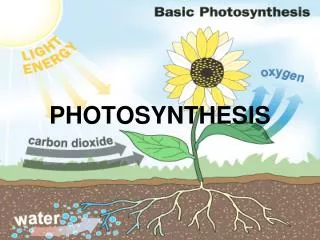
Refer to figure 6-2: Autotrophs and Heterotrophs are connected • Autotrophs _________________________ • Using carbon dioxide, water and light energy • Make organic compounds (glucose) and oxygen • Heterotrophs __________________________ • Using the products of photosynthesis – Organic compounds and oxygen • Break the bonds of organic compounds to get energy and release carbon dioxide and water Overview of photosynthesis
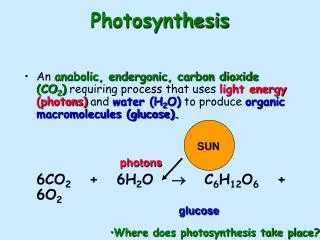
2 reactions of Photosynthesis • Light Reactions • Input: _______________ • Output: _________________________ • NADPH and ATP are E storing molecule • Calvin Cycle aka Dark Reactions • Input: ___________________________ • Output: __________________________ Overall Reaction for Photosynthesis: ______________________________________ Overview of Photosynthesis cont’d
Light Reactions • Named this because it requires the absorption of light • Light is absorbed by organelles in plant cells called chloroplasts • Chloroplasts include: • __________________ • __________________ • __________________ • __________________ • _______________ Capturing light energy
Refer to Figure 6-4 on pg 115 • White light that we see from the sun is actually broken down into various colors • Called the ____________________ • The different colors of light are measured in wavelengths • Each color has a ________________________ • When light hits an object that light can be: • __________________________, or _______________ • Compounds that _____________ are called ___________ • Pigments vary in the wavelengths they absorb from the visible spectrum. Light and Pigments
Refer to Fig 6-5 pg 115 • Pigments in plant cells are found in the thylakoid of chloroplasts • Include: Chlorophyll a, Chlorophyll b, Carotenoids • Chlorophyll a ___________________ • Chlorophyll b and Carotenoids _____________________ • By looking at the figure what can you say about the light that is absorbed by these pigments? Chloroplast Pigments
Converting light energy chemical energy Overall Reaction for Photosynthesis: _____________________________________
Light Reactions • Take place in _________________ • Both the membrane itself and the space inside • Refer to fig 6-6 pg 116 • Steps of Light Reactions • _______________ • _________________________ (of PSII) • _______________ • _________________________ (of PSI) Converting light energy chemical energy
Steps of Light Reaction 1. Photosystem II • Location: ___________________ • Input: ___________________ • Output: ____________let out to atmosphere and _______________ Converting light energy chemical energy
2. Electron Transport Chain (of PSII) - Location: __________________ - Input: ________________________ - Output: _______ (energy molecule) made from ___________________ - using a concentration gradient (of protons) that turns on ATP synthase in membrane that make ATP - ____________ = an exzyme that makes ATP by adding a Phosphate to ADP Converting light energy chemical energy
3. Photosystem I - Location: _______________________ - Input: ____________ - Output: ____________________ 4. Electron Trasnport Chain (of PSI) - Location: ______________________ - Input: _____________________ - Output: _______________ (energy molecule) Converting light energy chemical energy
From Light Reactions we have gotten: - _________ – let out into the atmosphere - ________ - ___________ Heading into the Calvin Cycle - Moving out of thylakoid into the _______ - Using __________________ as energy to fuel this phase - Also using _________from atmosphere
Converting light energy chemical energy Overall Reaction for Photosynthesis: ________________________________
No light necessary • Uses the _____________ from the light reactions as well as_____ from the atm • Enters through _______ (pores in the leaves) • _______________are formed • Importance: These sugars are used by autotrophs and hetertrophs for energy Calvin cycle
_________ go into the cycle one at a time to react with ________(ribulose biphosphate) Enzyme ___________ helps Result: _________ is formed Step 1: Carbon fixation
Step 2: Converting PGAG3P • Energy from_____ __________ used to change PGA into _______ • Energy molecules are now depleted • NADPHNADP+ • ATPADP • Result: G3P is made • Two G3P molecules can be combined to form _________
Step 3: Restocking RuBP • Using ATP the rest of the ____molecules are turned back into ______ • Result: ___________
_______________________ come and go through small pores in plants called stomata ___________________ loose water/CO2 and O2 at a faster rate and therefore have different ways of making _____________ Alternative pathways
1. __________________ • As light increases the rate if photosynthesis increases • Note: At a certain level of light intensity there is plateau • 2. _______________________ • As CO2 increases so does the rate of photosynthesis • Note: At a certain point there is plateau • 3. _________________ • As temp raises the rate of photosynthesis also raises • At certain temps stomata will close and the enzymes can denature resulting in the rate to decrease Factors that Effect Photosynthesis