Understanding Social Security: Impacts of Baby Boomers and Financial Commitments
This comprehensive overview delves into key concepts of Social Security, including the Baby Boom phenomenon and its long-term effects on the economy. It explores fundamental terms such as “Ponzi scheme”, “debt”, and "intergenerational commitment". Additionally, it addresses the implications of shifting demographics, with Baby Boomers (born 1945-1966) being a significant portion of the population, thereby affecting the sustainability of the system. Key points include the historical context provided by Franklin D. Roosevelt and the challenges posed by longer life spans and fewer working-age individuals to support retirees.


Understanding Social Security: Impacts of Baby Boomers and Financial Commitments
E N D
Presentation Transcript
Vocab • Baby boom-A temporary marked increase in the birth rate, esp. the one following World War II • Debt-money that is owed • Intergenerational commitment-official act that younger must support older people
Vocab (Con’t) • Ponzi scheme-fraudulent investing scam promising high rates of return with little risk to investors. • The Ponzi scheme generates returns for older investors by acquiring new investors. This scam actually yields the promised returns to earlier investors, as long as there are more new investors. • Social welfare state-federal gov’t provides benefits to “less fortunate” at expense of others. • Personal savings accounts-account where depositors earn a rate of interest in return for having restrictions upon how they can access their money
Why Does It Matter? • If you work, you will pay into it. • Largest unfunded liability of economy. • You will be able to collect when 62, if it still exists
Who and When • Franklin Delano Roosevelt (D) • 32nd President • Signed into law Aug. 14, 1935
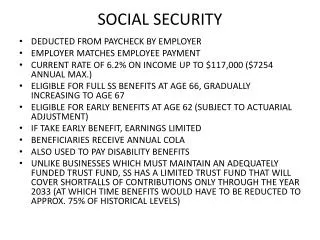
What is it? • old age pension for American workers • Pension-fixed payment to a retired person • Over 62, paid in through 10 years • 6.2% payroll tax on workers, employers • $90,000 annual salary, exempted from tax • Idea that today’s workers pay for tomorrow’s retiree’s
Effects of the Baby Boomers • Baby Boomers-born from 1945 to 1966 • Make up largest portion of population-77 million people born • Not enough people working to pay for them. • People live longer today. • Avg. life span: male-82 years, woman-85 years • Compared to 1935: 77 years old for both.