
Epigenetics Unraveled: The Hidden Code of Genetic Expression
E N D
Presentation Transcript
What is Epigenetics? • Epigenetics = above or in addition to genetics • How do different adult stem cells know their fate? • Myoblasts can only form muscle cells • Keratinocytes only form skin cells • Hematopoetic cells only become blood cells • But all have identical DNA sequences.
What is Epigenetics? • How do different adult stem cells know their fate? • How can identical twins have different natural hair colors? • How can a single individual have two different eye colors?
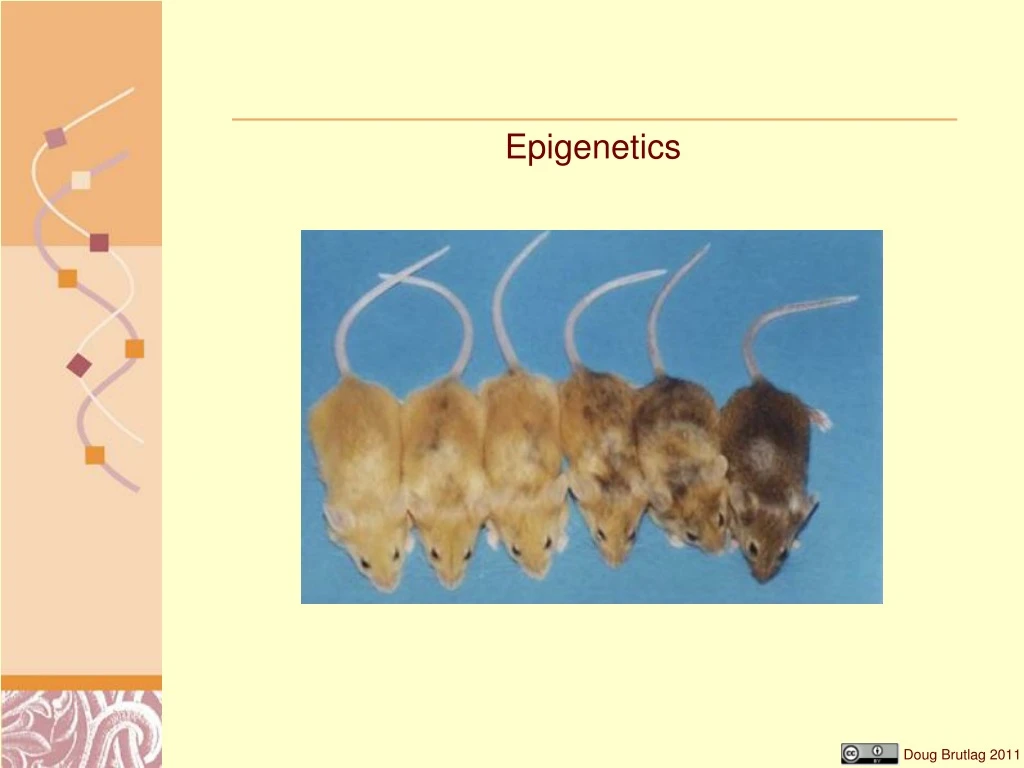
What is Epigenetics? • How do different adult stem cells know their fate? • How can identical twins have different natural hair colors? • How can a single individual have two different eye colors? • How can identical twin liter mates show different coat colors?
Coat Colors of Genetically Identical Agouti Mice Litter Mates
How do different adult stem cells know their fate? • How can identical twins have different natural hair colors? • How can a single individual have two different eye colors? • How can identical twin liter mates show different coat colors? • How can just paternal or maternal traits be expressed in offspring? This is called genetic imprinting.
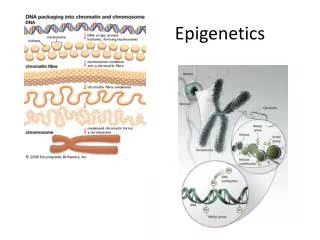
DNA Methylation & Histone ModificationsForm the Epigenetic Code Paula Vertino, Henry Stewart Talks
Environment can Influence Epigenetic Changes Emma Whitelaw, Henry Stewart Talks
Hongerwinter 1944 • German’s blocked food to the Dutch in the winter of 1944. • Calorie consumption dropped from 2,000 to 500 per day for 4.5 million. • Children born or raised in this time were small, short in stature and had many diseases including, edema, anemia, diabetes and depression. • The Dutch Famine Birth Cohort study showed that women living during this time had children 20-30 years later with the same problems despite being conceived and born during a normal dietary state.
Summary of Epigenetic Gene Regulation • Patterns of DNA methylation in adult cells parallels cell fate, chromatin structure and gene activation. • Most DNA methylation is removed at fertilization and re-established during embryogenesis. • Imprinted genes keep their parental pattern of methylation giving rise to parental patterns of expression. • Patterns of histone modifications parallel DNA methylation. • Methylated gene regions are genetically inactive, highly condensed and special histone modifications. • Active gene regions have little DNA methylation and distinctive histone modifications (acetyl groups and H3K4methyl). • X chromosome inactivation in females is correlated with extensive CG island methylation on one chromosome, condensation, inactivation and Barr body formation. • Alterations in gene and CG island methylation patterns are seen in aging and in cancer. • Most CG islands are not methylated except for X chromosome inactivation and tumor suppressors in cancer.