Integrating Passive Thermal Systems: Harnessing Genius Loci and Microclimate in Architecture
This lecture explores the importance of passive thermal systems in architecture as environmental control mechanisms. It emphasizes the influence of genius loci and microclimate on design, highlighting how natural elements like earth, wind, fire, and water dictate building form and materials. Case studies from various locations, including the Marriot Library and Taliesin West, illustrate traditional and modern applications of thermal mass, wind sheltering, and solar exposure. Attendees will learn how to implement these systems to enhance comfort while respecting local ecosystems.

Integrating Passive Thermal Systems: Harnessing Genius Loci and Microclimate in Architecture
E N D
Presentation Transcript
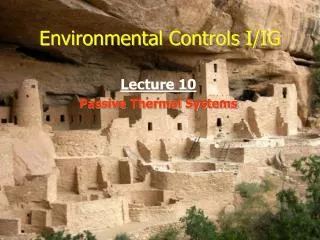
Environmental Controls I/IG Lecture 10 Passive Thermal Systems
Passive Thermal Systems Genius Loci + Microclimate + Vernacular Precedent = Architectural form as an environmental control system
Passive Thermal Systems Genius Loci Environmental Forces • Earth • Wind • Fire • Water
Passive Thermal Systems Earth Contact • Thermal mass • Wind shelter • Solar exposure
Passive Thermal Systems Earthlike forms • Thermal mass • Wind shelter • Solar “canyons” Marriot Library Salt Lake City, Utah
Passive Thermal Systems Earth-based materials Adobe, Brick, Stone • Natural material source • Thermal mass • Locally available • Traditional and modern uses
Passive Thermal Systems Earthscaping • Natural materials • Shelter/screening • Locally available
Passive Thermal Systems Wind Wind Tower • Wind scoop • Evaporative cooling • Thermal mass cooling
Passive Thermal Systems Wind Warm air rises • Attic ventilation • Solar chimneys
Passive Thermal Systems Fire • Solar chimney Morse-Libby Mansion Portland, Maine
Passive Thermal Systems Wind Air movement affects comfort • Cross ventilation provides cooling
Passive Thermal Systems Fire Solar Angles • Summer & Winter solstices • Verdant and Autumnal equinoxes
Passive Thermal Systems Fire Skin Surface Effects • Color • Reflectivity • Position
Passive Thermal Systems Fire Skin Thermal Mass • Increasing thermal mass delays heat penetration
Passive Thermal Systems Fire Interior Solar Control • Interior shading reduces depth of solar penetration but still admits heat
Passive Thermal Systems Fire SiteSolarControl • Evergreen trees fairly constant • Deciduous trees vary seasonally
Passive Thermal Systems Fire Exterior Solar Control • Sheltered openings (apertures)
Passive Thermal Systems Water Evapotranspiration • Landscaping elements provide moisture
Passive Thermal Systems Water Interior plantings can give off/trap moisture • Use according to local climate
Passive Thermal Systems Water Evaporative cooling • Water features add to evaporative cooling (but increase humidity)
Passive Thermal Systems Water Air directed over or through water can provide cooling • Use according to local climate
Passive Thermal Systems Microclimate • Fountain, recesses, and channeled breezes provide cooling • Building controls exposure to onshore winds SF School of Design San Francisco, CA
Passive Thermal Systems Microclimate Evaporative cooling • Building exposed to surrounding landscape • Pool, overhangs, and channeled breezes provide cooling Taliesin West Phoenix, AZ
Passive Thermal Systems Vernacular Precedents • Drawn from Genius Loci • Can be adapted to contemporary design
Passive Thermal Systems Genius Loci + Microclimate + Vernacular Precedent = Architectural form as an environmental control system