Download
1 / 11
110 likes | 230 Vues
In China's Hotan Prefecture, the cultivation of Red Willow Cistanche, known as "desert ginseng," offers a sustainable route to poverty reduction. This unique plant thrives in arid conditions and can enhance moisture and reduce desert expansion. With a net return potential of around USD 3,000 per hectare, it paves the way for improved livelihoods for local Uygur communities. However, challenges such as inadequate infrastructure and low technical capacity hinder progress. This initiative promotes cooperative farming, empowering local farmers while ensuring sustainability and equity.

E N D
The “Desert Ginseng” – a green miracle for poverty reduction Liu Ke Associate Country Program Officer IFAD China
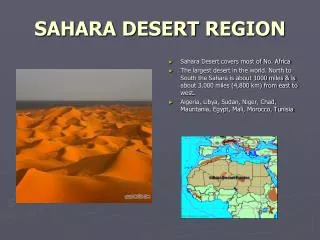
Setting stage: the Hotan Prefecture (2) • Total area: 247,800 square kilometer • Boarder the world’s 2nd largest desert, Taklamakan to the north • 63% of desert, 34% of mountains, 3% of oasis • Annual precipitation 35 mm • Annual evaporation 2480 mm • Total population 1.6 million, 96% Uygur • 2013 per capita income in Hotan: USD 300 • 2013 per capita income in Xinjiang Uygur Autonomous Region (XUAR) USD 1000 • Poverty, advance of desert
Red Willow Cistanche- the “desert ginseng” Able to survive in highly arid areas A natural shield from desert expansion reduce wind speed by 60% at 1 meter height; improve moisture by 10% Good market and sales potentials Around USD 3,000 net returns per hectare
Challenges • Infrastructure: lack of canal and leveling facilities • Technical capacity: low skills on seedling, planting, pesticide application, drying and storage • Small scaled production: household based production with planting area of 1/15 hectare • Market inaccessibility
Farmer + Cooperative + Companies • Pooled and up-scaled household based production • Improved technical level, quality and standardization of production process • Expanded marketing opportunities in the after-production phase • Strengthened capacity of self-management and self-organization among local communities • Received participation of 550 members (households), being replicated in government programs
Farmer + Cooperative + Companies • The chairman, secretariat and board members are voted with a three-year tenure • The board meets every month with attendance of 2/3 of board members • The board is required to disclose annual financial status including income and expenditure • Women are encouraged to be board members
Reflections • Sustainability: will and how the cooperative (and its institution) continue when supports from IFAD project completes? • Independence: how the cooperative keep its independence while interacting government and private sector entities ?? • Equity: how to avoid the “elite phenomenon” and ensure poor household receive their justified share of benefits ???