Download

1 / 0
The Road to Empire: Cleveland, McKinley, Roosevelt, and the Monroe Doctrine
0 likes | 126 Vues
Dive into the intricate journey of American imperialism through the lenses of Presidents Cleveland, McKinley, and Roosevelt. This exploration examines the pivotal events of the Monroe Doctrine, focusing on Cleveland’s intervention in the Venezuela crisis of 1895, as well as the influence of literature, such as Reverend Josiah Strong's *Our Country*, that inspired American missionaries to spread cultural beliefs abroad. Unpack how these moments shaped the trajectory of the United States as it carved its path toward becoming an empire.

Télécharger la présentation 
The Road to Empire: Cleveland, McKinley, Roosevelt, and the Monroe Doctrine
An Image/Link below is provided (as is) to download presentation
Download Policy: Content on the Website is provided to you AS IS for your information and personal use and may not be sold / licensed / shared on other websites without getting consent from its author.
Content is provided to you AS IS for your information and personal use only.
Download presentation by click this link.
While downloading, if for some reason you are not able to download a presentation, the publisher may have deleted the file from their server.
During download, if you can't get a presentation, the file might be deleted by the publisher.
E N D
Presentation Transcript
-
The Road to an Empire
Cleveland, McKinley and Roosevelt - On the Monroe Doctrine Cleveland, Olney, Venezuela 1895
- Literature and Influence Reverend Josiah Strong's Our Country:inspired missionaries to travel to foreign nations Alfred Thayer Mahan's book of 1890, The Influence of Sea Power upon History: argued that control of the sea was the key to world dominance James G. Blaine published his "Big Sister" policy: aimed to rally the Latin American nations behind America's leadership and to open Latin American markets to American traders
- Rise to Revolt Q: How would America’s tariff of 1894 impact Cuba’s production of sugarcane? Tariff made sugar cane less profitable; meanwhile Cubans began to revolt against Spanish Spanish started to place Cubans in concentration camps
- And it was all yellow… William R. Hearst (NY Journal) and Joseph Pulitzer (NY World) Señor Don EnrigueDupuy de Lôme (Spanish Ambassador to the United States) "It shows once more that McKinley is weak and catering to the rabble and, besides, a low politician who desires to leave a door open to himself and to stand well with the jingos of his party.” (1898) On February 15, 1898, the American ship, Maine blew up in the Havana port.
- Spanish-American War 1898 Treaty of Paris: Recognize Cuban Independence US gains Puerto Rico and Guam Acquisition of Philippines for 20mil http://www.history.com/topics/spanish-american-war/videos#mckinley-faces-war-assassination
- Filipino-American War http://www.youtube.com/watch?v=njOE_2xeOjY What does the narrator mean by: the Teller Amendment did not apply to the Philippines? How was this a guerilla war? What was the connection between the treatment of Filipinos to that of the natives? April 19th 1901, Philippines surrenders July 4, 1902 Teddy pardons the Philippines and grants amnesty
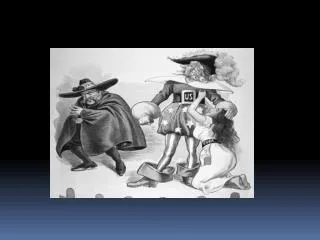
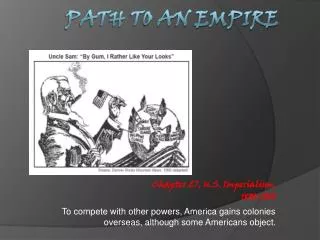
- Who is to the right of the picture? Who does Uncle Sam represent? What is the main idea of the cartoon? Who’s perspective is this?
- So what’s going on in 1901? Has already happened Teller Amendment Spanish American War Filipino American War Boxer Rebellion (xenophobia) Is happening Platt Amendment: can’t sign treaties, don’t build debt, remain independent, Guantanamo Bay…
- Sneaky Politics 1903!
- Roosevelt to the rescue! Corollary 1902: the United States would intervene when necessary in LA Gentleman’s Agreement: secretly prevented emigration from Japan to California until segregation issues were settled


More Related