Understanding Enteropathogenic E. Coli: Pathogen Interactions and Research Directions
20 likes | 129 Vues
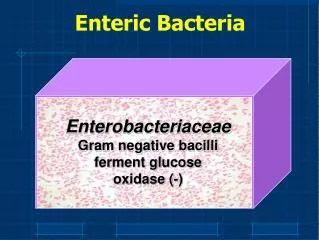
This research focuses on enteropathogenic E. coli and its secretion systems that transport virulence factors. We will explore commensal bacteria-pathogen interactions, and methods in our lab include molecular biology, biochemistry, microbiology, and biophysics. Proposed research ideas include examining fecal samples from individuals with high susceptibility to infectious diseases, identifying metabolites that activate pathogenicity islands, analyzing microbiota from special patient groups, and investigating the correlation between bacterial species in the GI tract and diet. Additionally, we aim to study the potential infection of gastrointestinal carcinoid tumor cells by pathogens.


Understanding Enteropathogenic E. Coli: Pathogen Interactions and Research Directions
E N D
Presentation Transcript
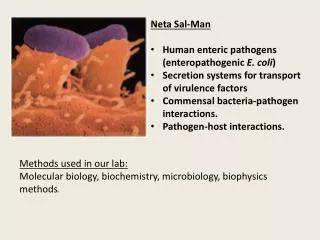
Neta Sal-Man • Human enteric pathogens (enteropathogenicE. coli) • Secretion systems for transport of virulence factors • Commensal bacteria-pathogen interactions. • Pathogen-host interactions. Methods used in our lab: Molecular biology, biochemistry, microbiology, biophysics methods.
Ideas for joined research: • Examine feces sample of individuals with high susceptibility of infectious diseases. Try to find metabolites that promote activation of the pathogenicity island of specific pathogens. • Analysis of the microbiota of special groups of patients and compare it to healthy individuals. • Examine the correlation between specific bacterial species in the GI tract and our diet. • Can pathogen infect gastrointestinal carcinoid tumor cells?