
SlideServe
Menu
Préférences
© SlideServe · v2026

Electromagnetic Energy

ataret avatar
7 diapositives · 694 Views · Aug 23, 2014

Electromagnetic Energy. BY: Alora.M. How Does It Work?. Electro magnetic energy is when you transmit one energy source to another by using waves. This can be in light, heat or any other form. You do this by using two magnets that are used to spin a wire.
Electromagnetic Energy - slide 1
01 / 7Electromagnetic Energy
1 / 17

Télécharger la présentation

Electromagnetic Energy
Une image / un lien ci-dessous est fourni (tel quel) pour télécharger la présentation

Politique de téléchargement : le contenu du site vous est fourni TEL QUEL pour votre information et votre usage personnel ; il ne peut être vendu, concédé sous licence ni partagé sur d’autres sites sans l’accord de son auteur.Le contenu vous est fourni TEL QUEL, pour votre information et votre usage personnel uniquement. Téléchargez la présentation en cliquant sur ce lien. Lors du téléchargement, si vous ne parvenez pas à télécharger une présentation, l’éditeur a peut-être supprimé le fichier de son serveur.Pendant le téléchargement, si vous ne parvenez pas à obtenir une présentation, le fichier a peut-être été supprimé par l’éditeur.

F I N

Plus de contenu associé

Transcription de la présentation
  1. Electromagnetic Energy BY: Alora.M

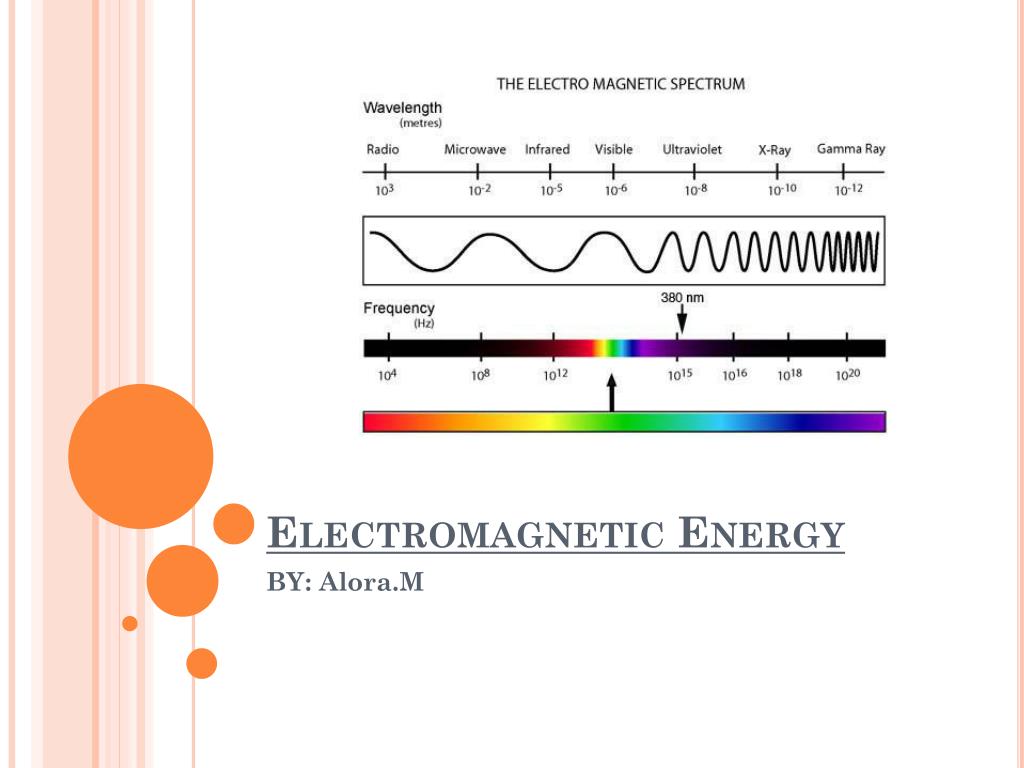
  2. How Does It Work? • Electro magnetic energy is when you transmit one energy source to another by using waves. This can be in light, heat or any other form. You do this by using two magnets that are used to spin a wire. • Electromagnetic energy is the energy that comes from electromagnetic radiation. This radiation is composed of waves, such as radio waves and visible light, that move at the speed of light in a way that is suggestive of both waves and particles.

  3. Common Uses • Radio waves • TV waves • Microwave ovens • Light • Heat • Ultraviolet Light • X-rays • Radar waves • Computers • Refrigerators

  4. Pro’s and Con’s Pro’s Con’s • Easy to generate • Green and not as polluting as oil and fossil fuels • Not as efficient as hydrocarbon energy sources • Can get incredibly hot due to electrical resistance • Not Easy to achieve • Some scientist’s believe is not safe

  5. Fun Facts! • •The different types of electromagnetic waves are light, microwaves, x-rays, and TV and radio transmissions. • •The higher the energy of the particles of electromagnetic wave, the shorter the wavelength. • When electromagnetic waves enter matter, they slow down i.e. their energy decreases, hence wavelength increases. • •When any object is heated, its particles are accelerated that causes change in their electric and magnetic fields, thus forming an electromagnetic wave.

  6. Sources • Nirmal, Aishwarya. "What is Electromagnetic Energy." Buzzle. N.p., n.d. Web. 11 Apr. 2012. <http://www.buzzle.com/articles/what-is-electromagnetic-energy.html>. • "What Is Electromagnetic Energy?." wiseGEEK: clear answers for common questions. N.p., n.d. Web. 11 Apr. 2012. <http://www.wisegeek.com/what-is-electromagnetic-energy.htm>. • "What is electromagnetic radiation?." Welcome to QRG. N.p., n.d. Web. 11 Apr. 2012. <http://www.qrg.northwestern.edu/projects/vss/docs/space-environment/2-what-is-electromagnetic-radiation.html>. • "What are everyday uses of electromagnetic energy." The Q&A wiki. N.p., n.d. Web. 11 Apr. 2012. <http://wiki.answers.com/Q/What_are_

  7. Thanks For Watching!!!