Download
1 / 3
30 likes | 164 Vues
The Northern Renaissance flourished later than its Italian counterpart, emerging in prosperous cities like Flanders. Flemish painters such as Jan van Eyck revolutionized art with oil painting and realistic detail. In 1455, Gutenberg's invention of movable type transformed education and communication, making printed materials more accessible. Figures like Erasmus and Thomas More called for religious reform and envisioned ideal societies through their works. Artists like Pieter Bruegel and Rubens blended vibrant colors and classical ideas, enriching visual storytelling. The era also saw influential writers like Shakespeare shaping the English language and cultural themes.

E N D
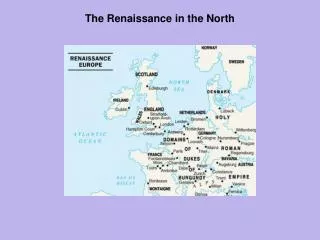
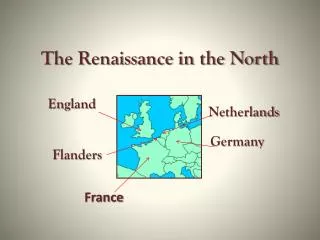
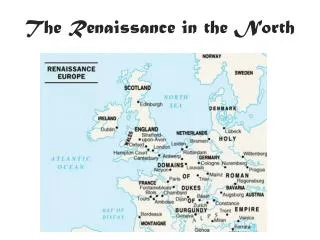
Renaissance in the North Arrived later due to the Plague Began in prosperous cities of Flanders
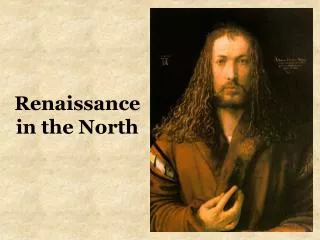
Flemish painter • Van Eyck portrays • scenes in realistic • Detail ( invented oil • paint.) • In 1455, Gutenberg • invented movable type • and prints the Bible with • the printing press • Education used to bring • about religious and • moral reform • Erasmus calls for bible • to be translated to the • vernacular • Printed books are easier & • cheaper to mass produce • Flemish painter Bruegel • Uses vibrant colors to • Portray peasant life • Thomas More writes • Utopia which shows the • perfect world, ideal society • Books become available • Flemish painter Rubens • blends realism with • classical Italian ideas • More people learn to read • German Durer, uses paining style on engravings • (Leonardo of the North ) • Rabelais French • Shakespeare
Shakespeare adds 1,700 words to the English language He applies renaissance ideals to express universal themes in poems and plays He wrote 37 plays still performed today