Download
1 / 7
70 likes | 202 Vues
Dive into the fascinating world of animal adaptations and learn how various species catch their lunch. From flamingos straining tiny creatures with their bills to parrots using strong beaks for cracking nuts, each method showcases a unique evolutionary trait. Explore how hummingbirds sip nectar using their long beaks, while brown bears utilize sharp claws to catch fish. Woodpeckers demonstrate their drilling abilities to find insects in trees. This overview provides insight into the remarkable adaptations that help animals thrive in their environments.

E N D
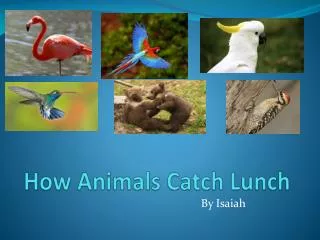
How Animals Catch Lunch By Isaiah
Flamingos You can find them by shallow muddy waters. This is a behavioral adaptation, because they choose to live in this area. Flamingos use their bill as a strainer to trap tiny plants, shrimp and snails. This is an example of a physical adaptation.
Parrots/Cockatoos • In the Rainforest parrots and cockatoos use their strong beaks to crack nuts and seeds and also to tear open fruit. This is a physical adaptation.
Humming Birds • Humming Birds have long beaks and that they use for sipping nectar from flowers. This is a physical adaptation. The long beak is just like a straw you would use to sip a milkshake!
Brown Bear • A Brown Bear uses sharp claws and teeth to catch and eat large fish. These are physical adaptations.
Woodpeckers • Woodpeckers use beaks to drill into trees so they can catch insects. Their beak looks like a drill. This is a physical adaptation.
Conclusion I hope you learned a lot about how animals catching lunch and when you see one you can be an expert. Resources used: Catching Lunch by Houghton Mifflin Discovery Works http://www.bbc.co.uk/learningzone/clips/how-animals-catch-their-prey/12640.html