The Path to World War I: Alliances, Imperialism, and Leadership of Otto von Bismarck
50 likes | 176 Vues
This text explores the complex web of alliances and imperialist ambitions that paved the way for World War I. It focuses on Otto von Bismarck's diplomatic strategies, including the formation of the Three Emperors’ League, the Dual Alliance, and the Triple Alliance with Austria and Italy. The rivalry between Britain and Germany, marked by the Entente Cordiale and the establishment of the Triple Entente, contributed to rising tensions. Key events, such as the Balkan and Moroccan crises and the assassination of Archduke Francis Ferdinand, further escalated conflicts leading to the war.


The Path to World War I: Alliances, Imperialism, and Leadership of Otto von Bismarck
E N D
Presentation Transcript
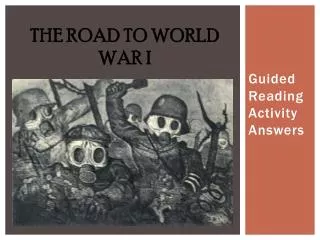
Ch. 25—Imperialism, Alliances, and War The road to world war i
Leadership of Otto von Bismark • Goals after the Franco-Prussia War (1870): • Maintain peace • Create certain alliances The german empire
Three Emperors’ League (1873) Congress of Berlin (1878) Dual Alliance (1879) Renewal of the Three Emperors’ League (1881) The Triple Alliance—Germany, Austria, and Italy is set by the end of the 19th Century Creation of the triple alliance
Franco-Russian Defensive Alliance (1894) British-German Rivalry at the beginning of the 20th century Entente Cordiale (1902) The Triple Entente (Britain, France, and Russia) is set in 1907. Creation of the triple entente
1888—William II becomes Emperor of Germany 1890—Bismark is dismissed Balkan Crises Moroccan Crises June 28, 1914—the assassination of Archduke Francis Ferdinand July 1914—Austria declares war of Serbia; German supports Austria; Russia supports Serbia; France and Britain support Russia. The road to world war i