### Comprehensive Guide to Poultry Meat Production: Chickens and Turkeys ###
This chapter explores the essentials of poultry meat production, focusing on high-protein, low-fat chicken and turkey. It covers the various types of chickens, including layers for egg production (like Leghorns) and broilers for meat (such as Cornish crosses). Key management practices, such as space requirements, temperature control, debeaking, and vaccination, are outlined. Layer care, egg collection, and proper feeding ratios are discussed for optimal production. The guide also defines important chicken terminology and provides insights into artificial insemination in turkeys. ###

### Comprehensive Guide to Poultry Meat Production: Chickens and Turkeys ###
E N D
Presentation Transcript
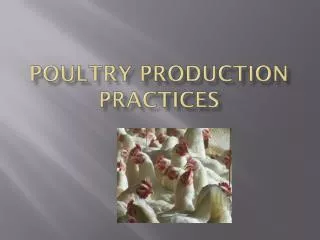
Poultry Production Chapter #10
Poultry Meat • High protein • Low fat • Economical to eat • 2nd in consumption only to beef
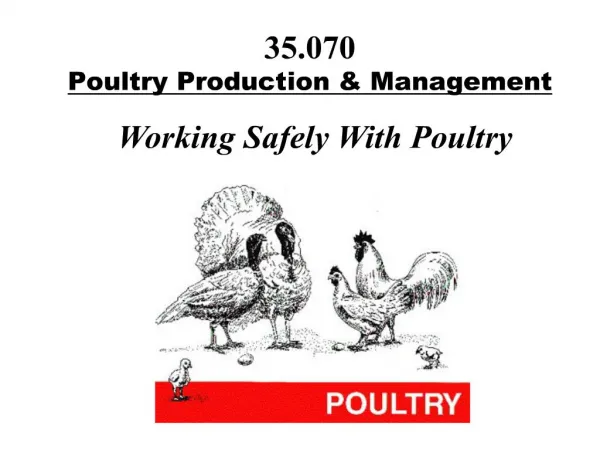
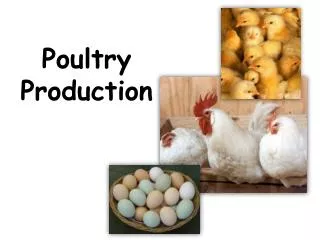
Chickens • Layers: for egg production • Leghorn (hybrids) • Broilers: meat production • White Plymouth Rock, Cornish Crosses • Producers usually buy chicks from hatcheries • Turkeys must be artificially inseminated (have been bred for large breasts which makes it physically impossible to mate)
Getting Started • Order chicks early • Only order what you can house • Space requirements: • 10 square inches / chick under light • 25 square inches / chick house space • Chicks shouldn’t be allowed to get more than 3 ft away from light
When they arrive • Temperature = 92-95 degrees under light, 70-75 deg in house • Decrease temp. 5 degrees / week until 60 degrees • Teach how to drink right away • If chicks are huddled together under light = too cold • If none are under light = too hot • Should be scattered
Management • Debeaking: remove 1/3 of the top beak and a small part of the bottom (prevent cannibolism) • at 6-8 days old • Vaccinate (hatchery can do this) • Lighting: birds naturally reproduce in spring, simulate spring, chickens molt (shed feathers) production increases
Layer Care • Collect eggs 2-3 times per day (if hot) • Wash eggs immediately in warm water • Refridgerate & keep away from onions & mold • Production Goal: 4 lbs feed / dozen eggs • Hens produce 7 eggs / 10 days
Broilers • Don’t keep in cages (weak bones & bruise easily) • Keep light on at night (prevent cannibolism) • Market at 4 1/2 lbs for males, 3 1/2 lbs for females (about 8 weeks) • 2.1 lbs feed / lb of gain
Chicken Terms • What do you call a mature male? Rooster • What do you call a mature female? Hen • What do you call a young female? Pullet
Chicken Terms • What do you call a castrated male? Capon • Chickens Hatch • What is the incubation period? 21 days