
Progressive Movements in America
E N D
Presentation Transcript
Progressivism A movement to improve American life by expanding democracy and achieving economic and social justice
Sources of Progressive Strength • Farmers • Workers • Writers • Political Leaders • But most of all, the Urban Middle Class
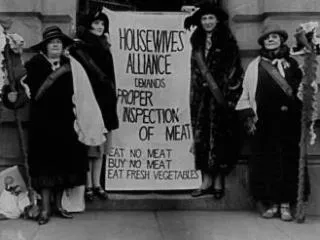
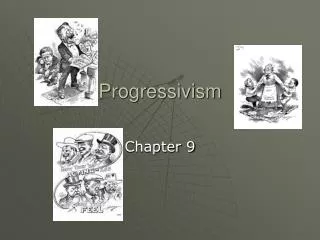
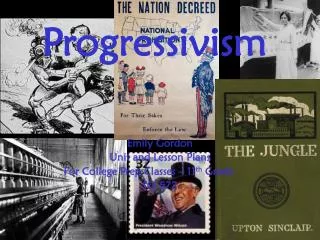
The Muckrakers • Writers exposing the ills of society • They did so through popular magazines and novels • Ida Tarbell - History of Standard Oil • Lincoln Steffens - Shame of the Cities • Upton Sinclair - The Jungle
Reforming Society • By 1920, ½ of all Americans live in cities • Cities unable to provide services • Housing • Tenement Act of 1901 • Landlords to install lighting in public hallways
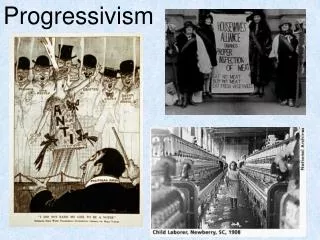
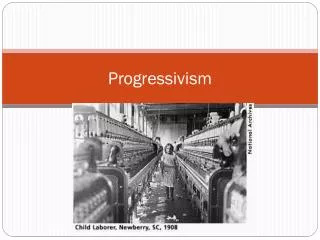
Reforming the Workplace • Expanding the fight to include the rights of women and children • 1904 – National Child Labor Comm. • Workday limited to 10 then 8 hrs. in some states • The fight for minimum wage (40% of workers lived in poverty) • 1912- Mass. Passed min. wage law
Court Cases on Labor • Lochner v. New York (1905) • Ruled in favor of business. Law limiting workday of bakers to 10 hrs. violated their ability to enter into a contract • Muller v. Oregon (1908) • Ruled in favor of workers claiming that a law limiting women to 10 hrs. protected their health
Unions expand • International Workers of the World • Founded in 1905 and made up of unskilled labor • Known as the “Wobblies” • Connection to violence and socialism
Reforming Government • City Govt. • Commission System • Council-manager system • State Govt. • Wisconsin – “lab of democracy” under Robert La Follette • Campaign spending
Cont. • Election reforms • Direct primary • 17th Amendment • Secret ballot • Initiative • Referendum • Recall
Opportunities for Women • Women were moving out of the “caring professions” and into the business world • Since many women were denied access to traditional education and certain professions, they turned to reform movements
Women and politics • Very active in the Prohibition movement and Suffrage • Women’s Christian Temperance Union (WCTU) and the Anti-Saloon League • 1917 – Congress passed the 18th Amendment (ratified in 1919) • 1869 – NWSA forms
Legacy of the Progressives • Promoted the belief that govt. has the responsibility to act for the people’s welfare • Marked the transition from laissez-faire to govt. regulation of the economy • Demonstrated the ability of democracy to deal with problems