The Silk Road: Expansion, Government Structure, and Cultural Exchange in Ancient China
Chapter 15, Section 2 delves into the reuniting and expansion of China along the Silk Road. It discusses the reforms of the first emperor who encouraged learning, reduced taxes, and eased harsh regulations. The strong hierarchical government structure is outlined, emphasizing the roles of civil servants who were appointed based on merit. The journeys of Zhang Qian highlight the establishment of trade routes that flourished due to protective military presence. The section also addresses the significant cultural exchange via the Silk Road, including the introduction of Buddhism, transforming Chinese society with new ideas.

The Silk Road: Expansion, Government Structure, and Cultural Exchange in Ancient China
E N D
Presentation Transcript
The Silk Road Chapter 15, Section 2
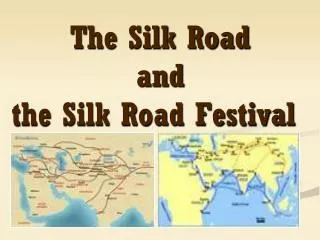
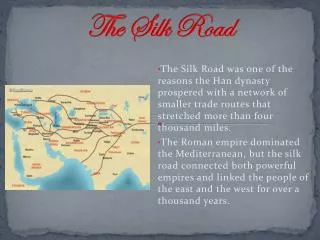
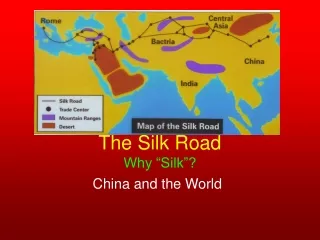
The Silk Road Reuniting and Expanding China • First emperor encouraged learning, lowered taxes, and ended the harsh rules • Expanded rule into central, north, and south Asia The Structure of Government • Strong central government • Organized in pyramid – officials took orders from those above, and gave orders to those below Civil Service • Appointed for their skills and knowledge • Collect taxes, organized labor, and enforced laws • Wore special clothes – for rank • Took exams and enjoyed high salaries
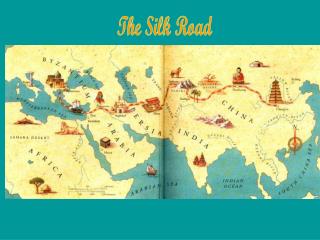
The Silk Road The Journey of Zhang Qian • Went to find allies • Found new lands that were ideal for trade • Sent envoys to set up relationships with those in the area • Han sent troops to protect region – trade flourished An Important Trade Route • Silk most important export – only Chinese knew how to make • Exchanged Silk for products; horses, grapes, sesame, and onion for cuisine New Ideas: Buddhism Enters China • Silk Road exchange of ideas – paper and Foreign ideas (Buddhism) • Buddhism started in India and spread – overtime became popular in China