Download
1 / 10
100 likes | 222 Vues
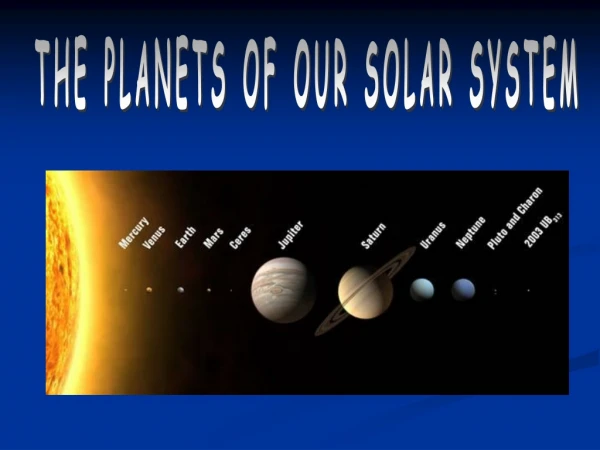
Discover the wonders of our solar system with this engaging overview of the nine planets designed for first graders. Learn about Mercury, the smallest planet closest to the sun, Venus, the hottest and driest, Earth, the only planet known to support life, and Mars, the red planet. Explore the outer giants: Jupiter, the heaviest planet, Saturn with its stunning rings, Uranus with its unique tilt, and Neptune, the furthest from the sun. Enjoy a fun educational video that brings the planets to life!

E N D
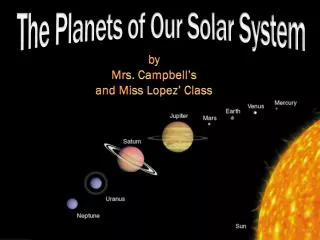
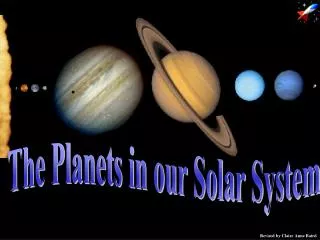
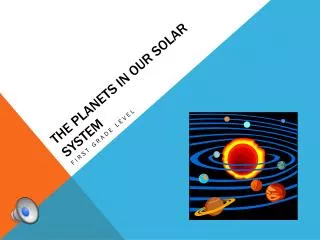
The Planets in our solar system First Grade Level
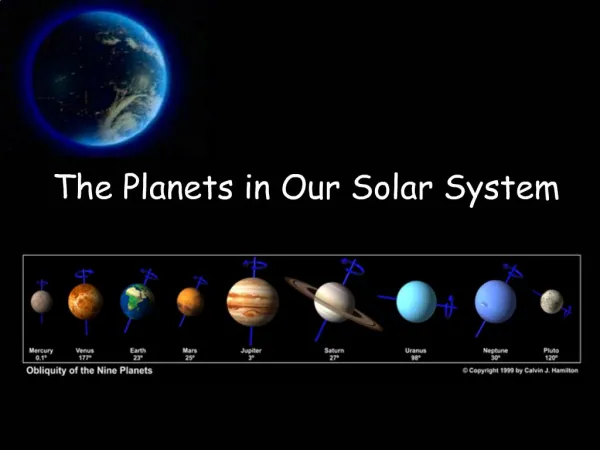
Mercury • There are nine planets that are in our solar system. They all rotate around the sun. The first planet that is closest to the sun is the planet Mercury. • Mercury is the smallest planet in the solar system.
Venus • Venus is about the same size as Earth. It is also the driest planet in the solar system. • Venus is the hottest planet in our solar system.
earth • Our planet Earth!! • It is the largest inner planet. • Earth is the only planet that is known to have life form on it. • It is made up of oxygen and water which is how living things can live on it. • It has one satellite which is what we call the moon.
mars • Mars is the last of the inner planets. • It is the only red planet in our solar system.
jupiter • Jupiter is the first of the outer planets. • It is the heaviest planet that weighs 2.5 tons more than all of the planets combined. • It has some cloudy bands that wrap around the planet.
saturn • Saturn is the second planet in the outer system. • It is the only planet that has rings around it. • The rings are made of ice and rock particles.
uranus • Uranus is the lightest planet. • It rotates the sun on a tilt called an axis.
neptune • Neptune is the last planet in our solar system and it is the farthest from the sun. • It is slightly smaller that Saturn.
Video on our planets • Here is a video on our planets from Brain Pop Jr.! • http://www.brainpopjr.com/science/space/solarsystem/preview.weml