Romantic Revival: Pre-Raphaelites' Truth to Nature
Explore the Pre-Raphaelites' movement challenging 19th-century art norms, embracing Romanticism, realism, symbolism, and vivid, emotional subjects from a Renaissance-inspired viewpoint. Dive into their captivating artworks like "Ophelia," "Hylas and the Nymphs," and "Flaming June."

Romantic Revival: Pre-Raphaelites' Truth to Nature
E N D
Presentation Transcript
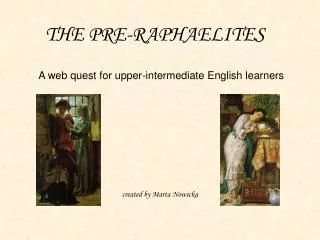
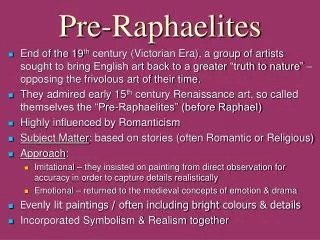
Pre-Raphaelites • End of the 19th century (Victorian Era), a group of artists sought to bring English art back to a greater “truth to nature” – opposing the frivolous art of their time. • They admired early 15th century Renaissance art, so called themselves the “Pre-Raphaelites” (before Raphael) • Highly influenced by Romanticism • Subject Matter: based on stories (often Romantic or Religious) • Approach: • Imitational – they insisted on painting from direct observation for accuracy in order to capture details realistically • Emotional – returned to the medieval concepts of emotion & drama • Evenly lit paintings / often including bright colours & details • Incorporated Symbolism & Realism together
35. John Everett Millais. Ophelia. (1851-1852) Oil on canvas.
36. John William Waterhouse. Hylas and the Nymphs. (1896) Oil on canvas.

![Pre - judice [ pre - judging ]](https://tcdn.slideserve.com/1_1530811.jpg)